
Trump, Xi Keep Great-Power Diplomacy on Track
Source: Bloomberg
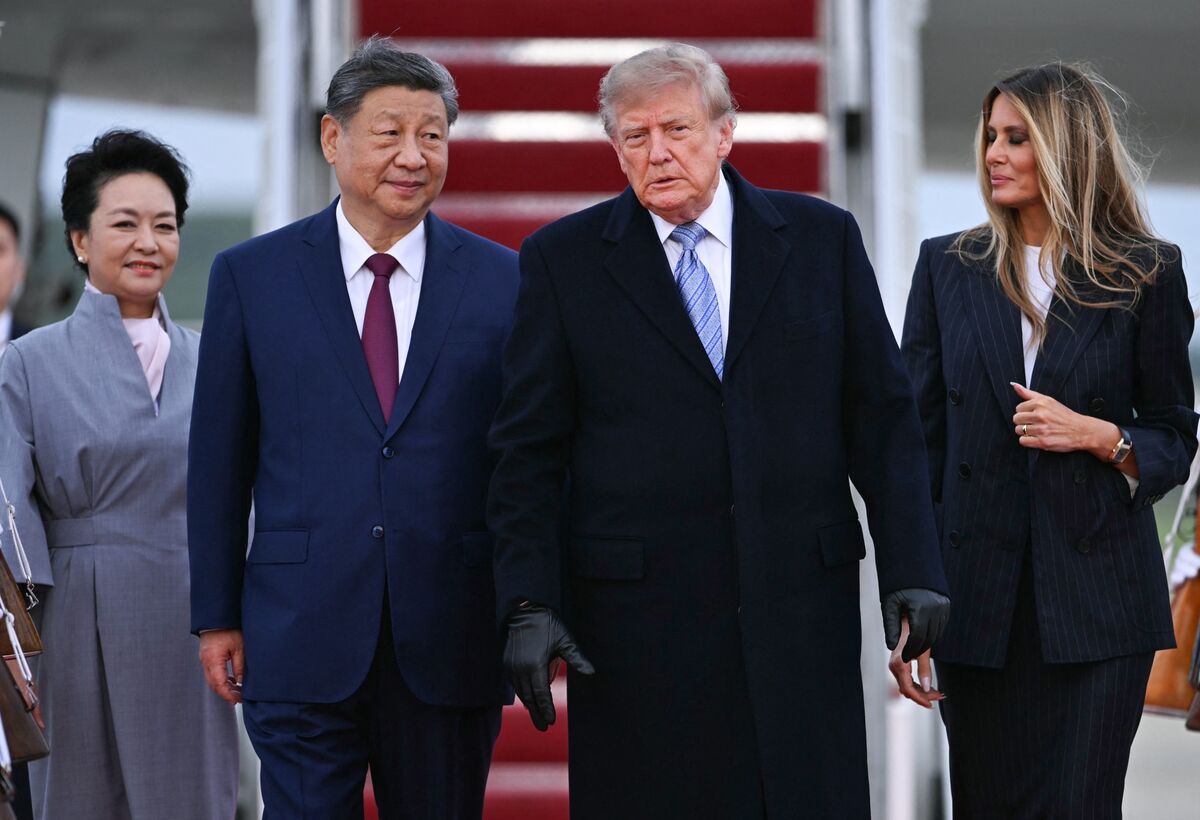
Trump and Chinese leader Xi held a Washington summit aimed at keeping great-power diplomacy between the world’s two largest economies on track. The article characterizes the meeting as driven largely by ceremonial diplomacy—including pageantry and cultural gestures—rather than reporting specific policy agreements, tariffs, or economic commitments.
Analysis
The investable implication is a near-term reduction in geopolitical left-tail risk rather than a durable change in trade policy. That favors assets carrying the largest China-risk discount—KWEB, FXI, luxury exposure (LVMUY, TPR), and select semiconductor equipment names—but only if follow-through appears in export-license approvals, tariff exclusions, or reduced enforcement rhetoric. Absent those operational signals, a diplomatic reset is unlikely to alter earnings estimates and should not justify chasing a relief rally.
The more important second-order effect is volatility compression: lowered perceived probability of abrupt restrictions can reduce hedging demand in CNH, Taiwan equities, and semiconductor supply chains over days to weeks. TSM and ASML benefit most from an extended status quo because their multiples embed material policy-tail risk, while domestic Chinese foundry and equipment substitutes such as SMIC remain relatively disadvantaged if access to Western technology is preserved. Conversely, US industrial reshoring beneficiaries and Mexico manufacturing proxies could see modest multiple pressure if investors price a lower probability of accelerated decoupling.
Consensus may overread diplomatic optics as evidence that strategic competition has softened. The structural constraints—advanced-chip controls, Taiwan, supply-chain localization, and election-driven trade politics—remain binary policy risks over 6-18 months; goodwill does not resolve them. The thesis is falsified by new export-control actions, broad tariff announcements, military activity around Taiwan, or a renewed CNH depreciation above prior stress levels, each of which would rapidly reprice China-sensitive risk assets.
AllMind Terminal
AI-powered research, real-time alerts, and portfolio analytics for institutional investors.
Request TrialMarket Sentiment
Overall Sentiment
neutral
Sentiment Score
0.05
Key Decisions for Investors
- No immediate directional macro trade on summit optics alone; use any 3-5% relief rally in FXI or KWEB as a catalyst to reassess fundamental revisions rather than as confirmation of a regime change.
- For a tactical 1-3 month risk-on expression, prefer a defined-risk long KWEB versus short FXI pair: internet platforms have greater valuation upside from lower regulatory/geopolitical discounts, while FXI retains bank and property drag. Exit if CNH weakens materially or US-China trade restrictions broaden.
- Maintain or add modest long TSM exposure on pullbacks, hedged with SOXX puts or a short SMH overlay. The relative thesis is that stable cross-border supply-chain conditions support TSM's utilization and valuation premium; it fails if advanced-node export restrictions tighten or Taiwan risk premia widen.
- Set policy alerts around export-license decisions, tariff announcements, and Taiwan-related military headlines. Treat concrete implementation as the trigger for larger gross exposure; diplomatic language alone is insufficient evidence for an earnings-level rerating.
More News
- Iran says it awaits US response on seven-day roadmap to end war
- Boom or bust? The case for and against panicking about 5% yields
- US, Iran Explore Phased Hormuz Deal
- Houthi attack on Mecca, Medina would cross ‘red line’, Pakistan PM tells UN
- What would a US diesel export ban mean for global fuel prices?
- The Tiny Magnet Maker That Attracted $1.6 Billion From Lutnick