
Yen Rises to Strongest Since May, Topping Intervention Rally
Source: Bloomberg
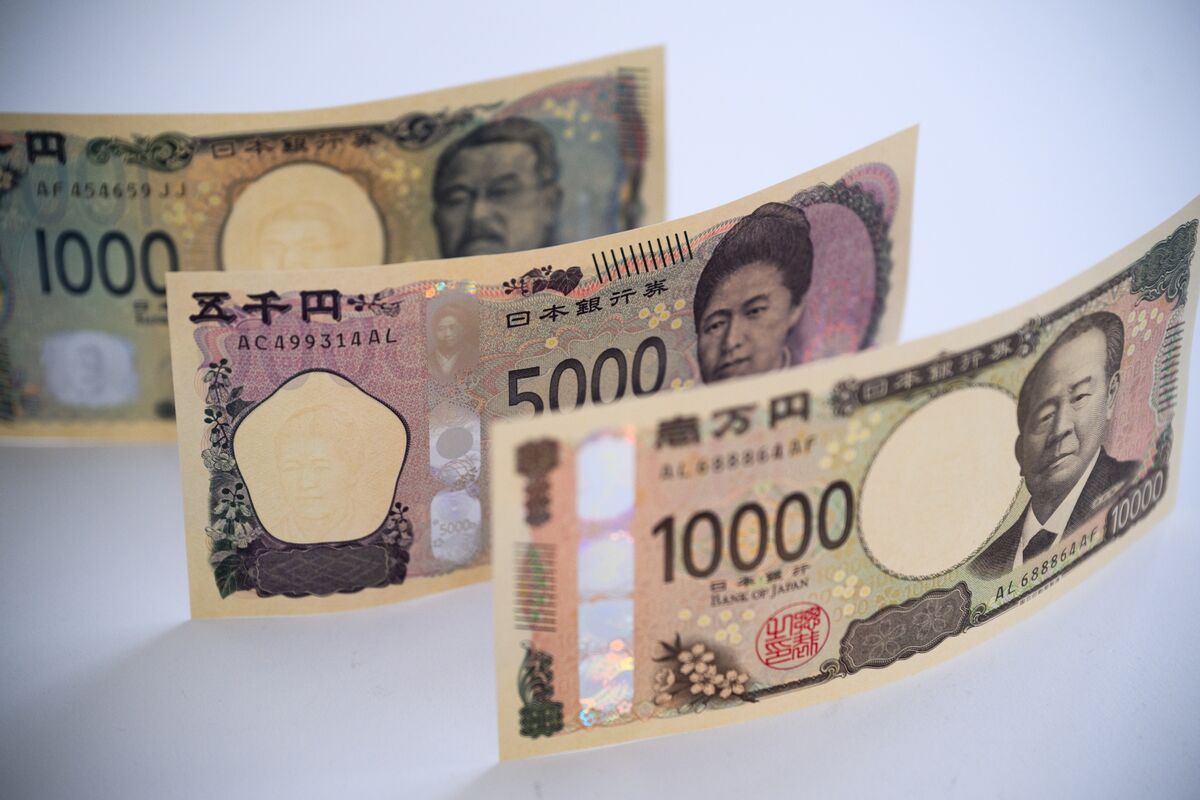
The yen rose as much as 1.1% to ¥154.56 per dollar, its strongest level since February and beyond the post-coordinated-intervention peak, after trading at ¥160.39 last week. Growing expectations for Bank of Japan rate hikes are driving a sharp reversal in yen sentiment, with implications for FX markets and Japanese policy expectations.
Analysis
The key transmission is a carry unwind rather than a standalone FX move. A sustained dollar-yen break below 155 raises the hedging cost and VaR pressure on leveraged global portfolios funded in yen, creating near-term vulnerability in high-beta equities, crowded AI semiconductors, crypto and emerging-market local debt. Japanese exporters, particularly autos (TM, HMC) and machinery (FANUY), face a translation and price-competitiveness headwind, while domestically oriented financials (SMFG, MUFG) can outperform if the move reflects higher Japanese front-end rates rather than broad risk aversion.
The 1-3 month catalyst path depends on whether Japanese rate expectations rise while US two-year yields fall; that combination can compress the rate differential quickly and force systematic de-risking. A move toward 150 would likely amplify CTA and short-yen stop-loss buying, whereas a rebound through 158 would suggest the move was positioning-driven rather than a durable policy regime change. Over 6-18 months, a firmer yen is modestly disinflationary for Japan through import prices, potentially limiting the terminal BOJ rate and capping the domestic-bank upside.
Consensus may be too focused on official action and insufficiently focused on the asymmetric positioning reset: intervention can create a temporary level, but a narrowing US-Japan yield spread changes the economics of the carry trade. Conversely, absent a sustained decline in US yields, aggressive yen strength is vulnerable to renewed dollar demand from Japanese institutional investors and repatriation hedges; this is not yet a clean structural short-dollar signal.
AllMind Terminal
AI-powered research, real-time alerts, and portfolio analytics for institutional investors.
Request TrialMarket Sentiment
Overall Sentiment
mildly positive
Sentiment Score
0.35
Key Decisions for Investors
- Initiate a tactical long yen position via long FXY or short USD/JPY, targeting 150-152 over 1-3 months; use a close above 158 as a thesis stop. The trade works best if US 2-year yields decline alongside firmer Japanese wage/inflation data.
- Express the relative Japan equity effect with long SMFG or MUFG versus short TM or FANUY over the next 1-3 months. Financials benefit from higher domestic rates, while exporters are more directly exposed to yen appreciation; exit if USD/JPY reclaims 158 or BOJ guidance turns explicitly dovish.
- Reduce exposure to leveraged carry-sensitive risk assets and consider a short-term hedge through long VIX calls or put spreads on QQQ. The expected payoff is convex if a yen-funded deleveraging episode broadens, but this should be sized as a weeks-long hedge rather than a core bearish equity view.
- Set an alert at USD/JPY 150: a break could trigger faster systematic buying of yen and justify adding; failure to hold 154 after a BOJ communication or US CPI release would instead favor taking profits, as it would indicate insufficient yield-differential support.
More News
- France is flashing euro crisis signals. This time, the fault lines are different
- OpenAI Trims Target Value & Volvo Cars Cuts 2,500 Jobs
- ‘They are trying to intimidate us’: Indonesia’s Prabowo remains defiant in the face of an MSCI double downgrade
- Wake up! The long bond’s up two points!
- US tech stocks tumble as investors fret over AI spending
- Asian shares wobble as tech rout boosts bonds, dents rate hike bets
From AllMind Research
- Anthropic IPO Preview: Valuation, Timing, and What to Watch
- Shein After the IPO: Venue, Valuation, and What Must Be Proved
- What AI Research Tools Should a Small Hedge Fund Buy First?
- Capital IQ Alternatives for Research and Deal Work
- Research Workflows, Report Format Selection, and Interactive Synthesis