
QinFlow Launches PressSure™, a New Device to Simplify Infusion Pressure Management Across Critical Care
Source: PR Newswire
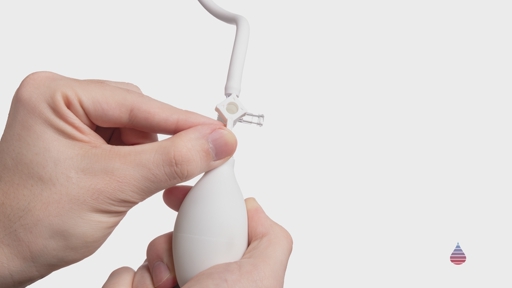
QinFlow launched PressSure™, a battery-powered device that automatically maintains blood and IV-fluid pressure-bag settings at 150, 300, or 450 mmHg, reducing clinicians' repetitive manual monitoring and reinflation tasks. The device works with standard pressure bags and requires no proprietary consumables, scheduled calibration, or preventive maintenance. PressSure™, a finalist for the 2026 EMS World Innovation Award, will debut at EMS World Expo and Emergency Nursing 2026 later this month.
Analysis
This is not independently actionable for public equities: QinFlow is private, commercial terms are absent, and the release provides no regulatory-clearance status, price point, installed-base conversion data, or procurement commitments. The clinically plausible value proposition does not by itself establish reimbursement, budget ownership, or adoption velocity; capital-equipment purchasing cycles in EMS and hospitals can extend 6-18 months and are often constrained by tender specifications rather than workflow preference.
The more relevant read-through is competitive rather than revenue-accretive: automated pressure control could raise expectations for workflow integration around transfusion and fluid delivery, modestly favoring broader acute-care workflow vendors if adoption validates willingness to pay for reduced clinician task burden. Potential long-duration beneficiaries include ICU/infusion infrastructure suppliers such as BDX and ICUI, but neither has disclosed an equivalent product linkage, so no direct revenue estimate is supportable. Consumable-free positioning may also limit QinFlow's recurring-revenue profile, making adoption potentially favorable for customers but less attractive economically than a razor/razorblade model.
Near-term catalysts are limited to trade-show feedback and any subsequent clearance, distributor, military, or health-system contract announcements. The contrarian view is that manual pressure bags remain adequate for many low-acuity settings; without evidence that automation improves time-to-infusion, adverse-event rates, staffing productivity, or protocol compliance, the product risks being categorized as a discretionary accessory rather than a standard-of-care upgrade. Falsification of the cautious view would be a named multi-site procurement win, published workflow outcomes, and evidence of a price point that fits EMS and hospital capital budgets.
AllMind Terminal
AI-powered research, real-time alerts, and portfolio analytics for institutional investors.
Request TrialMarket Sentiment
Overall Sentiment
moderately positive
Sentiment Score
0.42
Key Decisions for Investors
- No position based on this release; treat as a private-company product-watch item rather than a tradable catalyst.
- Monitor BDX and ICUI over the next 1-3 months for product responses, partnership announcements, or management commentary on automated pressure/rapid-infusion workflows; only consider a relative long after evidence that hospitals are allocating incremental capital to this category.
- Set an alert for QinFlow regulatory-clearance disclosure and named EMS, military, or hospital-system contracts over the next 6-12 months. A validated multi-site deployment with measurable labor or clinical-benefit data would justify revisiting adjacent acute-care device exposure.
- Avoid extrapolating an EMS World finalist designation into demand or revenue forecasts; reassess only if disclosed orders, pricing, and repeat-purchase behavior demonstrate commercial traction.
More News
- Taiwan benchmark Taiex rises to record intraday high as tech stocks advance
- AMD joins the $1 trillion club as chip rally surges - our AI Strategy saw it early
- Here's who we know is going to the Trump-Xi dinner so far
- +17% in a single session: This AI-picked stock catches a data-center breakout
- Asia stocks rise tracking U.S. tech rally; Trump-Xi meeting eyed
- Perpetual underdog AMD nips at Nvidia's heels as it joins the $1T club
From AllMind Research
- Anthropic IPO Preview: Valuation, Timing, and What to Watch
- Shein After the IPO: Venue, Valuation, and What Must Be Proved
- What AI Research Tools Should a Small Hedge Fund Buy First?
- AI for Sell-Side Models, Estimates, and Internal Data
- How to Write an Investment Memo with AI: A Decision-Record Template