
Google DeepMind Uses AI to Predict 9 Billion DNA Changes
Source: Bloomberg
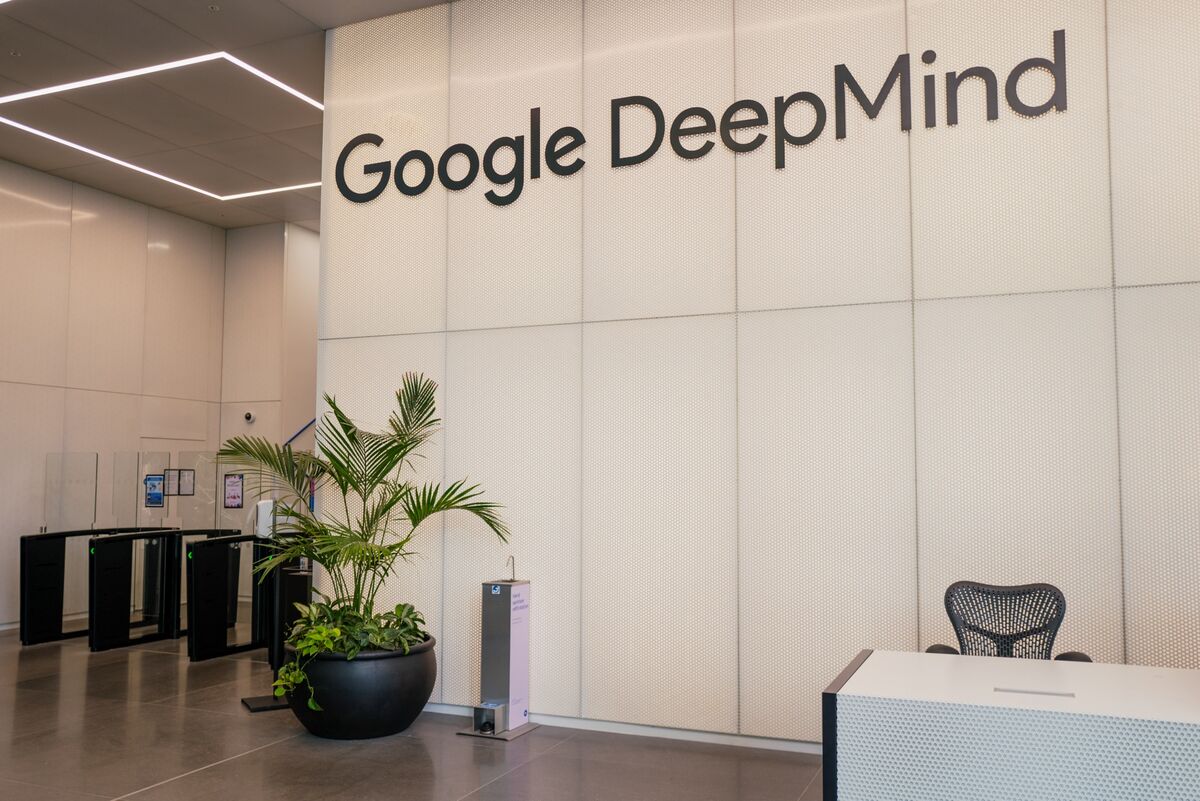
Google DeepMind has introduced an AI model designed to predict 9 billion possible DNA changes, aiming to help researchers identify genetic drivers of disease and other biological conditions. The development highlights AI's expanding application in genomics and drug discovery, although commercial and clinical implications remain uncertain. Separately, a Blackstone-Alphabet cloud venture reportedly faces roadblocks in plans to build data centers that would rent Google AI chips to customers next year.
Analysis
The investable implication for GOOG is not near-term biology revenue; it is evidence that proprietary-model differentiation is extending into high-value scientific workflows where accuracy, validation and regulated deployment create materially higher switching costs than generic enterprise AI. The relevant KPI over the next 1-3 quarters is external adoption by drug developers, academic consortia or clinical-data partners—not model-scale claims. Absent disclosed licensing, cloud-consumption or partnership economics, this should not alter Alphabet earnings estimates.
The more actionable second-order beneficiary is the life-sciences software and tools stack: faster variant interpretation can increase demand for sequencing, wet-lab validation and clinical-trial stratification rather than replace them. ILMN, TMO, DHR and CRL could benefit only if computational predictions translate into incremental sample throughput and biomarker-driven trial activity; software-led drug-discovery peers face the opposite risk if hyperscalers commoditize early-stage target-identification capabilities.
For BX, delays in an AI-chip rental/data-center venture matter less through direct earnings than through capital deployment and execution credibility. The risk is that AI infrastructure returns are being competed down before capacity is operational: customers can choose hyperscaler capacity, purpose-built GPU clouds, or direct chip access, while power interconnection and construction delays leave capital earning little. Over 6-18 months, sustained constraints would favor incumbent cloud platforms with existing power, networking and customer distribution, but pressure alternative asset managers underwriting late-cycle AI infrastructure at aggressive utilization assumptions.
Consensus may overread scientific-model announcements as a near-term healthcare monetization catalyst and underread the validation bottleneck. Clinical utility requires reproducibility, prospective evidence, data rights and regulatory acceptance; those processes run in years, not quarters. Conversely, if DeepMind converts this into an exclusive, revenue-bearing pharma platform, the market could rerate GOOG's healthcare optionality quickly because current valuation still primarily reflects advertising and cloud.
AllMind Terminal
AI-powered research, real-time alerts, and portfolio analytics for institutional investors.
Request TrialMarket Sentiment
Overall Sentiment
mildly positive
Sentiment Score
0.35
Ticker Sentiment
Key Decisions for Investors
- Maintain GOOG as a core AI-platform long, but do not add solely on this development; reassess after the next two earnings calls for disclosed life-sciences cloud bookings, commercial partners or incremental capex. Thesis is supported by Cloud growth acceleration without material margin deterioration; falsified if capex rises while Cloud margin and backlog conversion weaken.
- Put BX on a 1-3 month execution watch rather than initiate a directional short. A short becomes actionable only if the venture delay coincides with lower fundraising/deployment guidance, impairments, or evidence of weaker data-center leasing economics; otherwise BX's diversified fee base makes the specific project too small for clean downside exposure.
- Watch-list pair for a confirmed commercialization catalyst: long TMO or DHR / short RXRX or SDGR. The trade expresses increased demand for validation and lab workflow versus compression in differentiated-AI discovery multiples; enter only after a named pharma deployment or measurable sequencing/biomarker volume uplift, with a 6-12 month horizon.
- For AI-infrastructure exposure, favor GOOG over alternative GPU-cloud/private-data-center vehicles until utilization, power access and customer contracts are independently disclosed. The key reversal signal is evidence that new entrants secure take-or-pay contracts and funded power capacity, which would narrow incumbents' distribution and reliability advantage.
More News
- The experience economy keeps defying expectations. Maybe we’ve been looking at it all wrong
- Goldman says these top tech stocks have plenty of upside ahead of earnings
- Will AI expose the rickety infrastructure of the internet?
- The UK is investing $134 million into an AI Biosecurity Lab
- The AI graveyard: a running list of projects and startups that didn’t make it
- The PHP Meltdown Shows How AI Makes Bugs More Exploitable