
Eni, Vitol Pursue New Offshore Opportunities in Ghana's Tano Basin
Source: zacks.com
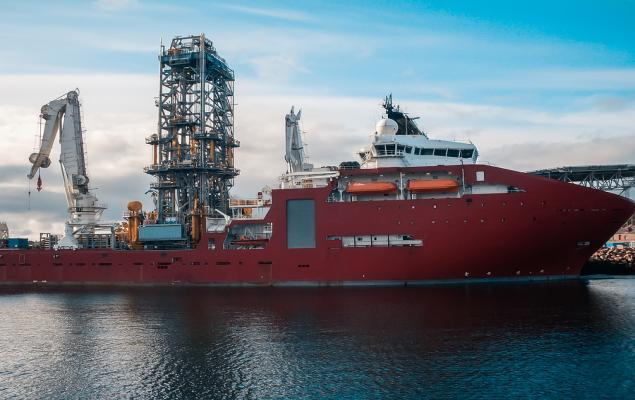
Eni and commodities trader Vitol signed MoUs with Ghana for offshore Tano Basin blocks GH WB 3 and GH WB 8, covering roughly 2,100 square kilometers in water depths of 750-2,800 meters. The preliminary agreements could lead to formal petroleum contracts and exploration activity, supporting Eni's infrastructure-led, near-field strategy designed to reduce development costs and accelerate production. The move expands Eni's Ghana asset pipeline, where it has operated since 2009 and already partners with Vitol and Ghana National Petroleum Corporation on the OCTP project.
Analysis
This is not yet an asset-value catalyst for Eni: non-binding acreage agreements in ultra-deepwater carry a multi-year sequence of petroleum terms, seismic work, drilling, appraisal and development before reserve booking or cash flow. The relevant near-term signal is strategic rather than earnings-based—Eni is seeking to leverage existing Ghana infrastructure to lower cycle time and unit development cost versus frontier exploration. That supports E's capital-discipline narrative only if management discloses a low committed-work-program obligation and avoids material upfront carry costs for its partner.
The second-order beneficiary is Ghana's existing gas and liquids infrastructure utilization, while the principal risk sits with fiscal and political terms rather than geology alone. Deepwater projects are especially vulnerable to cost inflation, contractor tightness and changes in host-government participation; a commercial discovery would likely be a 6-10 year value event, not a 1-3 month equity catalyst. Vitol's involvement can improve offtake and marketing optionality, but as a private firm it does not create a direct listed-equity read-through.
Consensus may incorrectly treat this as incremental production growth. Eni's shares should not re-rate on an MoU absent formal license terms, a disclosed exploration budget, or evidence that existing processing/export capacity can accommodate incremental volumes without substantial new capex. PARR and VLO have no fundamental linkage; any apparent sympathy move would be noise, while GALP's Namibia appraisal and development milestones remain a materially more investable offshore-exploration catalyst.
Over the next 1-3 months, monitor formal petroleum-agreement execution, fiscal terms, operator/equity splits and planned seismic or well timing. Over 6-18 months, the key falsifier for a constructive E thesis is rising exploration capex without offsetting divestment proceeds, buybacks or production guidance; an oil-price decline would further reduce the value assigned to distant, capital-intensive barrels.
AllMind Terminal
AI-powered research, real-time alerts, and portfolio analytics for institutional investors.
Request TrialMarket Sentiment
Overall Sentiment
mildly positive
Sentiment Score
0.30
Ticker Sentiment
Key Decisions for Investors
- No standalone trade in E on this announcement; maintain only existing core exposure and require formal license terms plus a disclosed capital commitment before adding. Treat a material exploration-capex increase or lower shareholder-return guidance at the next results as a thesis-negative trigger.
- For offshore-exploration exposure over 6-18 months, prefer a watchlist long GALP rather than using E as a Ghana proxy; enter only around verified Namibia appraisal, resource certification or development-plan milestones. Risk is appraisal disappointment and capex escalation, which would compress its discovery premium.
- Do not buy PARR or VLO on the news. Their earnings are driven by regional crude differentials, product cracks and refinery utilization; use any unexplained energy-sector beta rally to reassess refinery-margin exposures rather than infer Ghana-related upside.
- Set an alert for a signed petroleum agreement that specifies Eni's working interest, minimum work program and fiscal regime. A low-cost, infrastructure-tied program could justify a modest E overweight; a high carried-interest obligation or new standalone infrastructure requirement would argue against it.
More News
- Galp raises 2026 guidance after Q3 core profit beats forecasts
- European shares flat as investors eye earnings; energy drags
- From Wall Street to Silicon Valley, Anthropic IPO poised to have massive 'trickle-down effect'
- Federal Reserve is likely to hold interest rates steady in October. Here's what that means for consumers
- Anthropic’s IPO filing shows explosive growth, risks and staggering costs
- Iran, Saudi, Turkiye and Pakistan agree to more talks amid Houthi attacks