
Half of Americans Live Paycheck to Paycheck, and 74% Expect No Relief in The Year Ahead
Source: PR Newswire
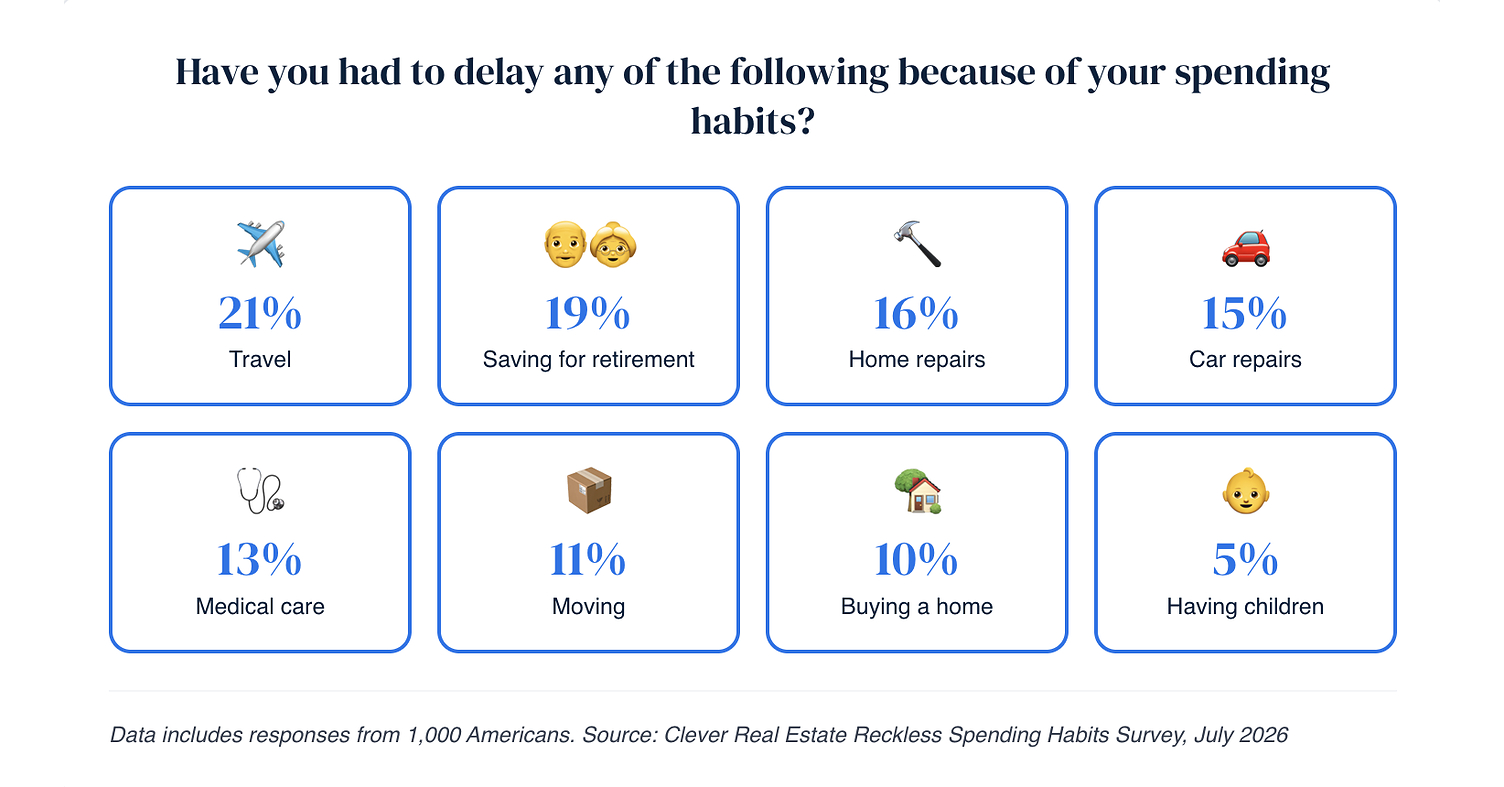
A new Clever Real Estate report finds 50% of Americans live paycheck to paycheck and 74% expect no relief over the next year, alongside widespread overspending (27% of respondents). Non-mortgage debt is common (68%), with 29% owing at least $10,000, and among overspenders the share with $10,000+ non-mortgage debt rises to 45%. The data points to persistent household financial stress and likely restrained discretionary consumption, though it is primarily survey-based rather than a direct corporate earnings/capital-markets catalyst.
Analysis
This reads less like a demand shock and more like a payment-stress indicator. Consumers can keep spending for a while by revolving balances and pushing out obligations, so the immediate equity read-through is likely muted; the first visible damage usually shows up 1-3 quarters later in charge-offs, reserve builds, and tighter underwriting. That timing matters: the market often prices the narrative before the earnings data confirms it.
The most exposed names are unsecured consumer lenders, subprime auto, and lower-income discretionary retailers; the more resilient cohort is staples and off-price where trading-down can offset volume weakness. The housing angle is subtler: fee-sensitive sellers and agents may gain some share, but overall transaction volume is capped if households feel too stretched to move, so the end markets for brokerage, title, and mortgage origination remain sluggish. For CLVR, the report is supportive of price sensitivity but negative for transaction velocity, so the net effect is small and probably not a clean standalone catalyst.
The contrarian miss is that survey distress can coexist with decent nominal retail sales if inflation and credit are doing the heavy lifting. To invalidate the bearish read, we would need stable or improving delinquency trends, no step-up in loss reserves, and labor data that keeps disposable income ahead of debt service. Without that confirmation, this is better treated as an alert for consumer-credit deterioration than a high-conviction macro short.
AllMind Terminal
AI-powered research, real-time alerts, and portfolio analytics for institutional investors.
Request TrialMarket Sentiment
Overall Sentiment
mildly negative
Sentiment Score
-0.35
Ticker Sentiment
Key Decisions for Investors
- Short SYF/COF on rallies over the next 1-3 months; thesis is delayed loss recognition and reserve pressure. Risk/reward improves if the market is still pricing a soft landing, but cover if charge-off guidance stays flat or improves.
- Pair trade: short XLY or XRT vs long XLP for a 1-3 month consumer-bifurcation trade. Best entry is on any broad market bounce; invalidate if retail sales and employment remain firm through the next print cycle.
- Buy HYG put spreads or short HYG versus LQD as a delayed credit-spread hedge over 1-3 months. This is a cleaner expression than single-name risk if consumer stress starts leaking into lower-quality issuers.
- No standalone CLVR position for now; treat this as a watch item. Reassess only if housing transaction data, mortgage applications, or seller concessions worsen enough to affect brokerage volumes.
More News
- CoreWeave credit default swaps hit distress levels as investors sour on AI debt
- Treasuries Soar as Tech Slump Threatens Growth
- What's behind the sell-off in AI neocloud stocks like CoreWeave and Nebius
- Don't See Canary in Coal Mine For AI: Khoda
- Trump administration advances plan for peptide drugs favored by RFK Jr.
- Nvidia CEO Downplays CoreWeave Concerns After Risk Gauge Soars