
WhalesBot Launches EliteMind, Bringing Physical AI Into STEM & AI Education
Source: PR Newswire
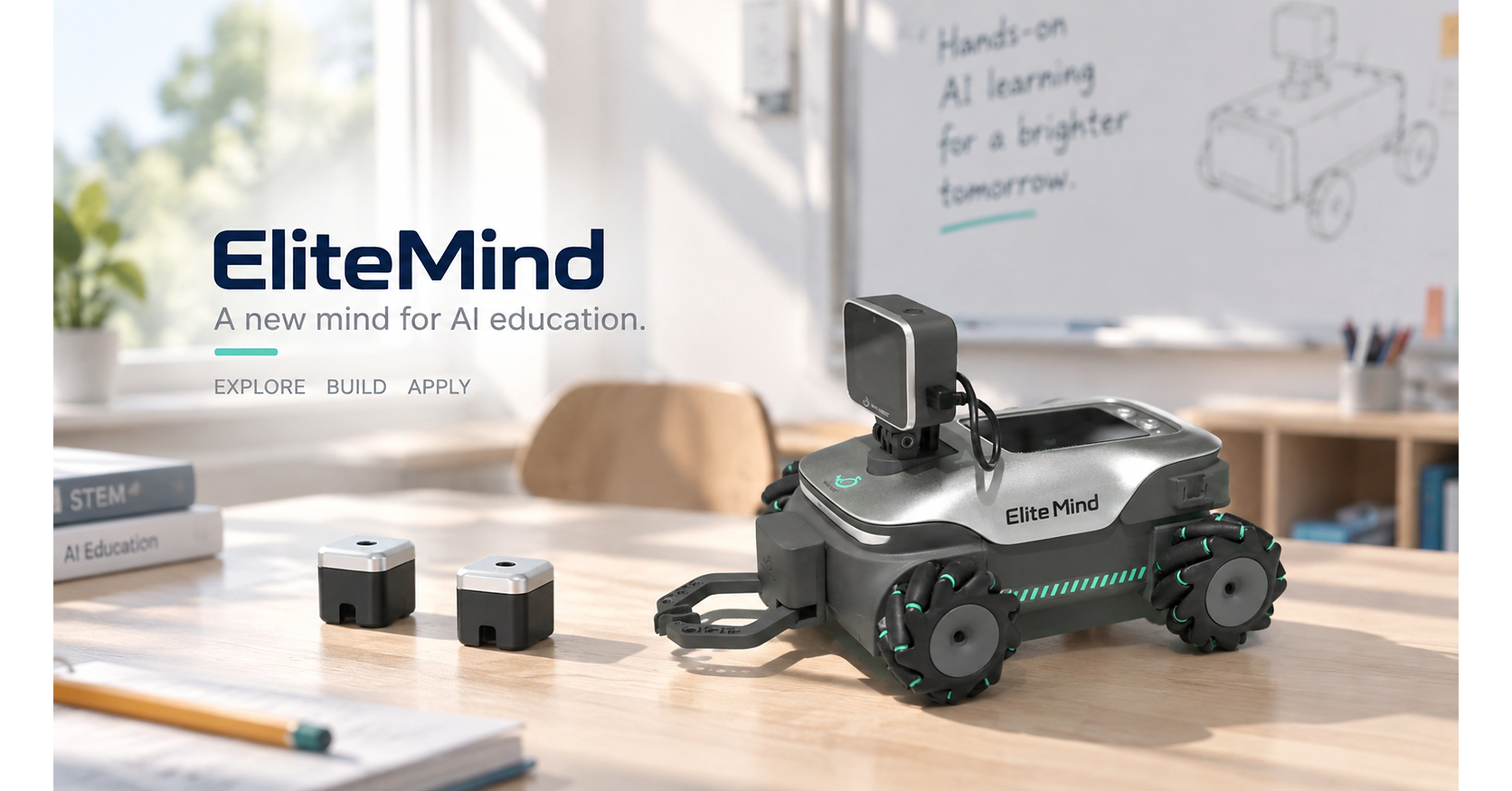
WhalesBot launched EliteMind, a modular Physical AI robot for elementary and middle school STEM education, powered by its W-Hong large language model. The product integrates voice, vision, intent recognition and physical controls, allowing students to deploy AI models from the OceanLevel learning platform into real-world robotics applications. The launch expands WhalesBot's AI education portfolio; the company says it has sold more than 1 million units across over 81 countries and regions.
Analysis
This is not directly investable absent a listed WhalesBot entity, disclosed pricing, channel sell-through, or evidence of school procurement. The relevant public-market read-through is modestly favorable for education-robotics incumbents and component suppliers only if physical-AI kits become a funded curriculum category rather than a discretionary after-school purchase. Near term, the launch is primarily a marketing signal; hardware-led education products typically face lumpy institutional budgets, long adoption cycles, and elevated support/content costs that can dilute gross margin versus software-only learning platforms.
The more consequential competitive dynamic is a shift from coding kits toward integrated hardware, curriculum, model-training tools, and teacher workflow. This raises switching costs for installed-base vendors such as LEGO (private), VEX Robotics (private), and Makeblock (private), but it also increases exposure to low-cost Chinese hardware competition for listed education suppliers including BYJU'S-linked peers are not practical proxies. Public beneficiaries are more likely indirect: NVIDIA (NVDA), Qualcomm (QCOM), and Ambarella (AMBA) if edge inference is genuinely deployed at scale, though education-unit volumes are immaterial to their financials.
Contrarian view: “physical AI” may be a branding layer over conventional vision/voice-enabled educational robotics, rather than evidence of differentiated proprietary model capability. A local or cloud LLM can improve engagement, but schools will prioritize reliability, child-safety controls, privacy compliance, teacher preparation, and total cost of ownership. The thesis is falsified positively by independently disclosed district contracts, recurring platform attach rates, and measurable renewal data; it is falsified negatively by reliance on competition sponsorships, promotional shipment figures, or weak international certification/privacy disclosures over the next 6-12 months.
For the broader AI complex, this reinforces a long-duration demand narrative for edge compute and embodied-AI tooling but does not alter 2026-27 earnings estimates for large semiconductor names. The nearer second-order risk is regulatory: stricter rules around minors’ data, cloud inference, and AI-generated content could force costly localization and moderation, advantaging vendors with enterprise-grade compliance over low-cost kit providers.
AllMind Terminal
AI-powered research, real-time alerts, and portfolio analytics for institutional investors.
Request TrialMarket Sentiment
Overall Sentiment
moderately positive
Sentiment Score
0.45
Key Decisions for Investors
- No standalone trade on the launch: maintain as a watch item until pricing, annual unit targets, gross-margin profile, and independently verifiable school/district contracts are disclosed.
- Do not add NVDA, QCOM, or AMBA on this news; education robotics is financially immaterial. Reassess only if multiple major curriculum vendors report edge-AI hardware orders or education-channel demand as a quantified revenue driver over the next 2-4 quarters.
- Monitor listed China education/edtech proxies and global hardware-learning suppliers for procurement commentary in the next 6-12 months; a broad shift toward physical-AI curricula could favor vendors with recurring software attach, while pure hardware sellers face margin and inventory risk.
- Set an alert for material child-data/privacy regulation in China, the EU, or U.S. school districts. Such rules would be a negative catalyst for low-cost connected robotics vendors and could create a relative-quality premium for established compliance-oriented education platforms.
More News
- Trump Versus Xi: How Their High-Stakes Summits Compare
- Trump, Xi Address AI, Taiwan During State Visit
- SEBI Allows Portfolio Managers to Invest Overseas, Short Equity Options
- China's Xi urges U.S. to cooperate on AI
- Oracle Japan shares surge 7% after record fiscal first quarter, bucking selloff of U.S. parent
- Surging Treasury yields are posing a brand new problem for Kevin Warsh and the Fed