
Chevron Is Pouring Billions Into Venezuela. Here's the 1 Number Investors Should Watch.
Source: fool.com
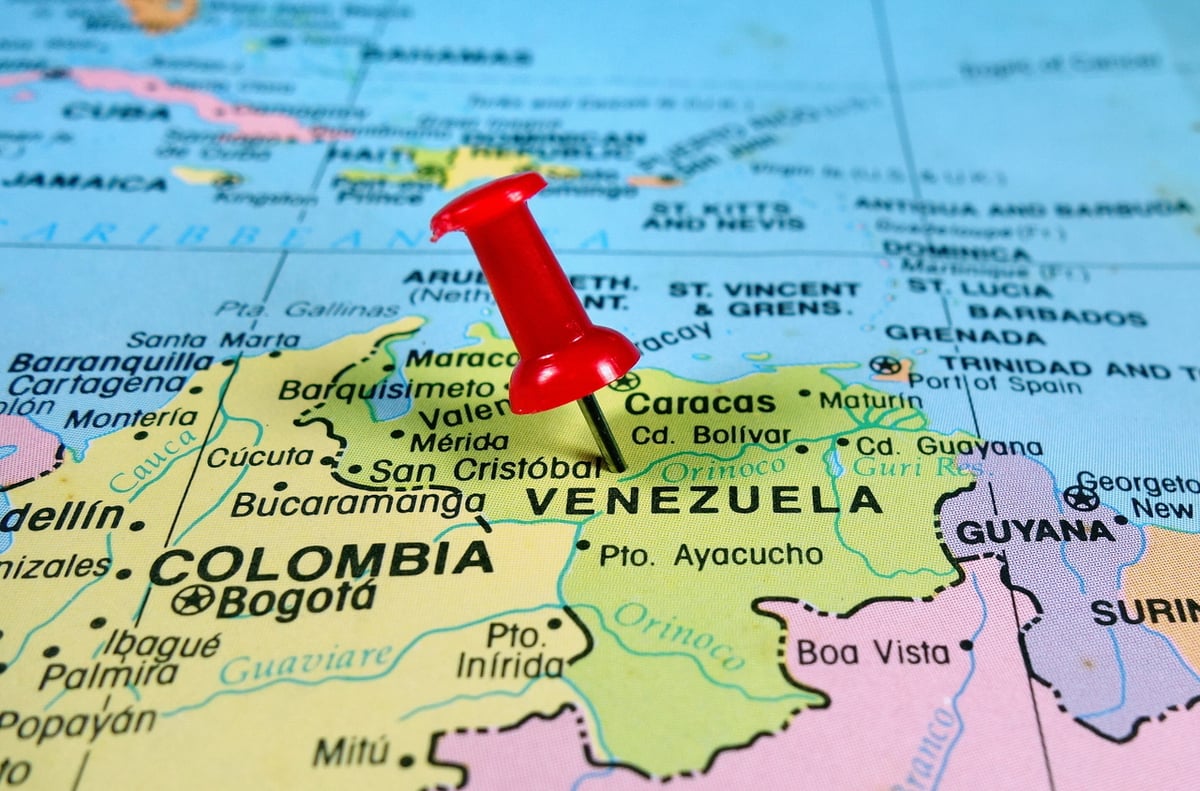
Chevron plans to invest more than $7 billion in Venezuela over five years and is targeting production of 600,000 barrels per day, up from about 280,000 barrels per day in Q2 2026. The roughly 320,000-barrel-per-day increase could represent about $8.2 billion in annual gross sales at an illustrative $70 per barrel, before costs, government payments, and Chevron’s joint-venture ownership share; the company expects production costs below $20 per barrel. Political and regulatory risks and damaged infrastructure could hinder growth, and Venezuela would add roughly 8% to Chevron’s current global production of more than 4 million barrels of oil equivalent per day before accounting for partial ownership.
Analysis
The key underwriting gap is the bridge from gross JV barrels to Chevron’s net, exportable cash flow. The headline sales arithmetic is not an earnings estimate: ownership, fiscal take, crude discounts, rehabilitation capex, and the ability to lift and sell barrels under prevailing legal terms determine the value. Treat the production target as a contingent option, not base-case volume, until those terms and quarterly output are independently visible.
Near term, the announcement may support sentiment but is unlikely to change consolidated earnings expectations materially without a net-volume and capital-spending schedule. Over 1–3 months, watch for verifiable license/contract terms, export arrangements, and sustained production gains—not acreage or investment pledges alone. Over 6–18 months, successful growth could add low-cost supply, but also pressure heavy-crude differentials and compete with other heavy grades, including Canadian barrels; complex refiners could benefit if access and logistics permit. A reversal in political terms, sanctions policy, infrastructure reliability, or oil prices would impair the economics. The contrarian point: investors may overvalue the low stated production-cost figure while underweighting above-ground costs and the time needed to restore infrastructure. Conversely, if net entitlements and exportability are better than assumed, Chevron’s established operating position could make the upside less speculative than a greenfield project.
AllMind Terminal
AI-powered research, real-time alerts, and portfolio analytics for institutional investors.
Request TrialMarket Sentiment
Overall Sentiment
mildly positive
Sentiment Score
0.30
Ticker Sentiment
Key Decisions for Investors
- Do not chase CVX solely on the target. Consider adding only after filings or operating updates clarify Chevron’s net share, realized pricing, capex burden, and export permissions.
- Set an alert for quarterly Venezuelan production and liftings, plus changes to JV fiscal terms and sanctions authorizations. Falsify the execution thesis if output stalls, required investment rises without corresponding net barrels, or export access is curtailed.
- For a relative-value expression, consider a modest long-CVX/short-crude-futures position only if the goal is to isolate company-specific execution from oil-price beta; size conservatively because CVX’s broader portfolio leaves meaningful residual commodity exposure.
- Track heavy-crude differentials and Canadian producer pricing as second-order signals: a sustained increase in Venezuelan exports could pressure competing heavy grades, while refiners may gain from improved feedstock availability if logistics and legal access are confirmed.
More News
- Jio’s Record $3.2 Billion IPO Puts India’s Market Muscle to the Test
- Australian data center operator NextDC's shares plunge 40% after it slashes earnings forecast
- Elon Musk says Tesla and SpaceX are weighing a $3.5 trillion merger—without him in the room
- Neoclouds Lose Silver Lining as Elice, CoreWeave Dive: Evening Briefing Americas
- Anthropic May Spend $750 Billion on Computing Costs, WSJ Reports
- This Janus Henderson fund manager owns CoreWeave debt — here's why he's sticking with it
From AllMind Research
- Anthropic IPO Preview: Valuation, Timing, and What to Watch
- Shein After the IPO: Venue, Valuation, and What Must Be Proved
- What AI Research Tools Should a Small Hedge Fund Buy First?
- How to Evaluate Consensus Estimates Platforms With AI
- Weekly Update: Adding Live MBO Level 3 Data - Liquidity Heatmap, OFI Charts, and More