
Alaska and Hawaiian Airlines Raise the Bar for Premium Travel
Source: zacks.com
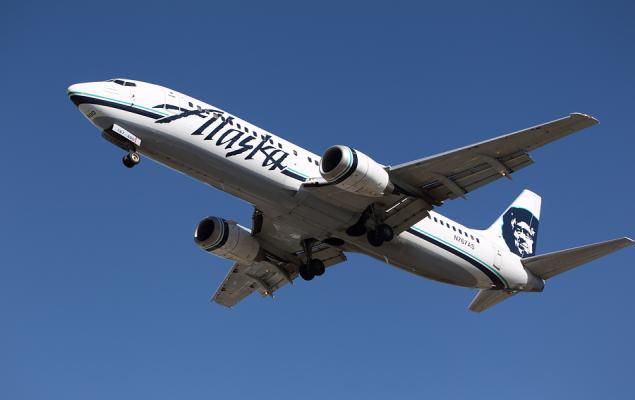
Alaska Air Group is expanding its premium travel strategy through Alaska Airlines' Aurora Suites and Hawaiian Airlines' Leihoku Suites, adding lie-flat business-class products, upgraded A330 interiors and dedicated airport services. The company also plans Premium Reserve for 2028, offering 38-inch seat pitch and enhanced amenities, alongside new lounges of nearly 41,000 square feet in Seattle and about 13,000 square feet in Honolulu. The investments aim to differentiate Alaska and Hawaiian in premium travel while retaining distinct brand identities; ALK shares have risen 8.6% over the past six months versus 7.5% for the airline industry.
Analysis
This is strategically constructive for ALK but not yet an earnings catalyst: the aircraft, cabin, and lounge program likely raises near-term capex, training, and retrofit costs well before premium-cabin revenue is measurable. The key underwriting variable is whether Alaska can lift unit revenue on long-haul and transcontinental routes without diluting seat density enough to offset it; premium products are margin accretive only at sustained load factors and a durable fare premium. Investors should treat management’s branding claims as unverified until route-level premium yields and ancillary revenue appear in guidance.
The more important competitive effect is at Seattle and Hawaii gateways. ALK can defend high-value corporate and affluent leisure traffic against Delta (DAL), United (UAL), and American (AAL), while Hawaiian’s differentiated product may improve direct-booking mix and reduce dependence on price-sensitive distribution channels. Conversely, capacity reductions from fewer economy seats could create modest fare support for competitors on constrained routes, particularly if ALK cannot monetize the upgraded product quickly.
Near term, this announcement is unlikely to change consensus EPS and should not justify a standalone rerating. Over 6-18 months, the actionable catalyst is evidence that the combined network is generating a revenue premium: premium-cabin load factor, corporate contract wins, loyalty engagement, and consolidated RASM ex-fuel. A recession or normalization in premium leisure demand would leave ALK with elevated fixed costs and lower-density configurations, creating operating leverage in the wrong direction.
AllMind Terminal
AI-powered research, real-time alerts, and portfolio analytics for institutional investors.
Request TrialMarket Sentiment
Overall Sentiment
mildly positive
Sentiment Score
0.38
Ticker Sentiment
Key Decisions for Investors
- No event-driven trade on the announcement alone; maintain ALK as a watch item until the next two earnings calls provide quantified capex, seat-density, and premium-RASM targets.
- Initiate a 6-12 month tactical long ALK only if management guides consolidated RASM ex-fuel above the US network-carrier peer group while holding non-fuel CASM ex below guidance; target 15-20% upside from multiple expansion, with a 8-10% stop on a guidance cut or premium-demand weakness.
- For a cleaner competitive expression, consider long ALK / short UAL in equal dollar risk only after ALK demonstrates Seattle or Hawaii corporate-share gains; the thesis fails if UAL matches pricing and premium capacity or ALK’s unit-cost guidance rises materially.
- Monitor Boeing (BA) 737-10 certification and delivery timing. Any further delay pushes revenue realization out while preserving retrofit, planning, and fleet-complexity costs; a confirmed delivery slip is a reason to avoid or reduce ALK exposure.
More News
- Stock Market News for Sep 30, 2026
- In photos: China's Xi hardens Taiwan warning as country celebrates week-long National Day holiday
- Tencent leases 100,000 chips from Oracle for $7 bln- FT
- RAM supply set to worsen, says Micron, as CEO celebrates ‘much higher’ prices
- Why is Nidec stock plunging today?
- Why is Kioxia stock rallying today?