
U.S. economy is gathering steam. This is the chief reason why.
Source: MarketWatch
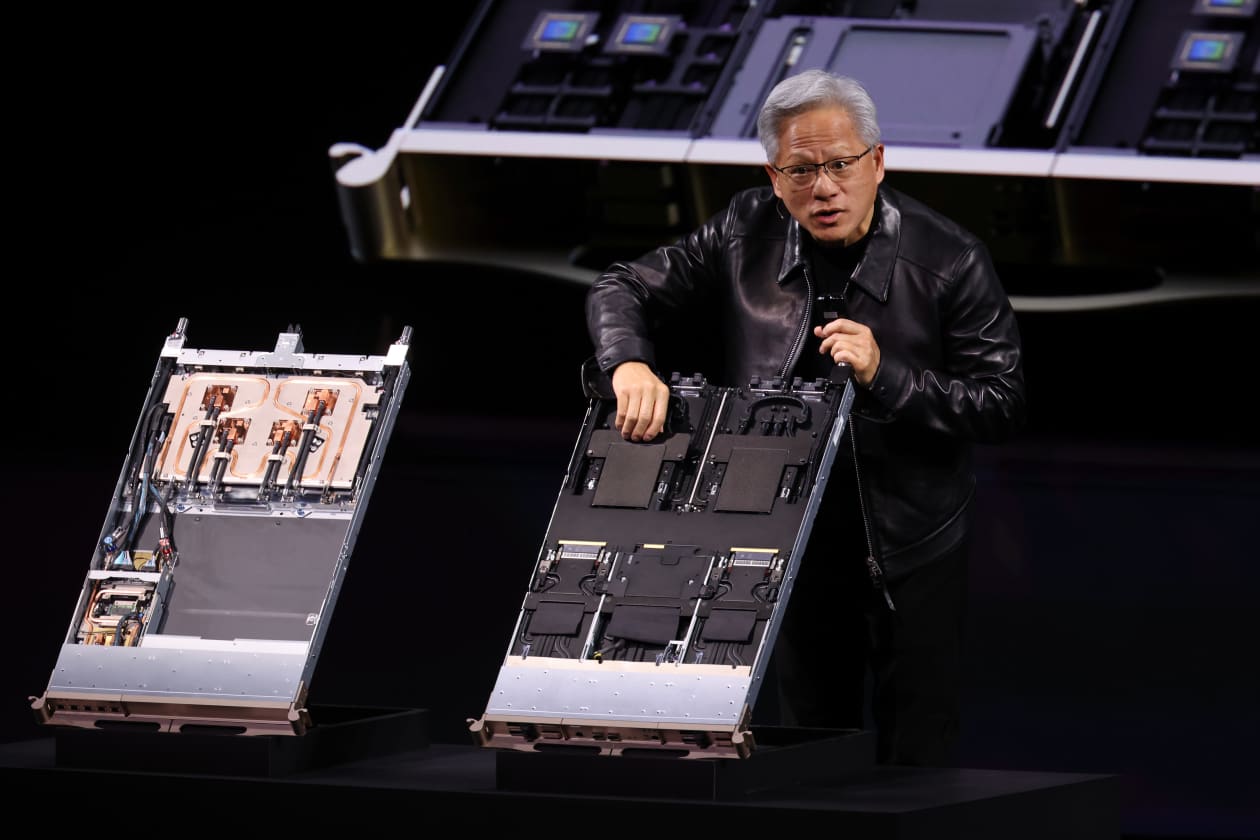
AI-related investment is cited as a key driver of a strengthening U.S. economy, with Anthropic and Meta aiming to raise up to $200 billion to expand their AI capabilities. The spending builds on hundreds of billions of dollars already invested by U.S. companies and is driving purchases of chips, computers, electrical equipment, turbines and data-center construction materials.
Analysis
The investable implication is not simply “AI spending lifts growth”: it is a concentrated capex cycle whose beneficiaries depend on where bottlenecks and pricing power sit. Incremental demand can support electrical equipment, grid upgrades, data-center construction and materials, but constrained power availability, permitting and delivery lead times may shift spending toward infrastructure while limiting near-term compute deployment. Some spending also leaks into imports, so the domestic multiplier may be smaller than headline capex suggests.
For META, the macro tailwind is secondary to the return on its own AI investment. Higher industry spend can validate demand, but it also raises the bar for monetization and risks depreciation and infrastructure costs outrunning incremental revenue. Anthropic’s prospective fundraising is not evidence of public-equity earnings or a direct META catalyst.
Near term, the narrative may support cyclicals and AI-linked infrastructure. Over 1–3 months, watch durable-goods and equipment orders, utility interconnection constraints, and META’s commentary on capex versus monetization. Over 6–18 months, the key risk is that capacity arrives before profitable workloads; a reversal in hyperscaler spending would hit suppliers and industrial sentiment disproportionately. The contrarian point: a strong investment pulse can coexist with weak productivity returns and may be less durable if financing costs or power constraints bite. No broad macro long is warranted without evidence that orders are translating into realized revenue and returns.
AllMind Terminal
AI-powered research, real-time alerts, and portfolio analytics for institutional investors.
Request TrialMarket Sentiment
Overall Sentiment
moderately positive
Sentiment Score
0.35
Ticker Sentiment
Key Decisions for Investors
- Treat META as a company-specific AI return-on-investment exposure, not a clean proxy for U.S. capex-led growth. Avoid adding solely on the macro narrative; reassess after disclosures on capex, infrastructure costs, and monetization. Falsifier: sustained evidence that incremental AI revenue is not keeping pace with investment or a material pullback in spending plans.
- Prefer a watchlist or measured exposure to electrical-equipment and grid-infrastructure suppliers over a broad “AI materials” basket: power delivery and interconnection may be tighter constraints than raw construction inputs. Verify order backlogs, cancellations, and pricing before entry; reduce exposure if lead times and orders roll over.
- Use 1–3 months of incoming orders and capital-spending guidance as the catalyst test. If equipment orders weaken while planned AI investment remains elevated, that divergence would challenge the growth-multiplier thesis and favor reducing cyclical exposure.
- Do not treat Anthropic’s fundraising or IPO preparation as a publicly tradable catalyst: it has no supplied ticker mapping. Revisit the sector view only when financing terms, spending commitments, and evidence of customer monetization are independently verifiable.
More News
- Anthropic's IPO could be 'speculative fiction' or a 'generational moment' — investors are split
- PayPal earnings analysis: questions answered and next catalysts
- AMD stock rallies on expanded Meta AI infrastructure deal and broader chip rally
- Santoli: We are nearing a now-or-never moment for the AI trade to rebound
- Nvidia to invest $3 billion in Meta as tech giants deepen AI partnership
- Anthropic's IPO is risky business