
Buffett Son Takes Chair as Berkshire Transition Ends
Source: youtube.com
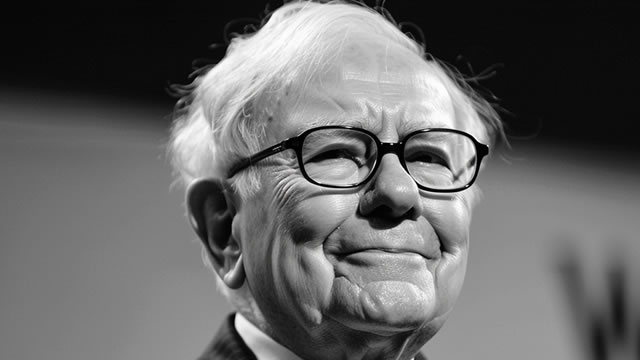
Warren Buffett stepped down as Berkshire Hathaway chairman after more than six decades, becoming chairman emeritus in a long-planned succession. Greg Abel remains CEO, while Howard Buffett, a Berkshire director since 1993, assumes the board chairmanship with responsibility for preserving the conglomerate's culture and values. The transition is material for Berkshire governance but reflects an established succession plan rather than an operational disruption.
Analysis
The investable question is not board continuity but whether Greg Abel can sustain Berkshire’s unusually patient capital-allocation edge as cash deployment opportunities emerge. Howard Buffett’s role should limit governance-discount risk, but it does not validate underwriting discipline, acquisition pricing, or the willingness to repurchase shares aggressively when the stock trades below conservative intrinsic value. The first meaningful evidence will be quarterly operating results and capital-allocation disclosures, not succession optics.
Near term, BRK.B could face modest "key-person premium" compression despite no change in cash flows, particularly if the shares had embedded a scarcity value for Buffett’s stewardship. That is more likely to create an entry point than a fundamental break: the decentralized operating model makes 1-3 month earnings sensitivity primarily a function of insurance float returns, catastrophe losses, BNSF volumes, and the mark-to-market portfolio rather than management turnover. A sustained decline in repurchase activity while cash accumulates would be the clearest early negative signal.
The second-order beneficiary is potentially the broader acquisition market. If Berkshire becomes less willing to transact on Buffett-like unilateral judgment, private-equity sponsors and strategic buyers may face less competition for large, complex carve-outs; this marginally favors KKR, APO and BX over 6-18 months. Contrarily, consensus may overstate this effect: Abel has been central to operating-capital decisions for years, and Berkshire’s balance sheet, permanent capital and ability to close without financing conditions remain difficult advantages to replicate.
AllMind Terminal
AI-powered research, real-time alerts, and portfolio analytics for institutional investors.
Request TrialMarket Sentiment
Overall Sentiment
neutral
Sentiment Score
0.05
Ticker Sentiment
Key Decisions for Investors
- Maintain existing BRK.B exposure rather than trade the leadership headline; use any 5-8% succession-driven pullback over the next 1-3 months to add, provided repurchases remain active and insurance underwriting stays profitable. Thesis fails if management signals structurally lower buybacks alongside rising excess cash.
- Prefer BRK.B over MKL as a defensive compounder over 6-18 months if the transition produces a valuation discount: Berkshire retains materially greater liquidity and flexibility to deploy capital during market stress. Reassess if BRK.B’s premium to conservative book-value/earnings proxies expands without corresponding improvement in operating earnings.
- Set an event-driven watch item for the next two Berkshire reports: flag (1) a material deterioration in GEICO underwriting, (2) catastrophe losses that impair float economics, or (3) cash growth combined with no meaningful repurchases. Any two would justify reducing BRK.B because they would challenge the capital-allocation continuity thesis.
- For a modest second-order expression, accumulate KKR or APO on market weakness over 6-18 months rather than chase immediately; the upside requires observable acceleration in large-cap M&A or corporate carve-out activity, so absent improved deal pipelines this remains a watch-list trade, not a direct successor hedge.
More News
- Buffett Son Takes Chair as Berkshire Transition Ends
- Buffett takes next step in plan to keep Berkshire from straying
- Berkshire's Energy Holdings Are Worth More Than Most Stand-Alone Utilities. Here's the Math.
- Warren Buffett Is No Longer Berkshire's Chairman. Here’s Why I'm Buying the Stock Anyway.
- A professor who teaches a course on Warren Buffett sees him more as a ‘guide toward how to live a successful life’ than how to invest
- Warren Buffett Watched Alphabet's Stock Price Climb 9,000% Before He Decided to Invest. Here's Why He and Greg Abel Are Making It One of Berkshire Hathaway's Biggest Investments Now.