
New Research Finds Restaurant Employees See Strong Career Opportunity, Satisfaction, and Lasting Value in Their Work
Source: PR Newswire
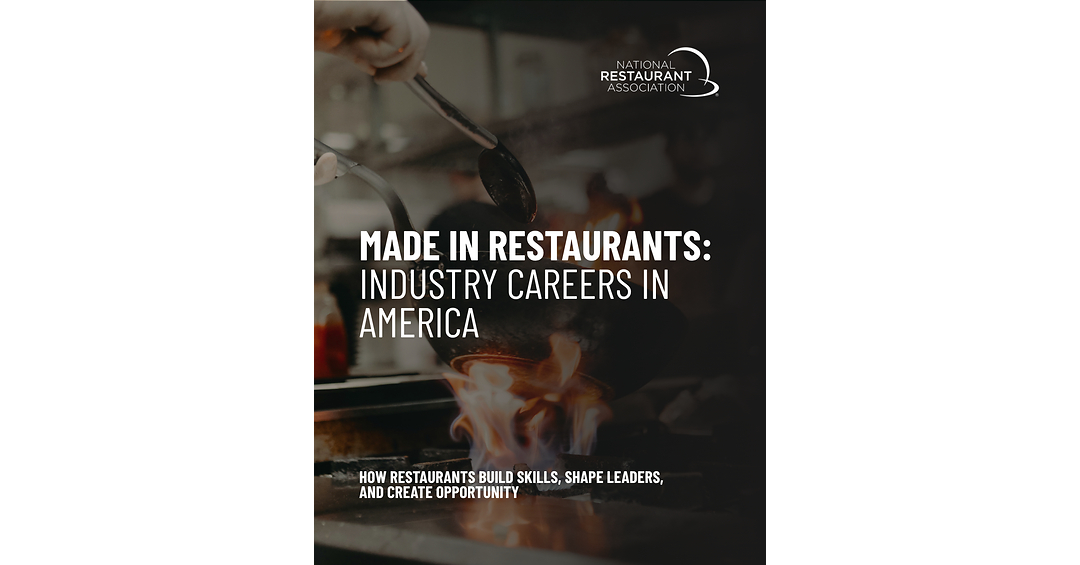
A National Restaurant Association survey found 86% of primary-job restaurant employees expect to remain in the industry until retirement, 91% would recommend restaurant work, and 89% see career-advancement opportunities. The industry employs 15.7 million people, but recruitment may be constrained by a perception gap: only 54% of adults without restaurant experience view the sector as offering good long-term careers, versus 86% of current employees. The report is supportive of the industry's workforce-development narrative but is unlikely to have material near-term market impact.
Analysis
This is a trade-labor narrative rather than an independently verified change in retention, wage costs, or unit economics. The survey's strongest potential market implication is that large, scaled operators with formal training, internal promotion, and predictable scheduling may gain a recruiting-cost advantage if they can convert employee advocacy into applicant flow; YUM, MCD, CMG, TXRH and DRI are the most plausible beneficiaries. That advantage matters only if it appears in lower turnover, reduced overtime/temporary labor, or restaurant-level margin resilience—none of which is established by the release.
Near term, the news is unlikely to alter estimates or valuation. Over the next 1-3 months, monitor company commentary on staffing fill rates, turnover and wage inflation, particularly ahead of holiday hiring; a widening labor-cost gap between franchised scale systems and independent operators would modestly reinforce share-gain expectations for national chains. The second-order loser is the independent restaurant cohort, which has less capacity to fund training, benefits and management pipelines, potentially accelerating closures or acquisition opportunities if labor availability tightens.
Contrarian view: favorable responses from current employees are vulnerable to selection bias, while the more investable signal may be the external perception gap that constrains the incremental labor pool. If recruiting remains difficult, operators will compete through pay and scheduling flexibility, limiting the expected margin benefit. The thesis is falsified by sequential deterioration in labor as a percent of sales, rising manager turnover, or renewed wage-pressure guidance despite stable same-store sales.
AllMind Terminal
AI-powered research, real-time alerts, and portfolio analytics for institutional investors.
Request TrialMarket Sentiment
Overall Sentiment
mildly positive
Sentiment Score
0.18
Key Decisions for Investors
- No standalone trade on this release; treat it as a watch item until Q3/Q4 calls provide comparable turnover, staffing and labor-cost disclosures.
- Maintain a 6-12 month quality bias toward TXRH and DRI versus smaller-cap restaurant exposure: their operating systems and managerial pipelines should be better positioned to monetize labor stability, but only add on evidence of labor-margin outperformance versus peers.
- Monitor a relative-value long MCD or YUM / short RRGB or DIN basket if wage inflation reaccelerates: asset-light franchise models have lower direct labor exposure, while underperforming full-service operators face greater deleveraging risk. Exit if franchisee wage commentary worsens or full-service traffic materially reaccelerates.
- Set an alert for restaurant labor expense as a percentage of sales rising more than 100 bps year-over-year at CMG, DRI or TXRH; that would indicate recruitment perception is translating into cost competition rather than retention-led margin leverage.
More News
- Facebook found liable as TikTok settles for $100m over user safety
- Bond market alarms are ringing on Wall Street. Here's what's ahead
- What would a US diesel export ban mean for global fuel prices?
- Shares of Akamai surge after deal with Anthropic. What Wall Street is saying
- The Tiny Magnet Maker That Attracted $1.6 Billion From Lutnick
- ‘U.S. trade policy is damaging the U.S. auto industry’: Canada’s purchase of American cars hits new low as Trump’s tariffs backfire on U.S. automakers
From AllMind Research
- Anthropic IPO Preview: Valuation, Timing, and What to Watch
- Shein After the IPO: Venue, Valuation, and What Must Be Proved
- What AI Research Tools Should a Small Hedge Fund Buy First?
- Capital Intensity as Gravity: The AI Trade Enters Its Industrial Era (Looking at Q3 2025 Earnings in Tech)
- AI Portfolio Monitoring: Build an Alert Policy Analysts Can Audit