
India Risks Losing a Political Shock Absorber
Source: Bloomberg
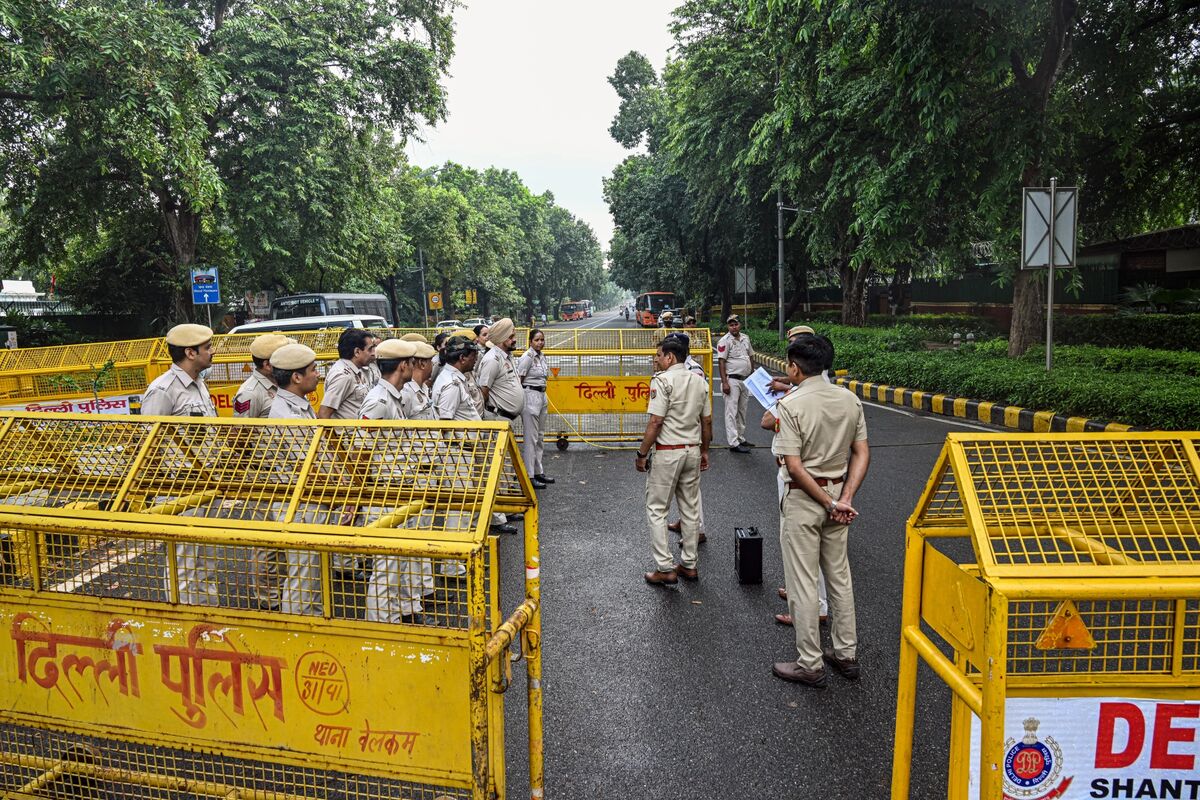
The article preview says protests in India have subsided and raises questions about how New Delhi is handling dissent, amid an apparent decline in political leaders’ tolerance for satire and ridicule. It also mentions US Secretary of State Marco Rubio’s visit to Mumbai but provides no details or market implications.
Analysis
The investable issue is whether political tolerance for criticism is weakening enough to impair India’s institutional shock absorbers—not the protest lull itself. If dissent faces narrower space, the market channel is likely a gradual governance-risk premium: foreign investors may demand more compensation for policy unpredictability, while domestic execution and regulatory credibility become harder to assess. That would matter more for long-duration India exposure and foreign flows than for near-term earnings absent evidence of policy disruption.
The signal is weak and underspecified. The article provides no detail on enforcement, legislation, protest triggers, or policy changes, and the diplomatic visit mentioned is not tied to a concrete commercial outcome. Do not infer a change in investment conditions from this alone. Over 1–3 months, watch for specific restrictions on media or civil society, changes in protest rules, court responses, and any resulting foreign-investor commentary. Over 6–18 months, sustained institutional deterioration could pressure the rupee and valuation multiples even if headline growth remains resilient. A return to predictable legal process and continued orderly policy execution would falsify that risk-premium thesis.
AllMind Terminal
AI-powered research, real-time alerts, and portfolio analytics for institutional investors.
Request TrialMarket Sentiment
Overall Sentiment
neutral
Sentiment Score
0.00
Key Decisions for Investors
- No directional India equity or FX trade on this item alone; the information is too limited to establish a change in policy or capital-flow fundamentals.
- Add a governance-risk watch: track concrete legal or regulatory actions affecting criticism and assembly, court challenges, and foreign-investor flow data over the next 1–3 months.
- If restrictions broaden and coincide with weaker foreign flows or rupee underperformance, consider reducing unhedged India exposure or using a limited INR hedge; treat this as a conditional risk control, not a current signal.
- Do not trade the US-India relationship off the visit reference without verifiable outcomes such as agreements, policy commitments, or changes to market access.
More News
- Meta ordered to pay $25 billion in case related to Cambridge Analytica scandal
- Meta ordered to pay $25 billion penalty over the Cambridge Analytica case
- Meta Boosts Bet on AI With Spending Outlook
- Billionaires fleeing California could turn a $30 billion tax windfall into a $39 billion loss, Stanford economists warn
- Putin agrees ‘in principle’ to resume talks with Washington and Kyiv to end war in Ukraine—but still isn’t ‘fully satisfied’ with proposals
- Witkoff heads to Russia for Putin talks as Zelenskyy insists 'nothing about Ukraine without Ukraine'
From AllMind Research
- Anthropic IPO Preview: Valuation, Timing, and What to Watch
- Shein After the IPO: Venue, Valuation, and What Must Be Proved
- What AI Research Tools Should a Small Hedge Fund Buy First?
- Reading Conviction in the Tape: What Level 3 Order Book Data Really Tells Discretionary PMs
- AI Tools for CFA Charterholders: An Evidence Standard