
What Francis Fukuyama Is Seeing at ‘The End of History’
Source: Bloomberg
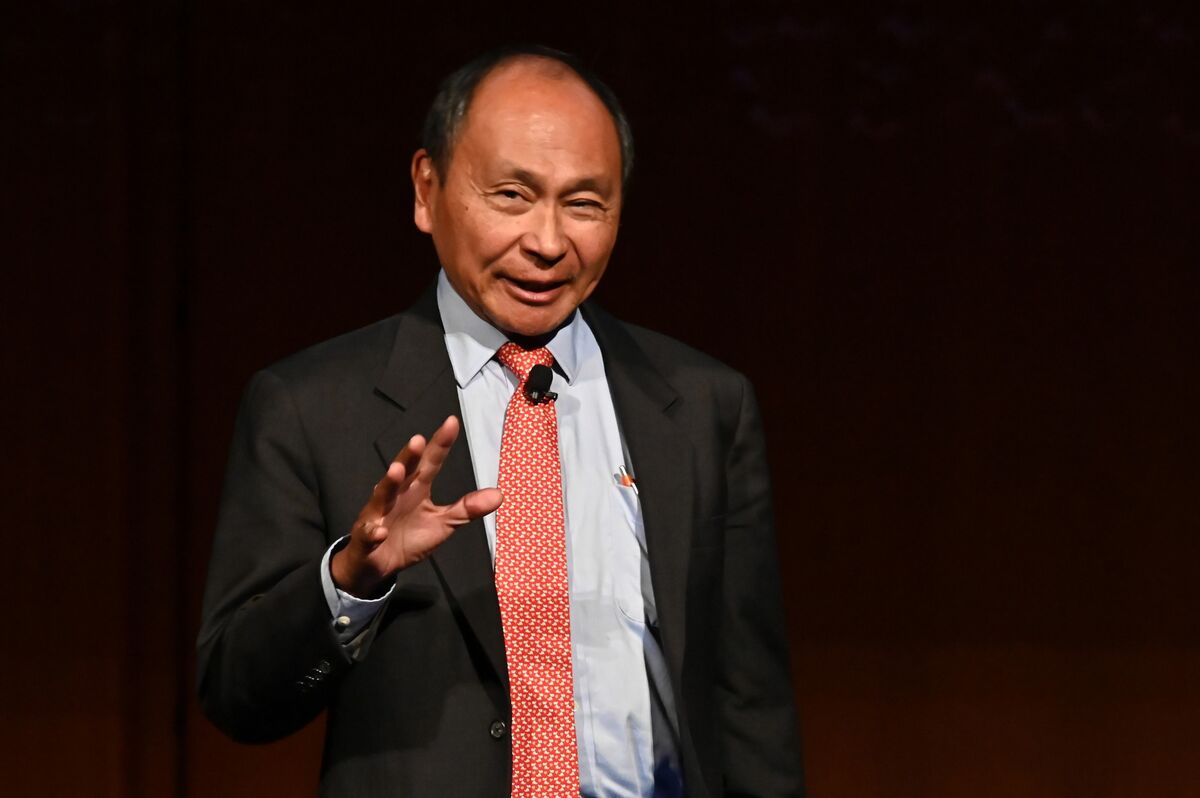
The article presents an Odd Lots discussion with political scientist Francis Fukuyama on the future of liberal democracy and what may follow his “end of history” thesis. No financial data, market-moving policy action, corporate development, or economic forecast is provided in the available news content.
Analysis
There is no identifiable earnings, regulatory, demand, or capital-allocation transmission mechanism from this item to AAPL. The neutral framing and de minimis assessed impact argue against treating it as a tradable political signal; any same-day price reaction would be noise relative to index, rates, China-demand, and AI-device-cycle variables.
The only potentially relevant second-order channel is a broad shift in investor attention toward institutional and election risk, which historically raises dispersion rather than creating a durable directional trade in mega-cap technology. AAPL would be more exposed through tariffs, app-store regulation, China policy, or consumer-confidence deterioration, but none can be inferred from the supplied information. The appropriate posture is to avoid adding political beta on this catalyst and preserve risk budget for measurable policy developments.
Over the next 1-3 months, monitor whether campaign platforms or legislative proposals begin specifying technology-related measures: China import restrictions, privacy/antitrust enforcement, or changes to corporate taxation. A material revision to those probabilities—not commentary about political systems—would justify reassessing AAPL’s multiple and supply-chain risk premium. Until then, the thesis is falsified neither by price action nor fundamentals because there is no investable thesis here.
AllMind Terminal
AI-powered research, real-time alerts, and portfolio analytics for institutional investors.
Request TrialMarket Sentiment
Overall Sentiment
neutral
Sentiment Score
0.00
Key Decisions for Investors
- No new AAPL position or options structure on this item; assessed impact is too low to overcome transaction costs and event-noise risk.
- Maintain existing AAPL exposure based on core catalysts—iPhone replacement demand, Services growth, gross-margin guidance, and China revenue—not political commentary.
- Set a policy alert for explicit US-China tariff proposals, App Store regulatory actions, or corporate-tax changes; reassess AAPL only if a proposal has a credible legislative path and implies a measurable earnings or multiple impact.
- If broad election-risk volatility rises while AAPL fundamentals remain unchanged, prefer using any implied-volatility premium for hedging existing beta rather than initiating directional political trades.
More News
- Generac Lands $2.4 Billion Generator Deal With Amazon
- PrismML hopes its tiny LLM could change how we all use AI
- Microsoft AI CEO says AI threats are real, and Anthropic is making it worse
- NASCAR CEO Steve O’Donnell talks growth opportunities, possible international expansion
- What are the biggest AI companies and how much are they worth?
- GOOGL Down 7% in the Past 3 Months: Buy, Sell or Hold the Stock?
From AllMind Research
- Anthropic IPO Preview: Valuation, Timing, and What to Watch
- Shein After the IPO: Venue, Valuation, and What Must Be Proved
- What AI Research Tools Should a Small Hedge Fund Buy First?
- 2026 Global Markets Outlook: Asset Allocation After the Great Disconnect
- Fintool Alternatives After the Microsoft Acquisition