
US Elections Offer a Midterm Referendum on Trump
Source: Bloomberg
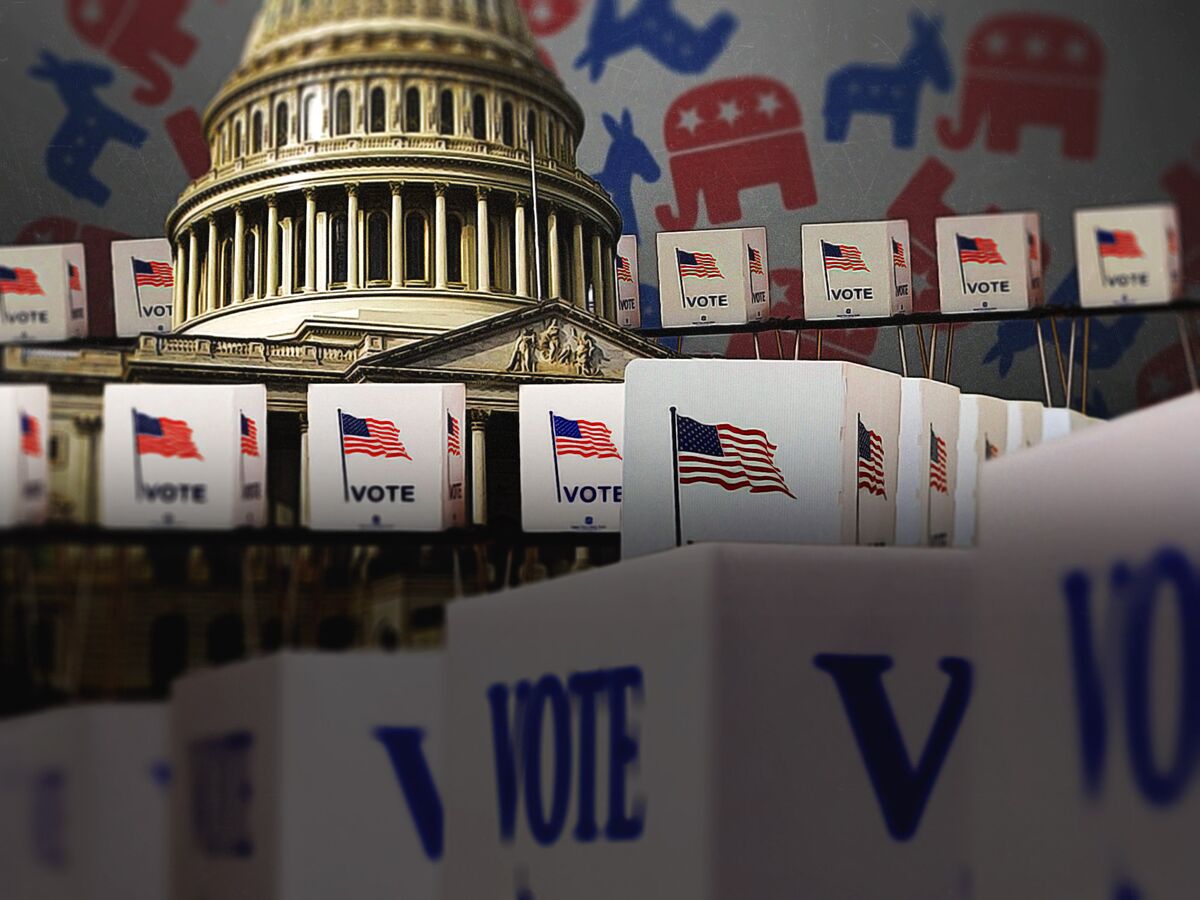
US midterm voting is underway in what the article describes as the country’s most expensive election, framed as a referendum on Donald Trump’s second term, with control of the House and Senate at stake. Affordability, AI guardrails and the war in Iran are prominent issues; stocks gained on the final day of voting, with no magnitude reported.
Analysis
The market-relevant variable is not the vote itself but whether the result changes the probability of legislation. A divided Congress would generally make major tax, spending and AI-rule changes harder; unified control raises the odds of policy shifts but not necessarily their timely passage. Treat the pre-vote equity gain as a weak signal: it may reflect positioning or relief, not durable visibility on earnings or policy.
Over days, watch rates, oil and implied volatility for the market’s actual read-through. Over 1–3 months, committee control and the ability to pass funding or other legislation matter more than campaign rhetoric. AI regulation is a longer-dated uncertainty for technology multiples; Iran-related policy can affect oil and defense sooner. These channels cut both ways: tighter AI rules could weigh on platforms and infrastructure spending, while policy clarity could lower the regulatory discount; escalation could support energy and defense but also lift inflation and pressure rate-sensitive equities. The contrarian point is that a “referendum” framing can overstate near-term policy traction when Congress is divided. No results, vote margins or market-implied probabilities are supplied, so a directional sector call is premature.
AllMind Terminal
AI-powered research, real-time alerts, and portfolio analytics for institutional investors.
Request TrialMarket Sentiment
Overall Sentiment
neutral
Sentiment Score
0.00
Key Decisions for Investors
- Do not chase the final-session equity move. After results, compare the control outcome with rates, oil and implied volatility before adding broad-market risk; the thesis is falsified if markets show little repricing and policy remains gridlocked.
- Use a defined-risk SPY put spread as a short-dated hedge only if post-result implied volatility remains reasonable relative to the portfolio’s event exposure. Avoid paying up for protection after a volatility spike; reassess once control is clear.
- Set conditional sector alerts rather than pre-positioning: sustained oil strength alongside evidence of Iran-policy escalation would support reviewing XLE exposure; a de-escalation signal and falling crude would weaken that setup. A defense-sector trade likewise requires evidence of durable spending or procurement implications, not campaign statements alone.
- Over 1–3 months, monitor legislative agenda and committee actions for concrete AI-rule proposals. Reduce or hedge exposed technology risk only if proposals advance toward enforceable restrictions; rhetoric without legislative progress is not a sufficient catalyst.
More News
- AMD stock jumps 7% on earnings as data center revenue nearly doubles
- Marvell-Lumentum Deal Puts Optical Networking at the Center of the AI Boom
- The Strait of Hormuz closure has cost Europe an extra $142 billion for the same energy it was already buying
- Marvell Technology could plunge on latest multibillion-dollar acquisition
- US hits Qeshm Island, Pezeshkian signals more diplomacy: Iran war latest
- 5 things to watch on Election Day as Democrats push for control of Congress