
New NCCN Survey Highlights Persistent Cancer Medication Shortages Across United States
Source: PR Newswire
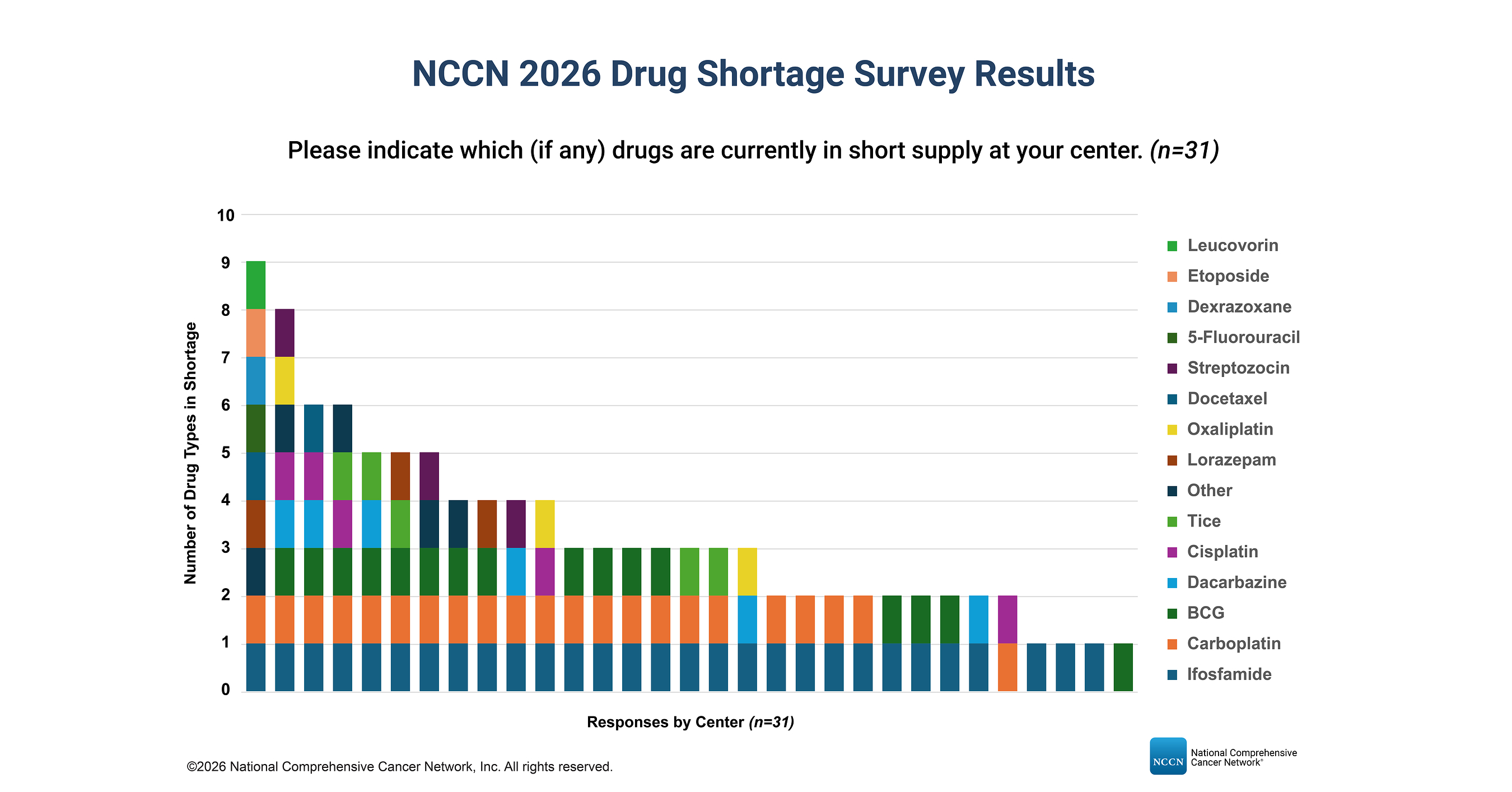
All responding NCCN cancer centers reported shortages of at least one anti-cancer drug, with 94% facing ifosfamide shortages, 71% reporting renewed carboplatin shortages, and more than 20% short of five or more medications. The shortages are forcing mitigation measures at 61% of centers and treatment-plan changes that require repeat prior authorization at 90% of affected centers, raising administrative burdens and risks of delayed care. Despite policy attention since 2023, 96% of surveyed pharmacy directors said conditions have not improved, intensifying calls for economic incentives for reliable generic-drug manufacturing and earlier supplier notifications.
Analysis
This is principally a sterile-injectables economics signal rather than a broad oncology-demand trade. The recurring pattern implies that low-margin, technically demanding SKUs remain vulnerable to single-site disruptions and constrained batch economics; any federal reimbursement uplift, quality-linked procurement program, or FDA domestic-capacity incentive would disproportionately re-rate manufacturers with verified U.S. injectable capacity, not diversified branded oncology companies. Conversely, an FDA-led import response would likely solve availability faster than it repairs industry profitability, capping the upside for incumbent generic suppliers.
Near term, the financial burden sits with providers: treatment redesign, authorization friction, and inventory management increase unreimbursed pharmacy labor while delaying regimen starts and clinical-trial throughput. HCA, THC, UHS, and oncology-heavy physician practices have only modest consolidated earnings exposure, so this is not independently a hospital short; the more relevant 1-3 month catalyst is whether payers recognize shortage-related substitutions without retrospective denials. Over 6-18 months, persistent scarcity can shift institutional purchasing from lowest-cost sourcing toward dual-source and domestic-quality contracts, creating durable share gains for reliable suppliers but also higher working-capital needs and less price transparency.
The consensus risk is overstating the benefit to oncology innovators. Platinum and alkylating-agent shortages do not mechanically redirect patients into high-priced novel therapies because clinical guidelines, reimbursement rules, and patient acuity constrain substitution; in some settings, care is delayed rather than upgraded. The actionable informational edge is manufacturer-level: confirmation of approved capacity, FDA inspection status, allocation practices, and contract exposure is required before assigning a revenue benefit to Hikma (HKMPY), Teva (TEVA), Pfizer (PFE), or Sandoz (SDZNY).
AllMind Terminal
AI-powered research, real-time alerts, and portfolio analytics for institutional investors.
Request TrialMarket Sentiment
Overall Sentiment
strongly negative
Sentiment Score
-0.58
Key Decisions for Investors
- No directional position solely on this survey. Create a 30-60 day alert on FDA shortage-database updates, import-enforcement discretion, and CMS or congressional procurement/reimbursement proposals; these are the events capable of converting an operational issue into an earnings catalyst.
- Put Hikma (HKMPY) on a long watchlist versus Teva (TEVA), conditional on evidence that Hikma has available U.S. sterile-oncology capacity or incremental supply contracts. A confirmed capacity win could support relative multiple expansion over 6-12 months; falsify if FDA listings show broad industry supply normalization or if incremental supply is import-based rather than Hikma-produced.
- Avoid treating Merck (MRK) as a clean shortage beneficiary. BCG availability may tighten bladder-cancer care, but the franchise is immaterial to consolidated earnings and rapid volume expansion requires manufacturing validation; only revisit after disclosed capacity additions or materially improved segment-level sales commentary.
- Monitor HCA, THC, UHS, and IQV for earnings-call evidence of elevated oncology-treatment deferrals, denials, or trial-enrollment disruption. A move from pharmacy inconvenience to disclosed revenue leakage would support a tactical underweight in oncology-exposed providers/CROs, but current evidence is insufficient for a short.
More News
- Here’s the ‘core economic flaw’ in the AI bull case as stock and bond trades unravel, according to a top economist
- Biotech stocks are surging. How investors can play the new drug innovation boom
- Braskem creditors, shareholders near deal on $11bn debt restructuring
- Instacart reportedly discussed selling itself with DoorDash and Uber
- Nvidia's role as AI financier faces first big test as neoclouds take market hit
- Trump set to announce plan by Audi to build a U.S. factory in Georgia, source says
From AllMind Research
- Anthropic IPO Preview: Valuation, Timing, and What to Watch
- Shein After the IPO: Venue, Valuation, and What Must Be Proved
- What AI Research Tools Should a Small Hedge Fund Buy First?
- Weekly Update: In-App Tutorials, Futures Data, and Watchlist Enhancements
- AI Tools for Independent Research Firms: A Publishing System