
Sceye поддерживает SoftBank Corp. в первой в мире демонстрации лазерной дальнометрии, отслеживая HAPS с земли
Source: PR Newswire
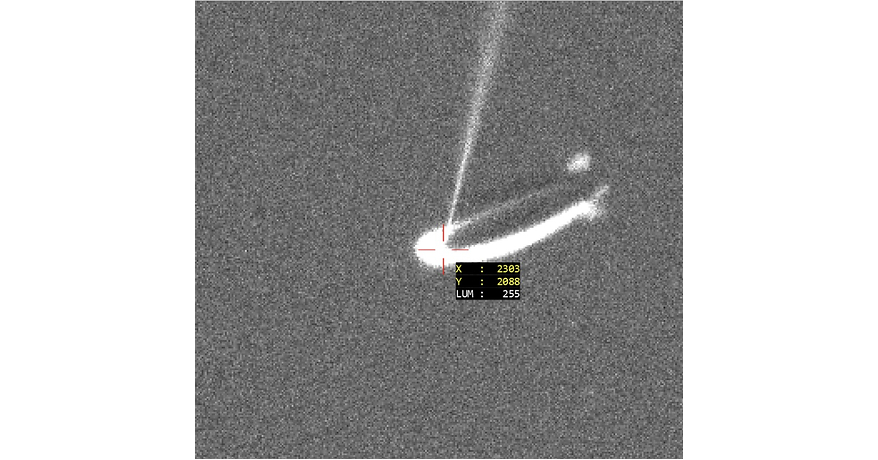
Sceye and SoftBank completed what they describe as the first real-time ground-to-stratosphere laser-ranging demonstration, continuously tracking a Sceye HAPS platform and receiving reflected laser signals. The test supports future free-space optical links connecting ground infrastructure, high-altitude platforms and satellites. Sceye's 30-day ST1 mission traveled nearly 30,000 km round-trip between New Mexico and Japan and also demonstrated direct connectivity to unmodified devices, including voice, text, internet and video services, through SoftBank's network.
Analysis
The investable read-through is limited for SoftBank Corp. (9434 JP; SFTBY): a private partner’s engineering milestone is unlikely to move telecom EBITDA or capital-allocation assumptions. The potentially differentiated implication is strategic rather than near-term financial—HAPS could reduce the cost and deployment time of rural coverage and disaster-recovery capacity versus terrestrial towers, but only if platform uptime, terminal cost, and backhaul availability prove economically superior to satellite alternatives. That is a multi-year optionality story, not a 1-3 month earnings catalyst.
The key technical distinction is that precision ranging is a prerequisite for optical links, not proof of commercially usable high-throughput data transmission. Atmospheric turbulence, cloud cover, pointing stability under payload vibration, and optical-terminal availability can sharply reduce usable-link uptime; a system can work in a demonstration window while failing carrier-grade availability requirements. The relevant next proof points are independently measured throughput, bit-error rates, availability across weather conditions, and cost per delivered GB versus LEO backhaul.
Competitive second-order effects favor satellite operators only if HAPS commercialization slips: AST SpaceMobile (ASTS), Globalstar (GSAT), Iridium (IRDM), and Viasat (VSAT) retain scarcity value in remote-connectivity use cases. Conversely, a credible HAPS network would pressure the valuation premium attached to direct-to-device and remote broadband capacity by offering lower-latency regional coverage, while creating demand for optical terminals and defense-grade pointing systems at suppliers such as L3Harris (LHX) and RTX. Consensus may over-credit the demonstration as validation of an optical network; the commercial bottleneck is economics and all-weather availability, not merely target acquisition.
Near term, treat this as a monitoring signal rather than a tradable telecom catalyst. Over 6-18 months, repeated endurance missions with carrier-grade service metrics could justify assigning optionality to 9434 and selectively reassessing satellite-connectivity multiples; a failed operational deployment, adverse aviation/regulatory treatment, or optical-link availability materially below terrestrial standards would falsify the disruption thesis.
AllMind Terminal
AI-powered research, real-time alerts, and portfolio analytics for institutional investors.
Request TrialMarket Sentiment
Overall Sentiment
moderately positive
Sentiment Score
0.62
Key Decisions for Investors
- No directional position in SoftBank Corp. (9434 JP / SFTBY) on this announcement; require disclosed commercial deployment terms, expected capex, and measurable service availability before underwriting earnings impact.
- Create a 6-12 month watchlist pair: long 9434 JP versus short a basket of remote-connectivity exposure (ASTS, GSAT, VSAT) only after a paid HAPS service contract and independently reported throughput/availability data. The thesis requires HAPS economics to undercut satellite capacity; absent those data, the pair is premature.
- Maintain existing ASTS/GSAT positions without changing sizing: the immediate technology risk is low because no capacity, subscriber, or revenue displacement has been demonstrated. Reassess if SoftBank commits material network capex or publishes all-weather optical-link uptime approaching carrier-grade levels.
- Monitor LHX and RTX for optical-terminal, precision-tracking, and resilient-communications contract announcements over the next 12-18 months; these suppliers offer a more diversified way to express HAPS adoption than the private-platform developer.
More News
- Saudi, Turkish, Pakistani chiefs plan urgent talks amid Yemen fighting
- Oil falls amid optimism over potential diplomatic solution to the Iran conflict
- Trump Versus Xi: How Their High-Stakes Summits Compare
- Trump, Xi Address AI, Taiwan During State Visit
- Oracle Japan shares surge 7% after record fiscal first quarter, bucking selloff of U.S. parent
- China's Xi urges U.S. to cooperate on AI
From AllMind Research
- Anthropic IPO Preview: Valuation, Timing, and What to Watch
- Shein After the IPO: Venue, Valuation, and What Must Be Proved
- What AI Research Tools Should a Small Hedge Fund Buy First?
- The Great Divergence: North American Banking at the Crossroads of Monetary Policy and Agentic AI (Q4 2025 Bank Earnings)
- AI for M&A Target Screening: From Universe to Deal File