
Rural America's Entrepreneurial Edge May Be Hiding in Plain Sight
Source: PR Newswire
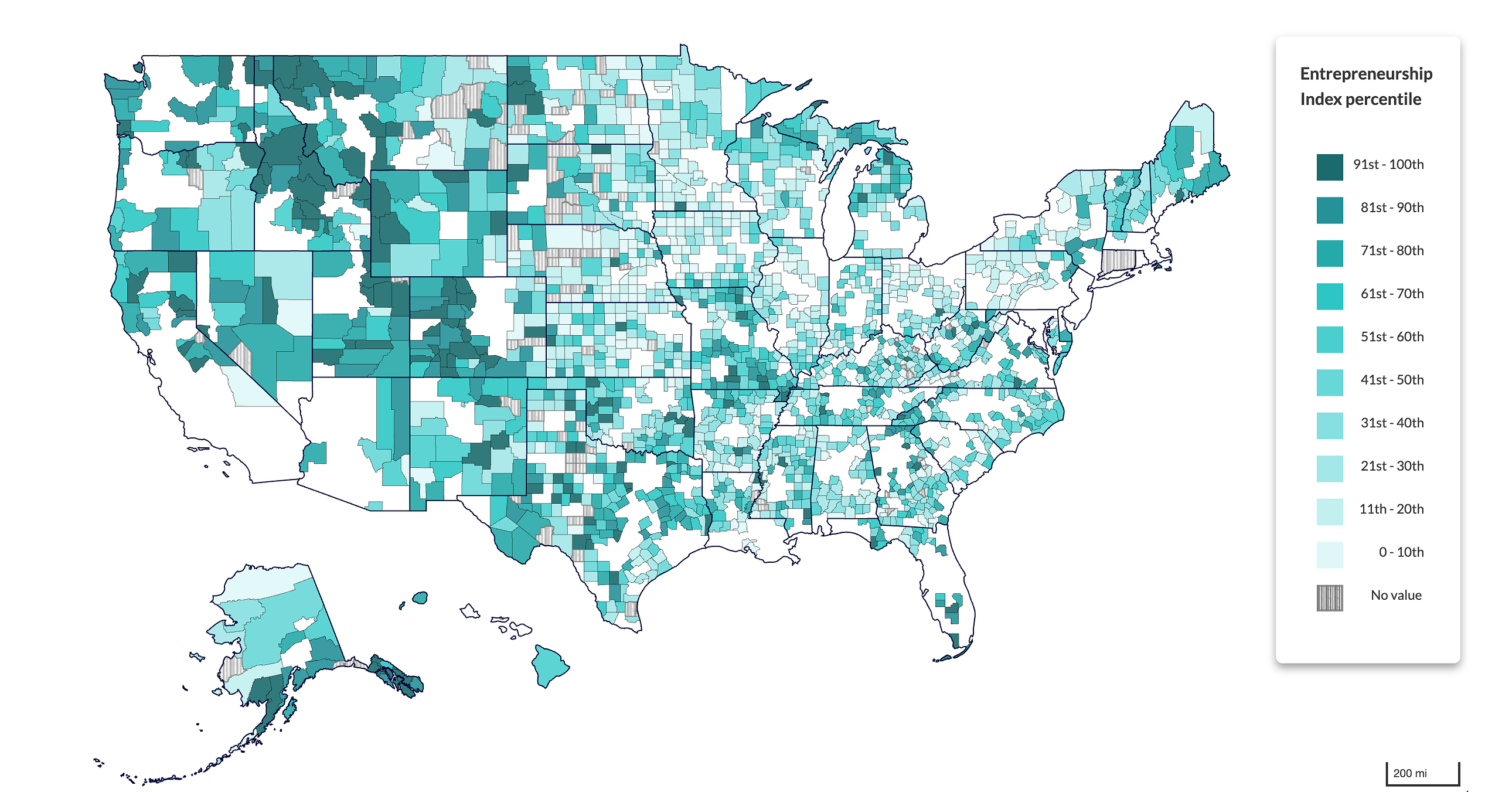
Rural employment grew 0.6% from 2023 to 2024, versus 1.3% in metropolitan areas, while a Capital One Insights Center–CORI report finds natural amenities are the strongest predictor of rural entrepreneurship. The analysis also links entrepreneurial strength to experienced workers and local business relationships; political capital is the only one of seven community-capital categories consistently associated with lower entrepreneurship. The research highlights broadband, workforce training, childcare, healthcare and entrepreneur-support networks as potential components of local investment, but does not report a near-term market catalyst.
Analysis
The investable read-through is limited: this is ecosystem research, not evidence of a near-term earnings inflection for Capital One (COF). Any benefit to COF is conditional on rural small-business lending converting into risk-adjusted loan growth and durable customer relationships; the release provides no loan, loss, or return-on-capital data to establish that link. Its community commitments may support local sourcing and reputation, but should not be capitalized as incremental earnings without measurable outcomes.
The more useful implication is where rural-development dollars may work: natural-amenity communities that can retain experienced workers and connect founders to trusted lenders, mentors, and customers. That favors targeted exposure to outdoor recreation and local services over a blanket rural broadband or infrastructure thesis. Broadband alone is not shown to be sufficient, while the reported association between political capital and lower entrepreneurship is not causal proof that incentives reduce business formation.
Near term, expect little fundamental repricing. Over 1–3 months, watch whether lenders, CDFIs, and local governments translate the findings into funding or underwriting programs; over 6–18 months, outcomes depend on business formation, survival, and credit performance. The contrarian risk is treating Bozeman-style amenity growth as universally replicable: tourism and amenity demand can bring seasonality, housing-cost pressure, and labor shortages, potentially eroding the talent-retention channel. The thesis weakens if supported counties fail to show better business formation or if credit losses rise as lending expands.
AllMind Terminal
AI-powered research, real-time alerts, and portfolio analytics for institutional investors.
Request TrialMarket Sentiment
Overall Sentiment
neutral
Sentiment Score
0.10
Ticker Sentiment
Key Decisions for Investors
- No immediate COF trade: the report does not quantify incremental originations, margins, or credit quality. Revisit only with evidence that rural small-business lending grows without weaker loss performance or returns.
- Watch—not yet buy—targeted outdoor recreation and local-service exposures. Seek county-level business formation, employment, and seasonality data before treating natural amenities as a revenue catalyst.
- Monitor community-bank and CDFI funding announcements for deployable capital and underwriting changes; a broad broadband-infrastructure position is not supported by the report absent complementary ecosystem investment.
- Falsification/watch item: if entrepreneurship and business survival do not improve in amenity-rich counties, or housing and labor constraints displace founders and workers, discount the proposed amenity-led growth thesis.
More News
- OCC Releases Report on Large Banks’ Debanking Activities
- Elon Musk says Trump is 'ultimately' responsible for any curbs on Ukraine's Starshield systems
- SK Hynix seeks U.S. chip equipment exports to China tied to new factory
- Hot September CPI Spurs Fed Rate Hike Fears
- Dell stock plunges 11%, leading data center sell-off on concerns about 'enterprise AI timing'
- US Stocks Tumble as Chip Rout Deepens
From AllMind Research
- Anthropic IPO Preview: Valuation, Timing, and What to Watch
- Shein After the IPO: Venue, Valuation, and What Must Be Proved
- What AI Research Tools Should a Small Hedge Fund Buy First?
- Introducing AllMind: A New Data & AI Workspace for Institutional Investors
- AI Tools for Private Equity Due Diligence: A Buyer Workflow