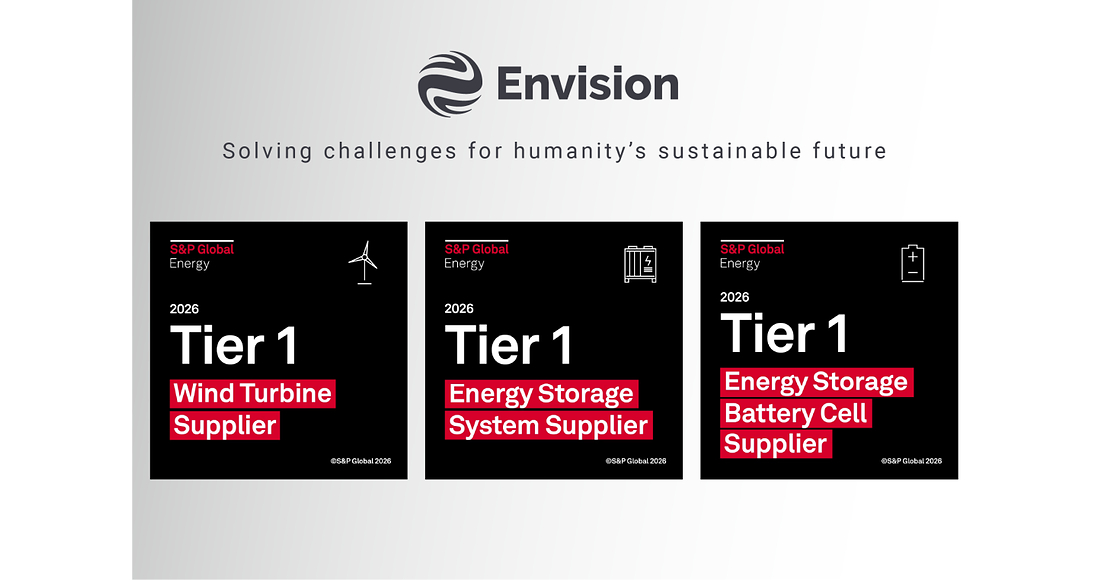
Envision fue incluida por segundo año consecutivo en la lista S&P Global Tier 1 Cleantech Companies 2026, manteniendo Tier 1 en turbinas eólicas y sistemas de almacenamiento de energía, mientras Envision AESC recibió Tier 1 para celdas de batería. La compañía destacó +100 GW de instalaciones eólicas acumuladas y 50 GWh desplegados de BESS para finales de 2025, además de proyectos como un parque de 300 MW con almacenamiento integrado en Nueva Escocia y la conexión exitosa de un prototipo de turbina con IA en Australia. El reconocimiento refuerza su posición en baterías y almacenamiento (incluido un rol Tier 1 en BloombergNEF) con un sesgo constructivo para su expansión internacional.
This is more of a credibility event than an earnings event. For S&P Global, the signal is that its tiering framework still functions as a de facto bankability screen in a sector where capital intensity and counterparty trust matter more than branding; that supports the moat around its data/benchmark franchise, but it is not likely to move near-term revenue or guidance. The bigger implication is for Envision: third-party validation can reduce procurement friction, improve financing terms on project bids, and widen the funnel for OEM/BESS wins, especially where developers are capital-constrained.
The second-order effect is competitive, not direct. In wind and BESS, the real prize is lowering the cost of capital and shortening sales cycles, which can shift share toward vertically integrated suppliers that can certify across turbines, storage, and cells. That hurts fragmented competitors that rely on point-product strength but lack an integrated platform, particularly in Europe and Australia where projects are increasingly structured around financing certainty rather than lowest upfront equipment price.
The market is likely overestimating the tradability of the headline and underestimating the timing lag. Any conversion from certification to orders should show up over 1-3 quarters, not days; the more immediate read-through is on procurement pipelines and lender appetite, not revenue this month. The thesis would be falsified if order intake, backlog, or project COD dates fail to improve despite the credentialing, or if policy/FX headwinds offset the financing benefit.
Contrarian view: this kind of endorsement matters most when capital is scarce, so the signal may be more powerful than the market is giving it credit for in a higher-rate world. But because it is a reputation-based catalyst rather than a hard fundamental change, I would not pay up for it in SPGI; the cleaner expression is to monitor whether this translates into higher conversion rates for listed cleantech equipment names over the next quarter.
AI-powered research, real-time alerts, and portfolio analytics for institutional investors.
Request TrialOverall Sentiment
mildly positive
Sentiment Score
0.25
Ticker Sentiment
