
Micron: Analysts Are Too Low On 2029 And The Shares Deserve A Higher Multiple
Source: seekingalpha.com
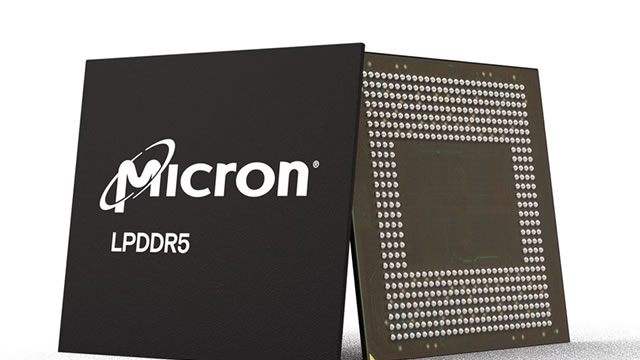
Micron reportedly delivered record FY2026 revenue of $133.19B, EPS of $75.52 and net cash of $68.3B, while trading at 5.94x forward earnings. The article cites 26 strategic customer agreements covering $150B in obligations and $32B in commitments, and argues take-or-pay contracts, delayed supply ramps and buybacks could support EPS growth through 2029 rather than a cyclical decline.
Analysis
The key underwriting question is whether these agreements change Micron’s realized pricing and downside protection—or merely reserve capacity during a strong market. Contract value is not equivalent to funded backlog: verify take-or-pay scope, cancellation and price-reset clauses, customer concentration, delivery windows, and whether commitments are net of required capex. Stronger visibility could improve earnings quality and reduce the trough multiple, but it may also cap participation in spot-price spikes if capacity is pre-allocated at fixed terms.
Do not anchor on the stated forward P/E without normalizing memory earnings across a cycle. If current EPS reflects unusually favorable pricing or product mix, a low multiple can be a peak-earnings warning rather than mispricing. Buybacks amplify per-share growth only if cash generation persists; repurchasing through a downturn would compete with investment needs. SK Hynix and Samsung remain relevant competitors: any Micron supply ramp or pricing advantage could prompt capacity or pricing responses, while tight HBM supply can also pull resources away from other memory products.
Near term, the claims are not enough to justify chasing the bullish narrative. Over 1–3 months, prioritize audited filings and guidance on HBM shipments, realized pricing, inventory, capex, cash conversion, and contract economics. Over 6–18 months, the thesis strengthens if agreements stabilize utilization and margins through weaker spot conditions. It fails if customers defer/cancel, pricing resets lower, inventory rises, or capex absorbs the promised cash generation.
AllMind Terminal
AI-powered research, real-time alerts, and portfolio analytics for institutional investors.
Request TrialMarket Sentiment
Overall Sentiment
moderately positive
Sentiment Score
0.55
Ticker Sentiment
Key Decisions for Investors
- No headline-driven add before verifying the agreements in filings; distinguish legally binding take-or-pay amounts from nonbinding commitments and gross contract value.
- Conditional trade: build a measured long MU position on weakness only if subsequent results confirm durable HBM/memory pricing, positive cash conversion after capex, and no material deterioration in inventory or guidance. Reassess on any customer deferrals or downward pricing commentary.
- For investors already long, avoid treating buybacks or a low forward multiple as downside protection; size exposure to normalized-cycle earnings and monitor capex versus free cash flow.
- Track relative supply and pricing signals from SK Hynix and Samsung. A competitive capacity response or a broader memory-price reversal would challenge the durability premium and is a reason to reduce or hedge exposure.
More News
- Memory stocks have hit a malaise. Jay Woods believes it's a buying opportunity
- AI-related companies to drive most third-quarter US earnings gains
- Nvidia and Micron shares bounce as investors get clarity on a key OpenAI matter
- Nasdaq, SPX Look to End Record-Filled Week With Gains
- This Forgotten AI Stock Is Up 689% and Nobody's Talking About It
- Micron Has Evolved Into a Next Gen Player So I Keep Adding
From AllMind Research
- Anthropic IPO Preview: Valuation, Timing, and What to Watch
- Shein After the IPO: Venue, Valuation, and What Must Be Proved
- What AI Research Tools Should a Small Hedge Fund Buy First?
- Can Hedge Funds Use ChatGPT? A Control Framework
- Palantir (PLTR) Q4 2025 Earnings: 70% Revenue Growth, Then an 11% Single-Day Crash