
Can Innovation Help PepsiCo Outpace Industry Headwinds?
Source: zacks.com
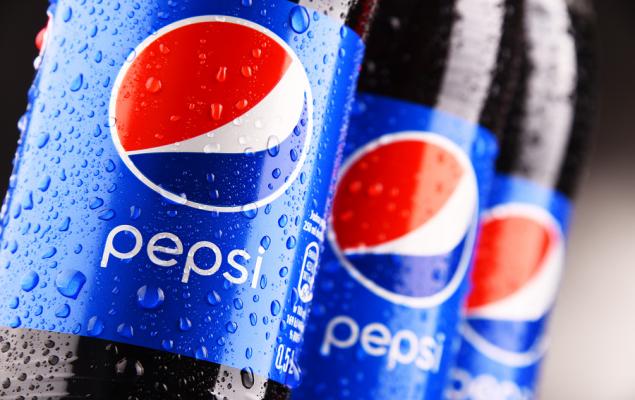
PepsiCo reported Q2 2026 organic volume growth of 3% in global convenient foods and 2% in global beverages, supported by hydration, zero-sugar, functional-drink and better-for-you food innovation. However, inflation-driven pressure on consumer budgets and softer North American category trends moderated U.S. food and beverage performance; PEP shares have fallen 17.2% over six months versus a 6% industry gain. Consensus forecasts EPS growth of 5.3% in 2026 and 4.6% in 2027, although 2027 estimates have declined over the past 30 days, and the stock carries a Zacks Rank #4 (Sell).
Analysis
PEP's discount is not automatically a value opportunity: the key question is whether its innovation mix can improve North American volume without further eroding gross margin through higher-cost ingredients, smaller-batch production, and promotional support. Functional and protein-led extensions tend to carry better revenue per unit but require velocity high enough to offset SKU complexity; absent proof of repeat purchase and distribution productivity, these launches are more defensive than incremental EPS drivers. The near-term read-through is therefore negative for consensus quality, particularly with forward estimates already drifting lower.
KO and MNST have cleaner exposure to beverage occasions and less operational complexity than PEP's combined snacks-and-beverages model. PEP's broad scale is an advantage in retailer negotiations, but tighter shelf space can force cannibalization within its own portfolio rather than share capture from competitors. Suppliers of protein inputs, specialty sweeteners, and co-packing capacity may see modest demand benefit, but the revenue pool is too small to support a standalone supplier trade.
Over 1-3 months, the catalyst is evidence that North American volume stabilizes while productivity funds brand investment without a step-up in trade spending. A rerating requires management to show that mix and cost actions can restore earnings durability; on a 6-18 month view, failure would turn the apparent valuation discount into a justified multiple gap versus KO. Contrarian upside is meaningful because expectations are subdued: even flat-to-positive U.S. volume and stable gross margin could produce a 10-15% rebound as investors price PEP as a defensive turnaround rather than a structurally ex-growth staple.
The decisive falsifier is another downward revision to next-year EPS or guidance indicating promotional intensity is rising faster than productivity savings. Conversely, two consecutive quarters of improved North American volume, stable or expanding segment margin, and no incremental estimate cuts would validate a long thesis. The article is promotional in nature and supplies no retailer scanner data, price/mix decomposition, or launch-level margin contribution; those are required before underwriting a fundamental inflection.
AllMind Terminal
AI-powered research, real-time alerts, and portfolio analytics for institutional investors.
Request TrialMarket Sentiment
Overall Sentiment
mildly negative
Sentiment Score
-0.18
Ticker Sentiment
Key Decisions for Investors
- Maintain PEP as watchlist rather than initiate immediately; enter a 3-6 month long only after earnings demonstrate North American volume improvement and segment-margin stability. Target 10-15% upside from multiple normalization; exit on a further FY2027 consensus EPS reduction or guidance reset.
- Express relative quality over the next 1-3 months through long KO / short PEP in equal dollar amounts. KO offers a cleaner execution profile if consumers remain pressured; risk is a PEP volume surprise or material productivity beat, which would compress the spread quickly.
- Prefer MNST over PEP for functional-beverage exposure, but only on pullbacks: its growth/multiple sensitivity makes it less defensive. Use a 5-7% position stop or exit if U.S. energy-drink scanner trends weaken for two consecutive monthly reads.
- At PEP's next report, monitor North American volume, gross margin, promotional spending, and management's quantified productivity reinvestment. If volume improves solely through price cuts or margin contracts, avoid the apparent valuation discount rather than averaging down.
More News
- Stock Market News for Sep 30, 2026
- In the high-stakes game of chicken between CEOs and states, who blinks first?
- Goldman Sachs pushes Fed rate hike forecast to December
- In photos: China's Xi hardens Taiwan warning as country celebrates week-long National Day holiday
- Asian stocks dip, bonds in focus after torrid September
- September Ends on a Grim Market Note: Evening Briefing Americas
From AllMind Research
- Anthropic IPO Preview: Valuation, Timing, and What to Watch
- Shein After the IPO: Venue, Valuation, and What Must Be Proved
- What AI Research Tools Should a Small Hedge Fund Buy First?
- Can Hedge Funds Use ChatGPT? A Control Framework
- Palantir (PLTR) Q4 2025 Earnings: 70% Revenue Growth, Then an 11% Single-Day Crash