
Huawei lance la solution d'IA Fintelligent pour aider les institutions financières du monde entier à concrétiser le principe « Maîtrisez votre IA pour maîtriser votre intelligence »
Source: PR Newswire
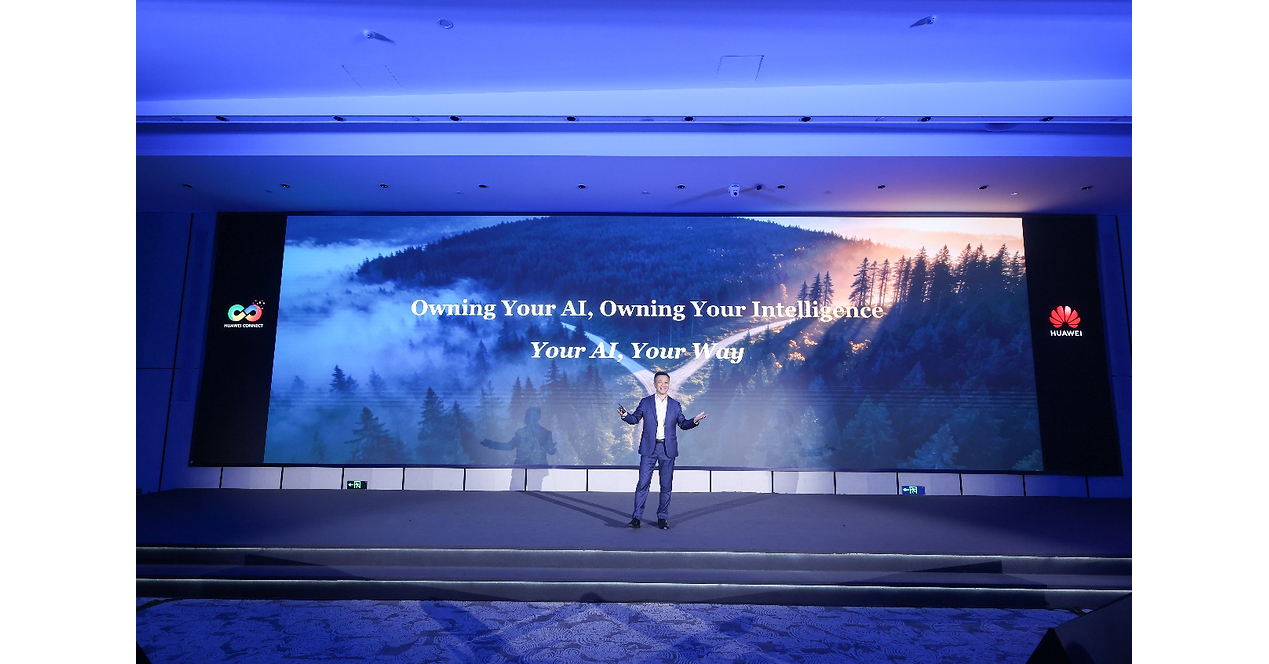
Huawei launched its Fintelligent AI solution globally at HUAWEI CONNECT 2026, targeting scalable and secure deployment of production-grade AI agents by financial institutions. The offering combines the open-source openJiuwen agent platform with agent, token, and data-and-knowledge “factories,” including TokeNexus for end-to-end token lifecycle management. Huawei said it has served more than 7,100 financial-sector customers across 80+ countries, including 54 of the world’s 100 largest banks, positioning the launch as a notable enterprise-finance AI expansion.
Analysis
The relevant market signal is not a near-term Huawei revenue event—there is no disclosed contract value, deployment schedule, or customer procurement commitment—but a further push toward sovereign, auditable AI stacks in regulated financial workflows. That preference favors vendors with on-premise/hybrid deployment, governance, and legacy-system integration capabilities over pure model providers; IBM, Oracle and SAP are better positioned than hyperscale-only AI narratives where bank data-residency constraints remain binding. The second-order pressure is on financial-software incumbents such as FIS and FISV: their installed base is valuable only if they can monetize agent orchestration and code modernization rather than become commodity data pipes beneath bank-controlled AI layers.
Over the next 1-3 months, this should not alter estimates for listed peers absent named lighthouse customers, pricing, or evidence of production workloads. The more investable 6-18 month implication is that AI spend in banking may shift from experimentation budgets to infrastructure, data-governance, cybersecurity, and systems-integration budgets; this lowers the share captured by model vendors while increasing implementation complexity and lengthening sales cycles. A broad claim of lower token cost is not independently verifiable, and aggressive price competition could compress infrastructure margins rather than expand them.
The contrarian view is that bank procurement friction is being underestimated: model-risk management, data lineage, and liability for autonomous actions can delay core-workflow adoption well beyond pilots. Conversely, a binding regulatory framework for AI governance or public production wins at top-tier banks would accelerate budget release and reward trusted enterprise vendors. For Huawei specifically, geopolitical restrictions and local data-sovereignty rules create a bifurcated market: stronger positioning in China and aligned emerging markets, but limited direct displacement potential at US and many European banks.
AllMind Terminal
AI-powered research, real-time alerts, and portfolio analytics for institutional investors.
Request TrialMarket Sentiment
Overall Sentiment
moderately positive
Sentiment Score
0.48
Key Decisions for Investors
- No directional trade solely on this launch; set an alert for disclosed production deployments, annual contract value, and named tier-1 bank wins. Treat any Huawei-led infrastructure impact as investable only after evidence that pilot activity converts into recurring procurement.
- Monitor a 6-18 month relative-value basket: long IBM versus short FIS, sized modestly. IBM has greater exposure to hybrid infrastructure, governance and integration spend, while FIS faces greater risk if banks internalize AI orchestration; exit if FIS demonstrates AI-driven recurring-revenue acceleration or IBM fails to convert AI bookings into revenue over two reporting periods.
- Maintain an underweight bias toward high-multiple, model-centric AI software exposures where banking is a material end-market, versus enterprise infrastructure names. The thesis is falsified if regulated institutions show that public-cloud model deployments clear governance requirements materially faster and cheaper than private/hybrid implementations.
- Watch Oracle quarterly cloud infrastructure backlog and IBM consulting bookings as near-term read-throughs. A sustained acceleration in either, accompanied by financial-services customer commentary, would support adding to hybrid-AI exposure; absent that evidence, the announcement remains narrative rather than an earnings catalyst.
More News
- Taiwan benchmark Taiex rises to record intraday high as tech stocks advance
- AMD joins the $1 trillion club as chip rally surges - our AI Strategy saw it early
- Jamie Dimon says hyperscaler AI spending could hit $1 trillion next year
- Factbox-Key issues for this week’s Trump-Xi summit in Washington
- Here's who we know is going to the Trump-Xi dinner so far
- +17% in a single session: This AI-picked stock catches a data-center breakout
From AllMind Research
- Anthropic IPO Preview: Valuation, Timing, and What to Watch
- Shein After the IPO: Venue, Valuation, and What Must Be Proved
- What AI Research Tools Should a Small Hedge Fund Buy First?
- How the 2026 Milan-Cortina Winter Olympics Will Reshape Company Revenues and Stock Performance
- Can Hedge Funds Use ChatGPT? A Control Framework