
Lektra Launches EdgeStart, an AI Server that Building Owners Can Buy and Run on Their Own Solar, While Receiving 80% of the Earnings
Source: PR Newswire
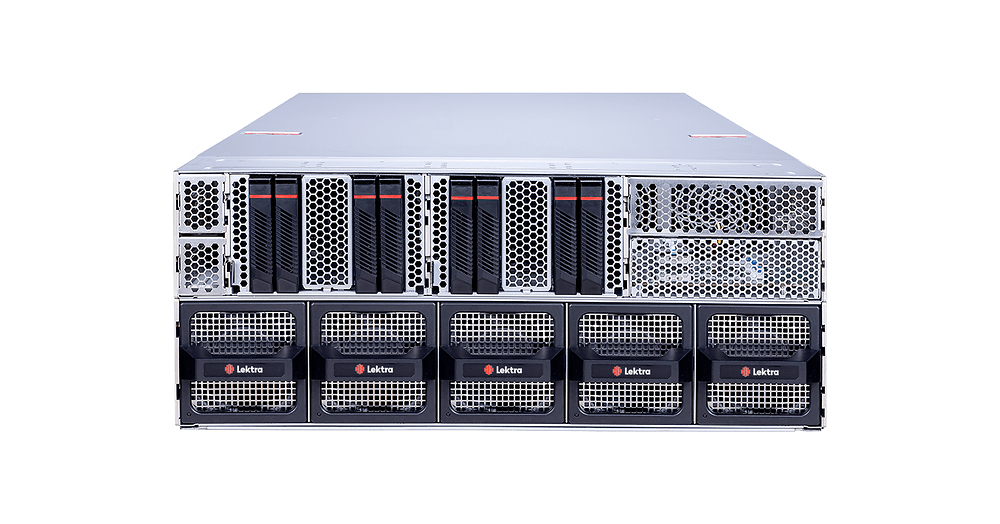
Lektra began taking orders for EdgeStart, an installed 8-GPU cabinet that uses building owners’ solar power and batteries to run AI workloads, with owners receiving 80% of revenue. The RTX model costs $310,197 and has estimated first-year owner earnings of about $9,700 per month; the B300 costs $840,951 with estimated earnings of about $36,950 per month. Estimates assume 730 contracted hours monthly, current market rates, and power at $0.10/kWh; Lektra says earnings are not guaranteed.
Analysis
The investable signal is small and conditional: a distributed GPU cabinet could monetize stranded power and space, but the disclosed footprint is not evidence yet of a meaningful alternative to centralized compute. For NVIDIA (NVDA), this is incremental hardware demand and a useful edge-computing proof point—not a basis for changing a data-center growth thesis. If the model scales, it could broaden GPU deployments and workloads, while creating a more fragmented base of operators and support needs. The near-term constraint is likely not simply available solar generation: inference customers need dependable service, so utilization, power continuity, fiber quality, and remote operations must all hold together.
Treat the advertised host economics as a sales case, not an underwritten return. The estimates assume roughly 730 contracted hours monthly and specified energy and connectivity costs; intermittent surplus power, lower utilization, equipment downtime, or higher operating costs could erode returns. Financing also makes the owner’s realized cash yield sensitive to performance: on the company’s estimates, debt payments consume a substantial part of monthly earnings before any unmodeled costs. GPU depreciation and replacement risk matter over a multi-year financing term.
Over 1–3 months, watch for independently verifiable orders, commissioned cabinets, utilization and uptime data, and whether quoted earnings are achieved. Over 6–18 months, the key question is repeatable deployment economics across sites—not the product launch itself. The thesis weakens if actual contracted hours or realized host earnings fall materially below estimates, or if reliable power requires costly grid imports. No material near-term read-through to UBER or ABNB; their mention is analogy, not business exposure.
AllMind Terminal
AI-powered research, real-time alerts, and portfolio analytics for institutional investors.
Request TrialMarket Sentiment
Overall Sentiment
mildly positive
Sentiment Score
0.35
Ticker Sentiment
Key Decisions for Investors
- No trade on the launch alone. Keep NVDA as a watch item for incremental edge demand, but do not extrapolate this deployment model into a material change in GPU revenue expectations without evidence of scale.
- Set a 1–3 month diligence trigger: look for commissioned-site counts, realized utilization and uptime, and host payouts versus the stated estimates. Treat order announcements without operating data as weak evidence.
- For any future host-economics assessment, verify site-level hourly power availability, grid-import requirements and tariffs, fiber/storage costs, maintenance responsibility, GPU useful life, and whether earnings estimates are before or after all operating costs and debt service.
- Falsify the distributed-compute thesis if realized utilization persistently misses the assumed contracted hours, reliable power requires uneconomic grid purchases, or equipment and service costs materially reduce host cash flow.
More News
- SK Hynix third-quarter profit sharply beats estimates on AI memory boost
- Indian investors rush to Nvidia, SpaceX, Apple as local trading apps roll out access to U.S. stocks
- SK Hynix Q3 profit jumps more than 7-fold, beats forecasts
- Oracle integrates ChatGPT, Codex into apps and expands cloud chip lineup
- OpenAI plans to buy Google AI chips to expand computing capacity
- Big Red gets cozy with Google to offer TPUs to AI customers