
Fire Risks Return to Haunt California’s Utilities
Source: Bloomberg
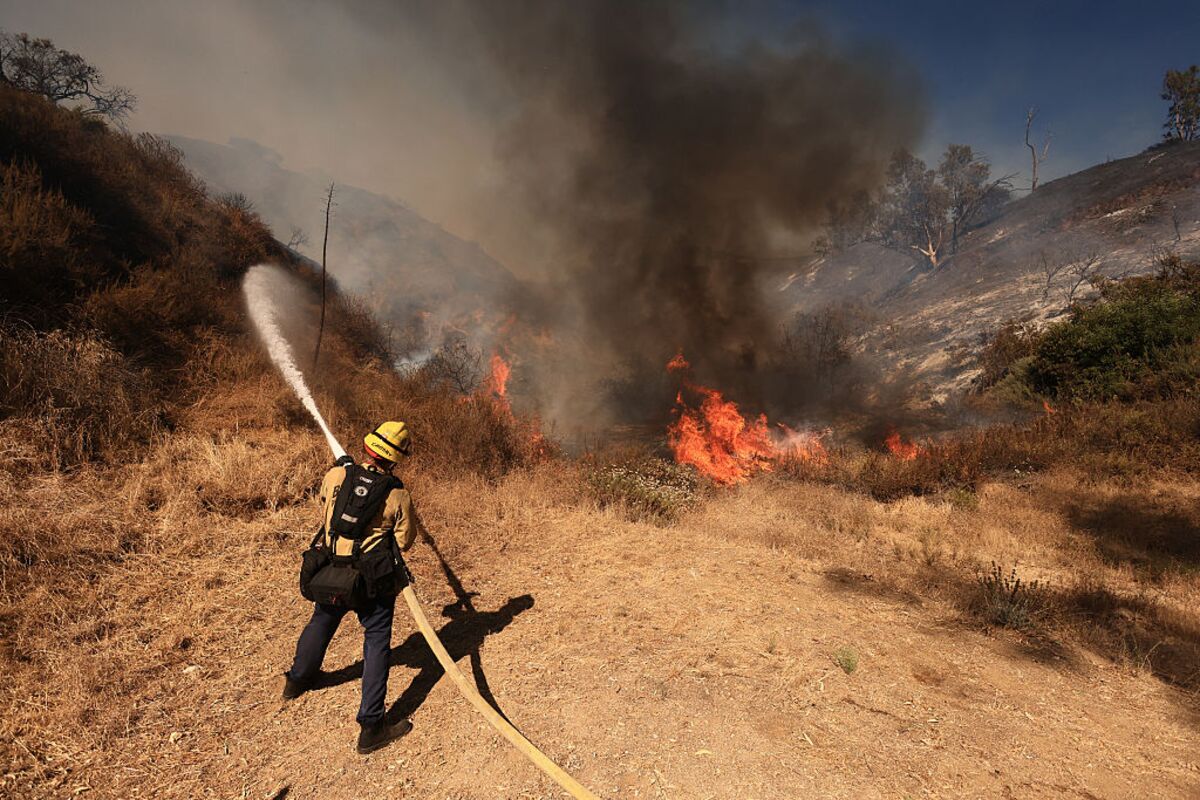
A renewed battle over how California utilities should apportion costs for wildfire damage is intensifying as the state heads into peak wildfire season. With related policy reforms reportedly being shelved, investors may face higher sector volatility and greater uncertainty around utilities’ future cost burdens and risk exposure during summer months.
Analysis
The market mechanism here is not the headline fire season itself; it is the persistence of an unpriced tail liability that forces California regulated names to trade less like bond proxies and more like quasi-damaged goods. When reform gets deferred, equity holders absorb a higher implied cost of capital, which tends to compress P/Es and widen utility credit spreads even before any incident occurs. That re-rating can be bigger than the direct earnings hit because it affects the whole funding stack: equity issuance becomes more dilutive, debt more expensive, and regulators become the release valve for costs.
Near term, expect the sharpest pressure in the most fire-exposed utilities and in any name with visible California rate-base expansion plans; those management teams may slow capex or push harder on rate cases to preserve balance-sheet flexibility. Over the next 1-3 months, the catalyst path is binary: either a benign fire season allows some volatility to mean-revert, or an incident re-anchors the market on the probability of socialized losses and renews the de-rating. Over 6-18 months, the structural loser is the entire California utility complex unless policymakers create a credible backstop or cost-sharing framework.
Contrarianly, the selloff may be too broad if investors are lumping every California utility into the same liability bucket. A lower-direct-exposure regulated name like CWT can still suffer sentiment drag, but its fundamental linkage to wildfire tail risk is weaker than the electric utilities, so relative underperformance may be overdone if the market is indiscriminately de-risking. The real second-order winner could be utility-hardening contractors and grid equipment suppliers, because the longer policy uncertainty persists, the more boards are forced to spend on mitigation rather than shareholder returns.
What would falsify the bearish utility view is a credible legislative or regulatory package that clearly caps utility-owned wildfire losses, or an insurance/reinsurance structure that restores financing visibility. Absent that, any spike in implied vol should be treated as a structural feature, not a trading anomaly.
AllMind Terminal
AI-powered research, real-time alerts, and portfolio analytics for institutional investors.
Request TrialMarket Sentiment
Overall Sentiment
mildly negative
Sentiment Score
-0.25
Ticker Sentiment
Key Decisions for Investors
- Pair trade: short PCG or EIX against long XLU over the next 1-3 months; thesis is that California-specific tail risk keeps the local names cheap longer than the diversified utility basket.
- If using CWT, treat it as a relative-defensive long only versus higher-fire-risk California electric utilities, not as a sector-wide bullish expression; the trade works best if the market is over-discounting all California regulated names.
- Buy medium-dated puts or put spreads on the most exposed California utility names ahead of peak wildfire season; structure for a 2-4 month catalyst window where one incident or policy headline can reprice implied vol.
- Watch utility credit spreads and equity issuance calendars; if spreads widen while reform stays frozen, avoid initiating fresh long utility positions because dilution risk can exceed dividend yield support.
- Set an alert for any formal wildfire liability backstop or cost-recovery bill; that would be the main thesis breaker and should trigger cover/trim decisions immediately.
More News
- Indonesian stocks plunge to six-year low as MSCI downgrade fears mount
- Nifty Bank Heavyweights HDFC, ICICI in Focus After Weekend Earnings
- Putin reportedly suggests summit with Trump and Xi to decide fate of Ukraine
- Ukraine launches over 1,000 drones at Russia, setting oil facilities ablaze
- Trump defends Russian sanctions relief, lashes out at Zelenskyy
- China’s Coal Output Drops as Concerns Build Over Winter Supply