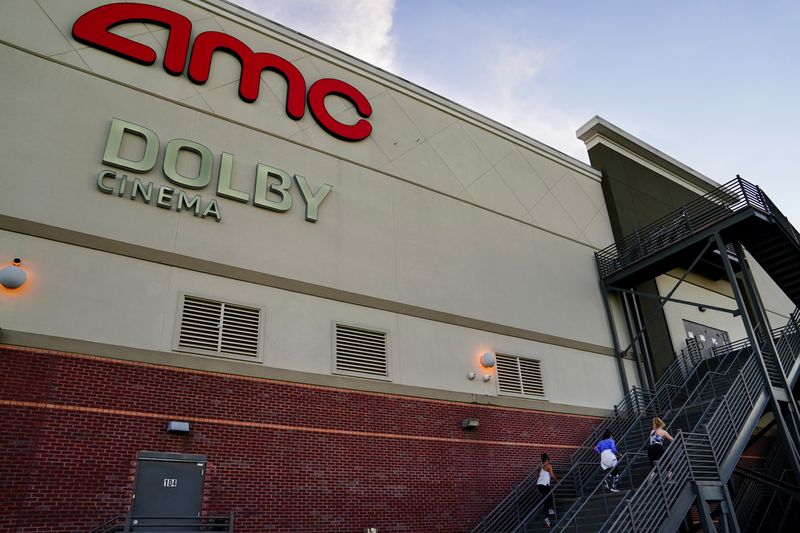
AMC shares rose 25.5% to $2.46 and are being repriced after a strong Q2: record revenue of $1.6B (+14% YoY) and adjusted EBITDA of $321.4M (+70% YoY) with EPS of $0.14 vs. a forecast $0.02 loss. Texas Capital raised its AMC price target to $3.50 from $3.00 (Buy), citing progress on the balance sheet including extending major debt maturities to 2029 and 2030 despite still having ~$7.9B in debt. Analysts are increasingly confident AMC can outperform the industry recovery, with expectations for valuation multiples to move closer to pre-pandemic levels.
AMC’s equity is trading less like a theater operator and more like a short-duration call option on the sustainability of a better-than-feared box-office cycle. The key mechanism is not near-term revenue growth; it is whether a few quarters of stronger attendance and tighter theater-level cost control are enough to push the market from valuing the equity as distressed dilution risk to valuing it as a levered recovery story. If that happens, the first-order winner is AMC’s common; the second-order winners are the entire exhibition complex and content-adjacent names that benefit from a healthier release slate, while the losers are capital structures still reliant on refinancing rather than organic deleveraging.
The balance-sheet angle matters more than the earnings beat. Extending maturities buys time, but it does not eliminate the core asymmetry: equity value only compounds if free cash flow stays positive long enough to force debt paydown rather than future equity issuance. That means the stock is highly sensitive to 1-3 month follow-through in attendance and margins, but the real re-rating thesis is 6-18 months of sustained EBITDA with no dilution. If the next few quarters revert to middling occupancy or premium-format mix slips, the market can quickly reprice AMC back toward a distressed multiple, regardless of one strong quarter.
The contrarian takeaway is that consensus may be over-weighting the optics of “normalization” and under-weighting the refinancing math. A stronger quarter can justify a tactical rerating, but a move toward pre-pandemic multiples is only credible if leverage falls fast enough to remove the equity overhang; otherwise, any multiple expansion is vulnerable to being offset by higher perceived dilution risk. The stock’s recent move likely reflects both fundamental surprise and technical/risk-seeking flows, so the risk of a sharp giveback is elevated if momentum stalls or the next box-office slate disappoints.
For competitors, AMC’s gains are not automatically bullish for all exhibitors. The more efficient operators can use a healthier industry tape to lock in better rent terms, programming leverage, and capital access, while AMC’s higher debt burden limits how much of the recovery converts to intrinsic value. That creates a relative-value setup: the better the industry, the more the market should reward balance-sheet quality over operational improvement alone.
AI-powered research, real-time alerts, and portfolio analytics for institutional investors.
Request TrialOverall Sentiment
strongly positive
Sentiment Score
0.70
Ticker Sentiment
