
Frida Created A Fake Anti-Aging Brand For Six-Year-Olds. The Crazy Part Is That People Believed It.
Source: PR Newswire
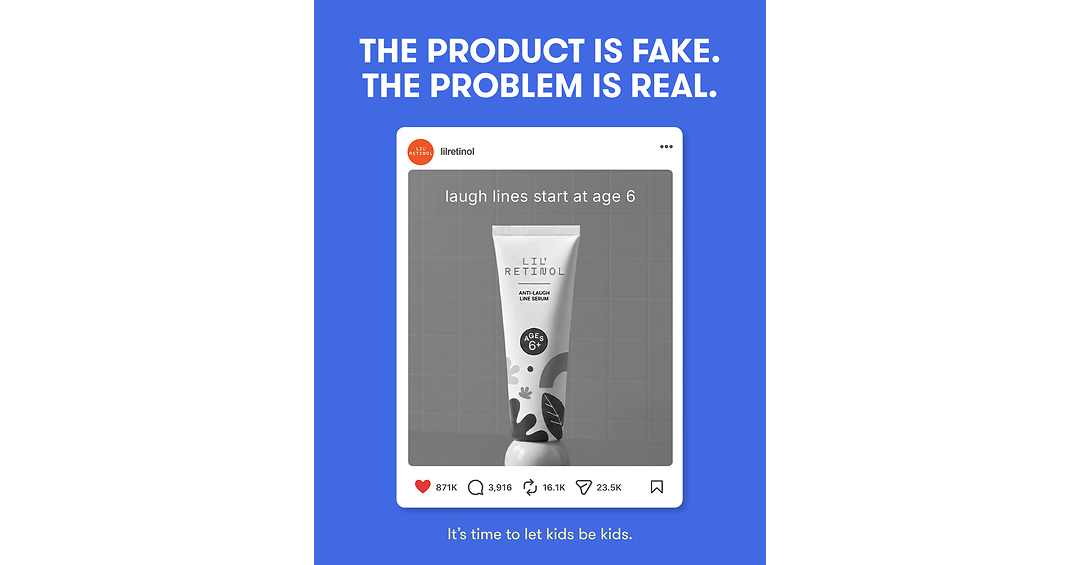
Frida launched a 32-product personal-care line for children, spanning body, hair and oral care, after using a fictional "Lil' Retinol" campaign to highlight concerns about adult skincare trends reaching young kids. NielsenIQ said households with tweens and teens are driving 12.4% beauty-category growth, while Frida's research found 60% of parents view basic hygiene as a major daily challenge and 42% of children have refused showers while wanting skincare routines. The launch targets an underserved age segment between baby products and teen/adult beauty offerings.
Analysis
This is primarily a private-company/category signal rather than an investable catalyst for NYT. The relevant mechanism is shelf-space and search-share migration within mass personal care: a credible “kids independence” segment can take dollars from baby care at one end and teen/adult prestige skincare at the other, but the initial revenue pool is likely too small to alter earnings for scaled incumbents. The launch’s broad assortment also raises execution risk: retail velocity, repeat purchase and retailer placement—not social engagement—will determine whether it becomes a durable subcategory.
Near term (days to 1-3 months), the most likely public-market read-through is incremental attention to kid-focused hygiene and beauty demand, not a material sector rerating. CHD and PG have existing oral/body-care distribution and could respond through line extensions; ELF, ULTA and COTY have greater exposure to the broader youth-beauty trend but also face reputational and regulatory risk if products marketed to younger consumers are perceived as encouraging inappropriate active-ingredient use. Retailers with broad family assortments, notably WMT and TGT, are better positioned than specialty beauty chains if the category centers on replenishable basics at mass price points.
The contrarian view is that social-media-driven concern about children using adult skincare may suppress, rather than expand, total beauty spending by younger cohorts as parents simplify routines. A meaningful opportunity requires evidence that the product displaces generic soap, toothpaste and deodorant through premiumization and repeat rates—not merely reallocating an existing household basket. Watch NielsenIQ category growth, retailer assortment expansion, and 90-day reorder/velocity data; absent those, this is not a tradeable demand inflection.
Over 6-18 months, successful segmentation could pressure legacy baby-care brands whose portfolios age out before children gain autonomy. However, Frida’s private status, lack of disclosed pricing/distribution economics, and promotional framing make it impossible to underwrite revenue or margin impact today. Treat this as an alert for mass retail and consumer-staples channel checks rather than a directional position.
AllMind Terminal
AI-powered research, real-time alerts, and portfolio analytics for institutional investors.
Request TrialMarket Sentiment
Overall Sentiment
mildly positive
Sentiment Score
0.28
Key Decisions for Investors
- No standalone position in NYT: the campaign may generate advertising or attention value, but there is no disclosed economics sufficient to affect NYT earnings; maintain neutral.
- Add WMT and TGT to a 1-3 month retail-channel watchlist; consider a long only if initial placements broaden beyond launch doors and scanner data show sustained velocity above comparable kids personal-care launches after the promotional window.
- Monitor CHD and PG for defensive line-extension risk rather than buy the news: a successful new segment could modestly raise innovation spending and shelf-space competition, but their scale makes any near-term earnings impact immaterial.
- Avoid extrapolating this into a long ELF or ULTA thesis without evidence of incremental category spend. Falsification of the youth-beauty growth narrative would be slowing tween/teen beauty scanner growth, higher promotion, or retailer resets toward basic hygiene.
More News
- Urgent calls from OpenAI, Anthropic for an AI slowdown fall on deaf ears with Trump, Xi ahead of next week’s meeting
- What must happen for AI’s trillion-dollar gamble to pay off
- 2 Stocks That Will Cash In When Anthropic Goes Public
- Shrinkflation is coming for pro sports: The cost of watching the NFL jumped 28.6%—and attending a game 72%—since 2015
- Voters mostly don’t like AI and data centers, but neither party seems to have an edge
- China's AI leaders keep quiet despite U.S. 'publicity' on tech risks