
Sceye Supports SoftBank Corp. in World-First Demonstration of Laser Ranging by Tracking a HAPS from the Ground
Source: PR Newswire
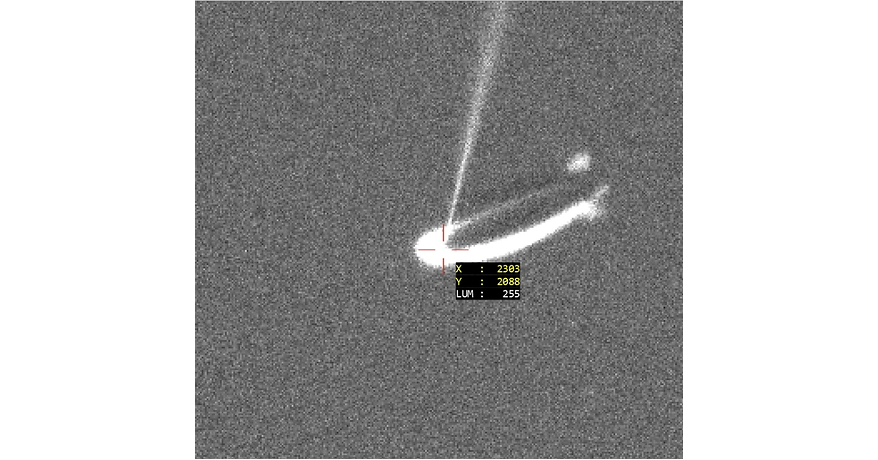
Sceye and SoftBank completed a claimed world-first ground-to-HAPS laser-ranging demonstration, continuously tracking Sceye's stratospheric platform and receiving reflected optical signals in real time. The test, conducted during Sceye's 30-day, nearly 30,000-km ST1 mission, generated atmospheric-performance data needed for future free-space optical links among ground infrastructure, HAPS platforms and satellites. The technology could support high-capacity connectivity, disaster communications, Earth-observation data transmission and low-latency network links, but remains at the demonstration stage.
Analysis
This is strategically relevant to SoftBank Corp. (9434.T) but not yet financially material: a ranging demonstration reduces one engineering risk in a future HAPS optical-backhaul architecture, while leaving the commercial gating items—terminal cost, weather availability, pointing stability under payload load, spectrum/aviation approvals and network-level uptime—unproven. The nearer implication is an incremental option-value benefit for 9434.T's non-terrestrial-network strategy rather than a change to telecom EBITDA or capex forecasts over the next 12 months. Sceye is private, limiting direct public-market exposure.
The competitive read-through is modestly negative for satellite-only connectivity narratives at AST SpaceMobile (ASTS), Globalstar (GSAT) and Iridium (IRDM), but only over a 6-18 month horizon if HAPS can demonstrate repeatable economics and carrier-grade availability. HAPS could be a lower-latency, higher-capacity complement in dense disaster-recovery and rural corridors, not a wholesale substitute for LEO coverage; the likely initial value capture sits with carriers and optical-terminal suppliers rather than platform operators. The contrarian view is that optical links are especially vulnerable to cloud cover and atmospheric turbulence, so successful tracking may not translate into usable data-link availability; investors should not extrapolate from technical milestones to recurring revenue.
A rerating catalyst for 9434.T would require disclosed payload throughput, usable-link availability across weather conditions, terminal cost and a committed commercialization timeline. The thesis is falsified if subsequent trials show low availability, material onboard power/weight penalties, or if regulatory constraints prevent persistent operations over target markets; absent those data, the event is an R&D watch item rather than a trade trigger.
AllMind Terminal
AI-powered research, real-time alerts, and portfolio analytics for institutional investors.
Request TrialMarket Sentiment
Overall Sentiment
moderately positive
Sentiment Score
0.48
Key Decisions for Investors
- No standalone position from this announcement; maintain 9434.T as a watch item rather than increasing telecom exposure on an unmonetized technical demonstration.
- Set an alert for carrier-grade trial disclosures from SoftBank/Sceye over the next 3-9 months: sustained optical throughput, availability by weather regime, payload power draw and commercial capex per covered area are the decision variables.
- Do not short ASTS, GSAT or IRDM on this development. Reassess only if SoftBank publishes a funded HAPS deployment plan with contracted optical-terminal vendors and economics competitive with satellite backhaul; until then, competitive displacement is too distant and speculative.
- For existing ASTS/GSAT longs, treat HAPS progress as a 6-18 month narrative risk rather than an earnings risk; reduce exposure only on evidence that carrier capex is being redirected from satellite partnerships into scaled HAPS procurement.
More News
- Chinese authorities reportedly in possession of F-35 components in Hong Kong
- Meta announces new lightweight virtual reality glasses to one-up Apple’s Vision Pro
- How Meta took the lead in the race for the post-smartphone world
- Mark Zuckerberg debuts $1,299 Meta VR Glasses and Muse Charm pendant amid AI agent push
- Meta's standoff with Amazon over Muse could be a sign of things to come
- Why Trump banning diesel exports would upset the U.S. oil sector and upend global fuel markets — ‘the cure would be far worse than the disease’
From AllMind Research
- Anthropic IPO Preview: Valuation, Timing, and What to Watch
- Shein After the IPO: Venue, Valuation, and What Must Be Proved
- What AI Research Tools Should a Small Hedge Fund Buy First?
- State of Public Markets, June 2026: Higher for Longer Meets the AI Supercycle
- AI Research Tools With Exact Source Citations