
Catalyx Launches OpenLine to Bring Regulatory-Grade Control and Higher Throughput to High-Speed Manufacturing
Source: PR Newswire
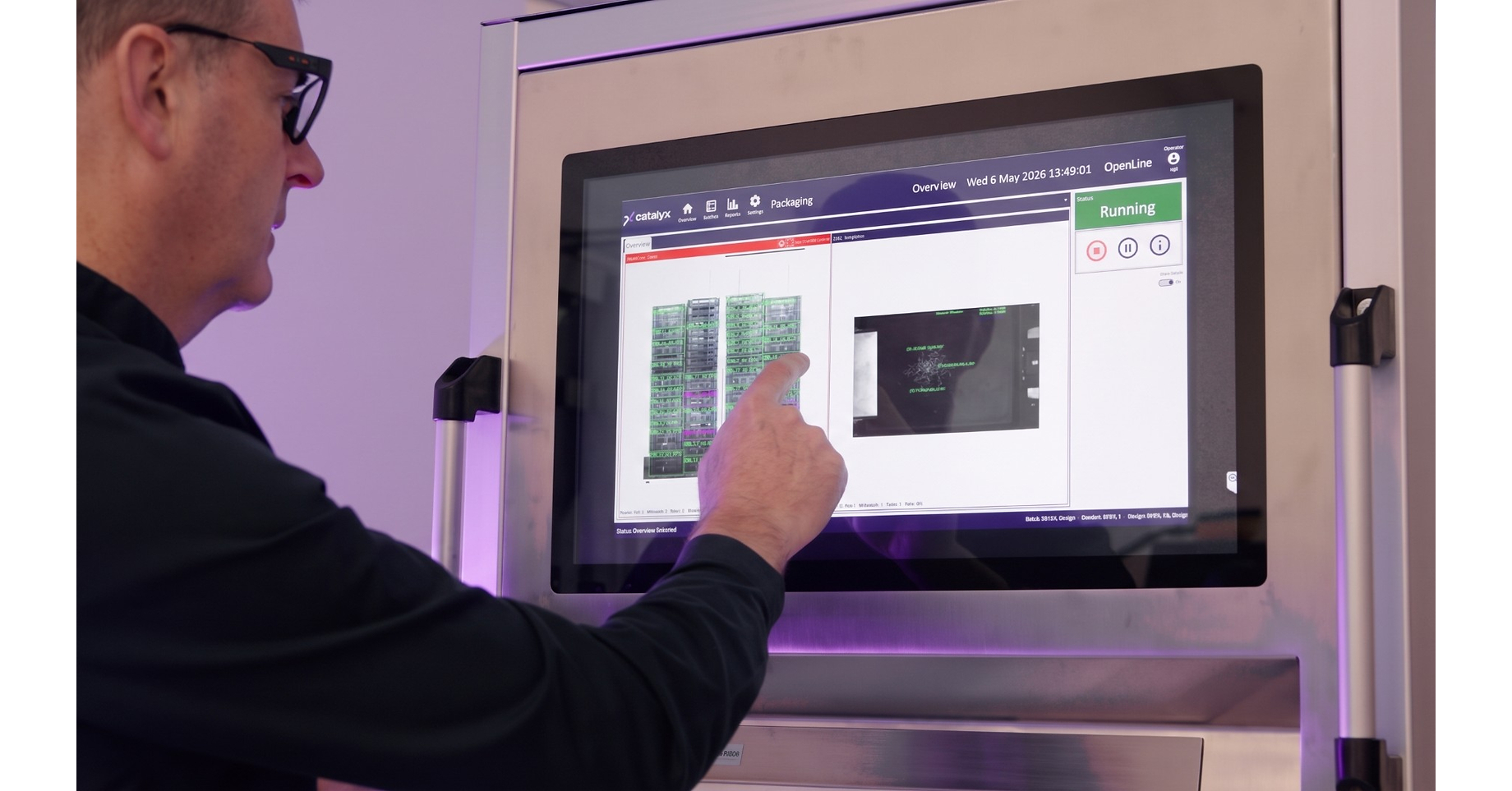
Catalyx launched OpenLine, a platform that connects AI-driven and traditional machine vision with production equipment and enterprise systems to coordinate manufacturing lines. In one multi-site deployment, a biometric monitoring device manufacturer increased annual output from 3 million to 50 million units while maintaining yield above 99%. OpenLine is available now for global deployment and includes features designed to support regulated manufacturing requirements.
Analysis
The investable signal is not the product launch itself, but whether manufacturers will pay for a vendor-neutral orchestration layer rather than extend incumbent automation stacks. If OpenLine can work reliably across installed equipment, it could shift value toward integration software and away from bespoke engineering, while making machine-vision vendors more interchangeable. The counterweight is that regulated customers face validation, cybersecurity and change-control burdens: compatibility claims do not establish a short deployment cycle or recurring software economics. Catalyx’s cited output example is a company-reported single deployment, not evidence of typical customer ROI or independently verified causation.
Near term (days to 1–3 months), this is low-signal PR with no mapped public issuer or disclosed commercial metrics; no event-driven trade is warranted. Watch for named customer wins, deployment timelines, software revenue or renewals, and evidence that integration reduces engineering effort. Over 6–18 months, successful multi-site standardization could support demand for factory software and systems integration, but may also pressure project-based integrators if configuration becomes repeatable. Rockwell Automation, Siemens and Emerson are relevant incumbent automation ecosystems; Cognex and Keyence are relevant vision suppliers, though the article does not establish displacement of any of them.
Contrarian point: the stated pain is credible, but connectivity alone is not a moat. In regulated production, validated workflows and liability for inspection failures may favor existing vendor relationships over a new cross-vendor layer. Thesis weakens if pilots fail to convert, deployments remain bespoke, or customers defer upgrades; it strengthens with repeatable multi-site wins and independently documented payback.
AllMind Terminal
AI-powered research, real-time alerts, and portfolio analytics for institutional investors.
Request TrialMarket Sentiment
Overall Sentiment
moderately positive
Sentiment Score
0.35
Key Decisions for Investors
- No direct equity or options trade: the release provides no financial terms, customer identity, adoption data, or mapped public issuer.
- Add Catalyx to an industrial-software watchlist; seek verification of paid deployments, recurring software contribution, implementation time, and customer retention before underwriting material revenue.
- Track commentary from Rockwell Automation, Siemens, Emerson, Cognex and Keyence for signs that cross-vendor orchestration is accelerating, being bundled into incumbent platforms, or changing service demand; do not infer displacement from this launch.
- Reassess the positive read if multiple named customers demonstrate repeatable multi-site deployments and measurable payback; reverse it if implementation remains customized or regulated customers cite validation and cybersecurity hurdles as reasons to delay.
More News
- Marvell to buy Lumentum in $115 billion deal in AI data-center bet
- Marvell, Lumentum tout historic $115B deal to create ‘category leader' in AI connectivity
- Palantir reports booming U.S. commercial revenue growth, topping government for first time
- Anthropic releases amended IPO prospectus with third-quarter financials
- The AI boom is facing another supply crunch. This time it’s the amount of capital available to feed Silicon Valley’s endless need for cash
- Anthropic to Spend $895 Billion in the Years Ahead