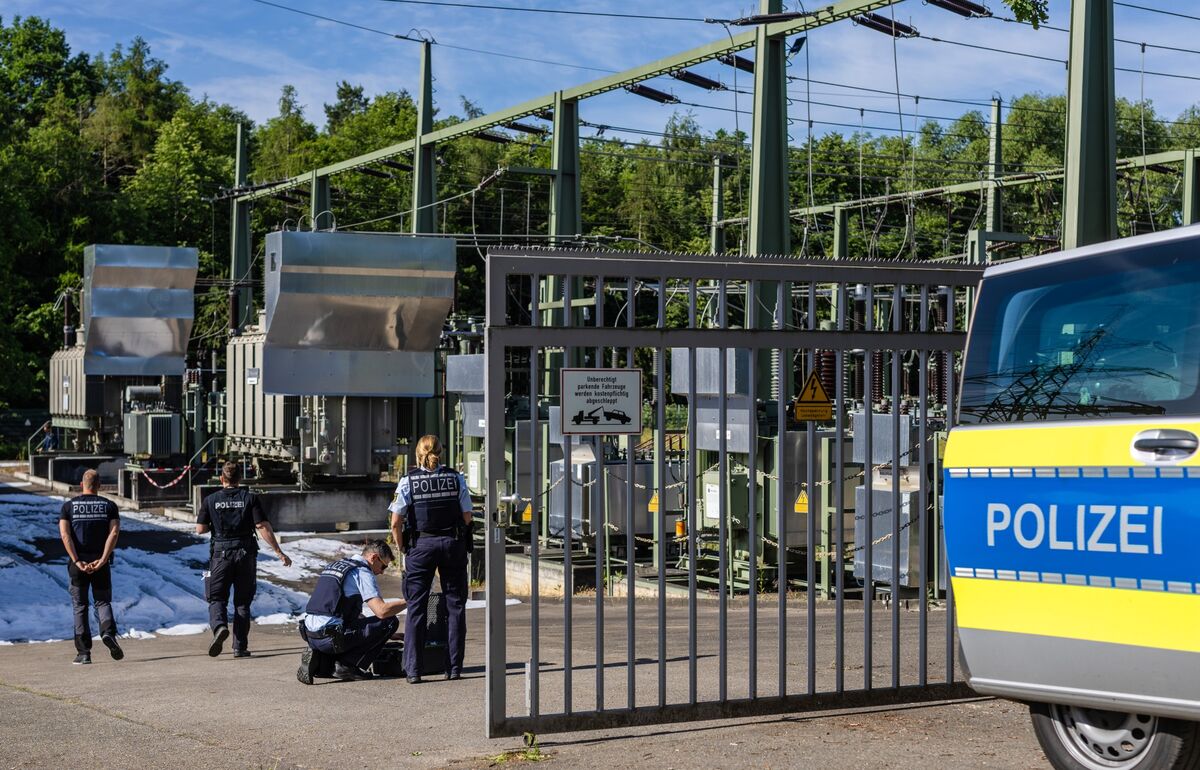
German police are investigating a suspected arson attack on a power substation in Reutlingen, Baden-Wuerttemberg, that disrupted electricity for a hospital and tens of thousands of homes and businesses. Authorities said the fire was most likely started deliberately. The incident is negative for local infrastructure reliability, but the broader market impact is limited.
This is less a single-asset event than a reminder that European grid fragility has real optionality value for firms tied to backup power, industrial resilience, and physical security. The immediate economic loss is local, but the second-order effect is that customers hit by even a short outage tend to accelerate capex into generators, battery storage, UPS systems, and redundant controls over the next 1-3 quarters. That supports a broader “resilience spend” basket even if the direct damage is quickly repaired.
The market is likely underpricing the litigation and regulatory angle. If investigators confirm sabotage, expect a tighter policy response around critical infrastructure protection, which can translate into higher procurement budgets for perimeter security, monitoring software, and utility hardening across Germany and the EU over 6-18 months. That is structurally negative for utilities’ opex and near-term margins, but positive for vendors selling hardening, surveillance, and contingency systems.
Energy-price spillovers should be modest unless outages become repeated or geographically clustered. The key tail risk is not lost load at this substation alone, but a copycat pattern that forces utilities to build in more redundancy, raising network costs and potentially feeding through to regulated tariffs; that would be a slower-burn inflationary impulse rather than an immediate power-price spike. Contrarian view: if authorities move fast and this proves isolated, the event may fade from headlines before the market reprices it, making any broad “Europe grid risk” trade vulnerable to a sharp mean reversion.
AI-powered research, real-time alerts, and portfolio analytics for institutional investors.
Request TrialOverall Sentiment
moderately negative
Sentiment Score
-0.35
