
Berkshire Makes Record $9.6 Billion Buyback
Source: youtube.com
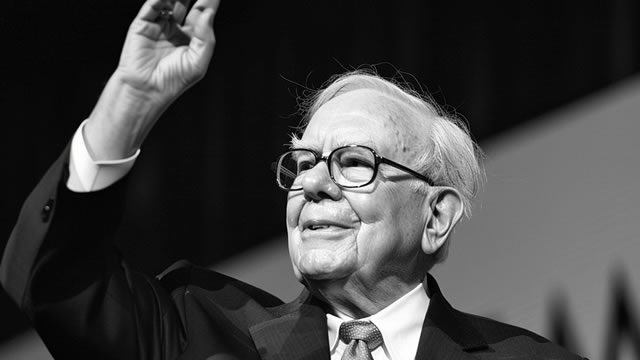
Berkshire Hathaway reported record third-quarter share buybacks of $9.6 billion alongside weaker insurance earnings. CEO Greg Abel is deploying the company’s cash reserves through buybacks, acquisitions and equity investments while maintaining a measured approach.
Analysis
The key question is not the headline buyback size but whether repurchases are reducing the share count at prices that improve per-share intrinsic value. The cash deployment supports the capital-allocation case for Berkshire Hathaway, but without average repurchase prices, shares retired, and cash remaining after operating needs, it is not yet evidence of durable per-share accretion. Weaker insurance earnings add a separate uncertainty: the cause matters. Ordinary underwriting volatility is different from adverse reserve development or a sustained deterioration in pricing, and the article does not establish which is driving the weakness.
Near term, the buyback may provide a sentiment floor, but it should not be treated as a hard valuation floor: repurchase pace can slow, and the cash reserve also has option value if markets or acquisition opportunities improve. Over 1–3 months, verify the share-count change, repurchase cadence, and insurance underwriting/reserve disclosures. Over 6–18 months, the test is whether Greg Abel can sustain disciplined capital allocation across buybacks, acquisitions, and equity investments—not simply deploy cash. The contrarian risk is that investors read a record dollar amount as an endorsement of value when the relevant measure is price paid versus intrinsic value. No clear directional trade is warranted from this information alone.
AllMind Terminal
AI-powered research, real-time alerts, and portfolio analytics for institutional investors.
Request TrialMarket Sentiment
Overall Sentiment
mixed
Sentiment Score
0.10
Ticker Sentiment
Key Decisions for Investors
- Do not chase BRK.A solely on the buyback headline. Before adding, check the next filing for shares retired, average repurchase price if disclosed, and cash retained for insurance and operating needs.
- Treat insurance weakness as a watch item, not yet a structural short thesis. Reassess if disclosures point to adverse reserve development, persistent underwriting deterioration, or management guidance that indicates the weakness is not temporary.
- For a 1–3 month catalyst check, compare subsequent repurchase activity and per-share book-value/intrinsic-value indicators with insurance results. A sharp slowdown in repurchases alongside continued cash accumulation would weaken the capital-return thesis.
- Keep BRK.A on a 6–18 month capital-allocation watchlist through the leadership transition. The thesis is falsified if deployment increasingly favors acquisitions or investments that fail to support per-share value, or if underwriting deterioration persists; absent those signals, no forced long/short position.
More News
- Berkshire Hathaway more than doubles buybacks in third quarter as earnings decline
- Berkshire shares surge as Wall Street swoons amid AI fears
- Berkshire Hathaway stock is a haven again as investors flee AI bloodbath while its own portfolio takes a hit amid reshuffling
- Berkshire Makes Record $9.6 Billion Buyback
- Berkshire Hathaway A earnings beat by $7.00, revenue topped estimates
- Warren Buffett's Berkshire Just Spent a Record $9.6 Billion Buying Its Own Stock