
EU Says Accord With China Could Cut Hybrid Car Exports by Half
Source: Bloomberg
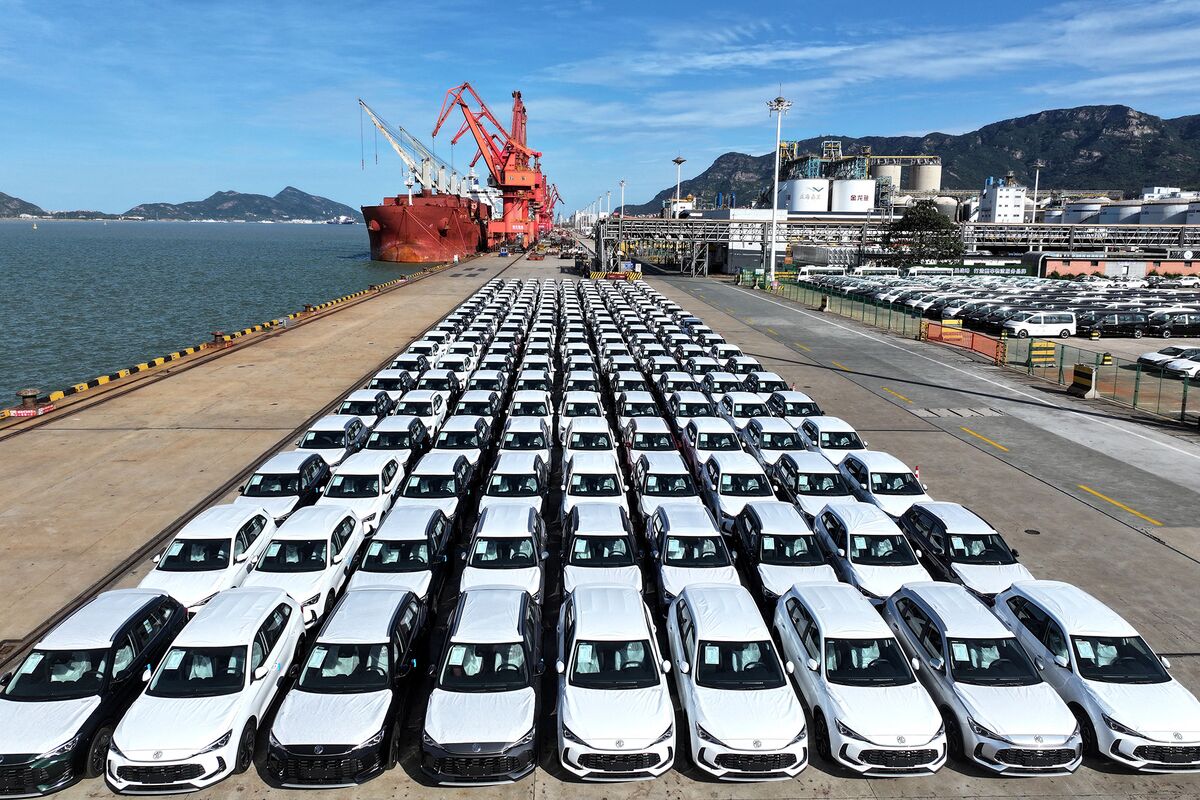
The EU and China said they reached a shared understanding to moderate Chinese hybrid and plug-in hybrid exports to the EU, with EU trade chief Maros Sefcovic saying the arrangement could cut exports by more than half. The potential reduction is prospective; the article provides no implementation details or confirmed export-volume change.
Analysis
The market mechanism is reduced price competition in the specific hybrid and plug-in-hybrid categories covered—not a broad reduction in Chinese auto competition. If the arrangement is binding and enforced, European incumbents could gain pricing room and avoid some volume displacement; that benefit may be diluted if Chinese manufacturers redirect exports to other powertrains or markets, or localize production in Europe. The agreement could also shift competition toward pure EVs, where this measure may offer no protection.
Near term, any European-auto relief rally risks getting ahead of verifiable earnings impact. The key missing details are covered vehicle definitions, export baseline and quota, duration, enforcement, and whether the arrangement is voluntary or backed by trade remedies. Over 1–3 months, those details—not the headline—should determine whether this changes company guidance. Over 6–18 months, localization and product-mix shifts are plausible responses, but would require company-specific investment and capacity evidence.
Contrarian view: a greater-than-half export reduction sounds large but does not establish an equivalent reduction in Chinese competitive pressure or a material uplift to European OEM profits. Reversal risks include weak enforcement, disputes over scope, and substitution into excluded models. No broad sector position is justified before implementation terms are clear.
AllMind Terminal
AI-powered research, real-time alerts, and portfolio analytics for institutional investors.
Request TrialMarket Sentiment
Overall Sentiment
mildly negative
Sentiment Score
-0.20
Key Decisions for Investors
- Do not chase a broad European-auto rally on the announcement alone; treat it as a potential pricing-power catalyst, not yet an earnings upgrade.
- Set an alert for publication of the agreement’s covered models, baseline, duration, and enforcement mechanism. Reassess European automakers only if the terms constrain vehicles that are meaningful to their competitive set.
- Monitor Chinese automakers’ model mix, destination markets, and European production plans for evidence of substitution or localization; either would weaken the expected protection for EU incumbents.
- Falsify the constructive thesis if the arrangement proves voluntary or narrowly scoped, or if European OEM guidance and realized pricing show no improvement over the next 1–3 months.
More News
- Trump's diesel agreement with Putin accused of contradicting Russia sanctions law
- Trump reaches Russian diesel supply deal as U.S. fuel prices surge
- Putin tells Trump peace talks are unlikely, cites Ukraine drone attacks
- Elon Musk intensifies attack on Ambani over Starlink India launch delay
- Wall Street Week | Michigan Manufacturing, AI Debt Investments, Baby Bonds, Canadian Coal Fight
- Trump struck a diesel deal with Putin just weeks after signing Russia sanctions. Zelenskyy calls it ‘a weak decision’