
The New Third-Party Logistics Study Delves into Strategic Partnerships, Supply Chain Resilience, AI and Freight Fraud
Source: PR Newswire
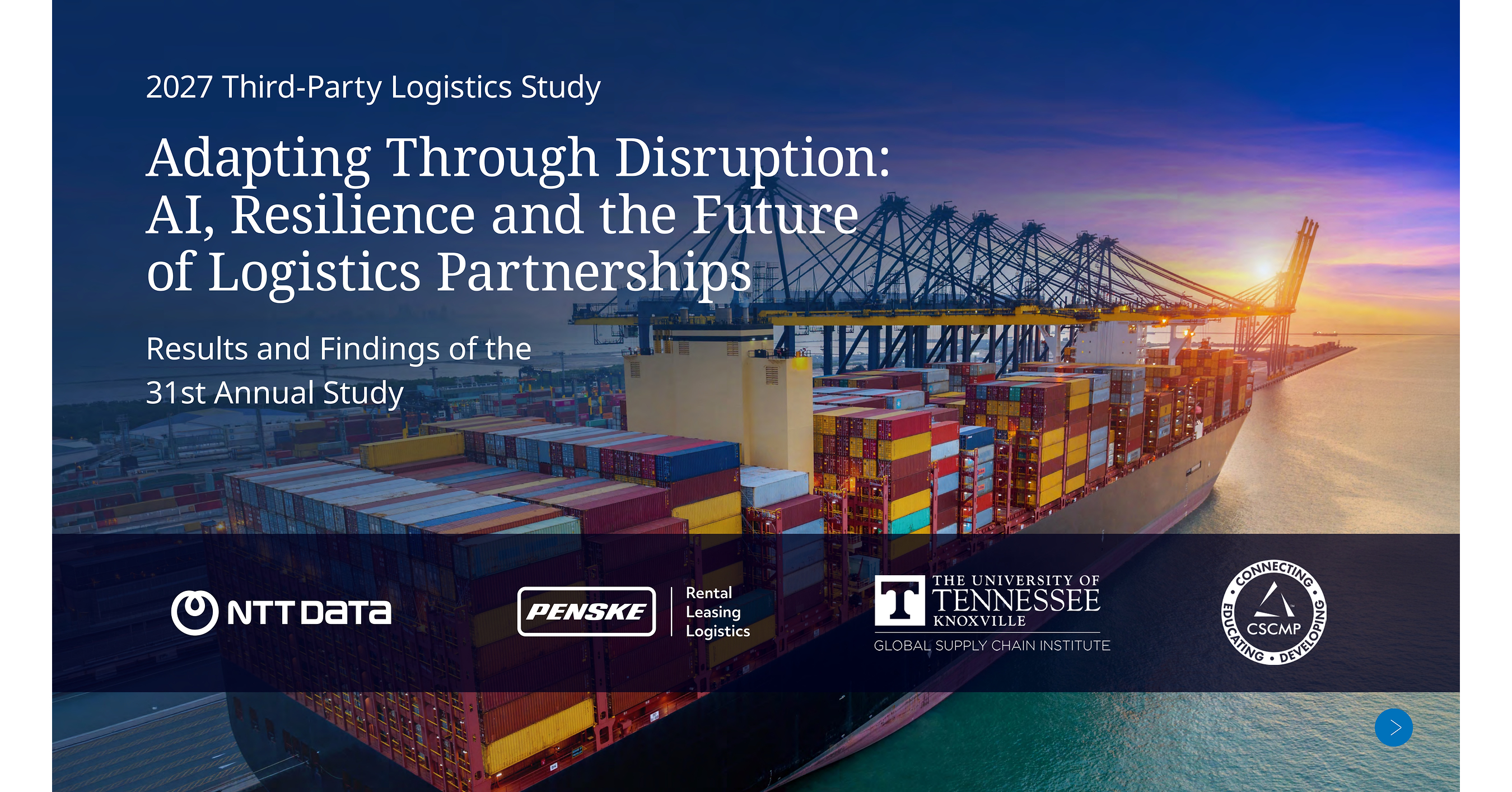
The 2027 Third-Party Logistics Study finds AI is embedded in supply-chain planning and execution, with 66% of shippers using it for predictive analytics and risk planning versus 43% of 3PLs. Data quality (61%), legacy-system integration (54%) and budget constraints (46%) are leading barriers to broader adoption. The study also highlights transportation-capacity disruption and freight fraud concerns, with 69% of 3PLs extremely satisfied with anti-theft technology compared with 36% of shippers.
Analysis
The investable signal is not “AI adoption” but where the bottleneck sits: data quality and legacy integration. That shifts near-term value toward systems integrators, data platforms and cybersecurity providers—not necessarily the model vendors—and makes AI-driven productivity gains slow and uneven. 3PLs with usable, cross-customer data could differentiate on planning and execution; smaller providers may face rising integration costs or become dependent on larger platforms. For shippers, more flexible routing and inventory buffers reduce disruption exposure but can tie up working capital and weaken the appeal of ultra-lean networks.
The partnership figures suggest customer relationships may be sticky, but they do not establish pricing power, incremental margins or contract duration. The study is survey-based and promoted by logistics and technology sponsors, so treat adoption and satisfaction claims as directional rather than proof of realized returns. Freight fraud and cybersecurity create additional demand for controls, while faster shipment cycles can undermine process discipline—the technology spend alone may not solve that operational failure mode.
Over days, this is unlikely to support a reliable sector trade. Over 1–3 months, watch earnings commentary from logistics operators and supply-chain software vendors for measurable implementation spend, contract wins and productivity—not AI mentions. Over 6–18 months, the winners should be firms that can demonstrate lower operating cost or better service without requiring customers to replace core systems. The thesis weakens if integration projects stall, customers defer spending, or reported AI deployments fail to improve service or cost metrics.
AllMind Terminal
AI-powered research, real-time alerts, and portfolio analytics for institutional investors.
Request TrialMarket Sentiment
Overall Sentiment
mixed
Sentiment Score
0.10
Key Decisions for Investors
- No immediate directional trade: the survey offers no company-level revenue, margin or spending data, and sponsorship creates a promotional bias. Avoid treating adoption rates as earnings estimates.
- Set an alert on earnings from C.H. Robinson, GXO Logistics and J.B. Hunt for quantified productivity, service-level improvements, technology spending and customer retention. Favor evidence of realized unit-cost gains over broad AI commentary.
- Watch enterprise integration and cybersecurity providers, including NTT DATA, for disclosed supply-chain engagements and conversion of pilots into scaled contracts; verify contract economics before taking exposure.
- Falsification/watch item: if logistics firms report rising technology and implementation costs without improvement in operating costs, service reliability or renewal terms over the next 2–3 quarters, the proposed productivity and partnership advantage is not translating into investable earnings.
More News
- US stock market hits all-time high as investors bet big on AI
- Oman evacuates injured crew from attacked tanker in Strait of Hormuz
- Oil rises as concerns over Houthi attacks on Saudi Arabia eclipse supply recovery
- Singapore's Temasek warns of the ‘biggest risk’ facing markets right now
- Rebounding oil exports through Strait of Hormuz are vulnerable to stepped-up Iranian tanker attacks
- A 32% beat, a +6% jump: the IT solutions name our models picked in July