
Apple's AI Strategy And New Products
Source: seekingalpha.com
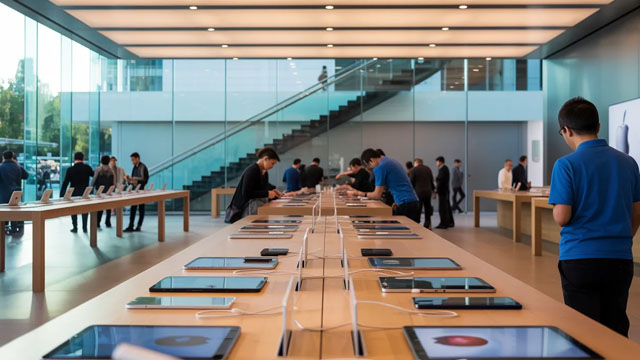
Apple unveiled Apple Intelligence, embedding AI across its devices and services through custom silicon, unified operating systems and a new intelligence layer. The strategy is intended to deepen engagement and support future device upgrades, while AI functionality is limited to newer hardware. New iPhone Duo foldable and Pro models reinforce Apple's hardware roadmap, though the upgrade cycle is likely to be gradual.
Analysis
The investable issue is not AI feature quality but the installed-base conversion rate into compatible hardware. Apple can monetize through a mix upgrade rather than an immediate unit-volume spike: higher-memory configurations, Pro-model mix, and potentially faster replacement cycles lift iPhone ASP and gross-margin dollars even if total handset demand remains muted. The gating factor is whether on-device inference creates a sufficiently visible user benefit to overcome consumers' historically long replacement intervals; until activation and retention data emerge, headline enthusiasm should not be capitalized as a durable Services multiple expansion.
Near term (days to weeks), AAPL is likely to trade with broader AI-risk sentiment and product-event expectations rather than measurable earnings revisions. Over the next 1-3 months, the key catalyst is evidence that carrier promotions, trade-in activity, and Pro/compatible-device mix are improving ahead of launch; that would support FY earnings upside through ASPs and component content. A weaker outcome would be a feature rollout perceived as iterative or geographically constrained, leaving Apple with elevated AI spending but no corresponding upgrade-cycle acceleration.
Second-order beneficiaries are semiconductor content providers exposed to memory and advanced packaging, particularly SK Hynix and Micron (MU), if local AI requirements raise DRAM/NAND content per premium handset. Conversely, Android OEMs and Qualcomm (QCOM) may see the competitive response narrow Apple's differentiation quickly, since an AI-led replacement cycle rewards whichever ecosystem delivers comparable features at lower hardware price points. The contrarian view is that the market may overestimate AI as a unit catalyst: AI could mainly protect premium share and reduce churn, valuable strategically but insufficient to move consolidated revenue growth materially without a broader consumer-demand rebound.
AllMind Terminal
AI-powered research, real-time alerts, and portfolio analytics for institutional investors.
Request TrialMarket Sentiment
Overall Sentiment
moderately positive
Sentiment Score
0.42
Ticker Sentiment
Key Decisions for Investors
- Maintain AAPL as a core-quality long but do not add aggressively on launch headlines; add only if post-launch channel data indicate Pro/compatible-device mix is improving. A 1-3 month upside case is multiple expansion plus ASP-driven estimate revisions; thesis is weakened if management does not raise iPhone revenue or gross-margin commentary at the next earnings update.
- Express the hardware-content angle through a 3-6 month long MU position rather than assuming all AI value accrues to AAPL. The trade requires confirmation of higher mobile-memory specifications and improving handset-memory pricing; exit or reduce if DRAM contract pricing softens or premium-phone demand disappoints.
- Watch a relative-value setup: long AAPL / short QCOM only if Apple demonstrates materially superior AI-driven upgrade metrics or ecosystem retention. This is not yet actionable because Qualcomm can still benefit from Android AI handset content; reassess after initial device sell-through and OEM launch responses.
- Avoid treating foldables as a near-term earnings driver until pricing, bill-of-materials, and production-volume disclosures clarify whether margins can match the existing Pro franchise. A costly low-volume form factor would dilute the AI-upgrade narrative rather than enhance it.
More News
- Bloomberg Daybreak Europe: Soaring BOE & ECB Hike Bets (Podcast)
- Earnings call transcript: MasterCraft beats on Q4 2026 sales, shares rise premarket
- Trump Promises $5,000 For US Citizens if GOP Win Midterms
- Stocks making the biggest moves premarket: Macy's, Meta, Apple, Novartis and more
- Here are Thursday's biggest analyst calls: Nvidia, SpaceX, Tesla, Ferrari, Meta, Apple, AMD, Yum & more
- U.S. stock futures tick up after Wall St falls on higher yields; PPI, CPI awaited