
Broadcom, Amazon Test Limits of Investor Demand for AI Buildout
Source: Bloomberg
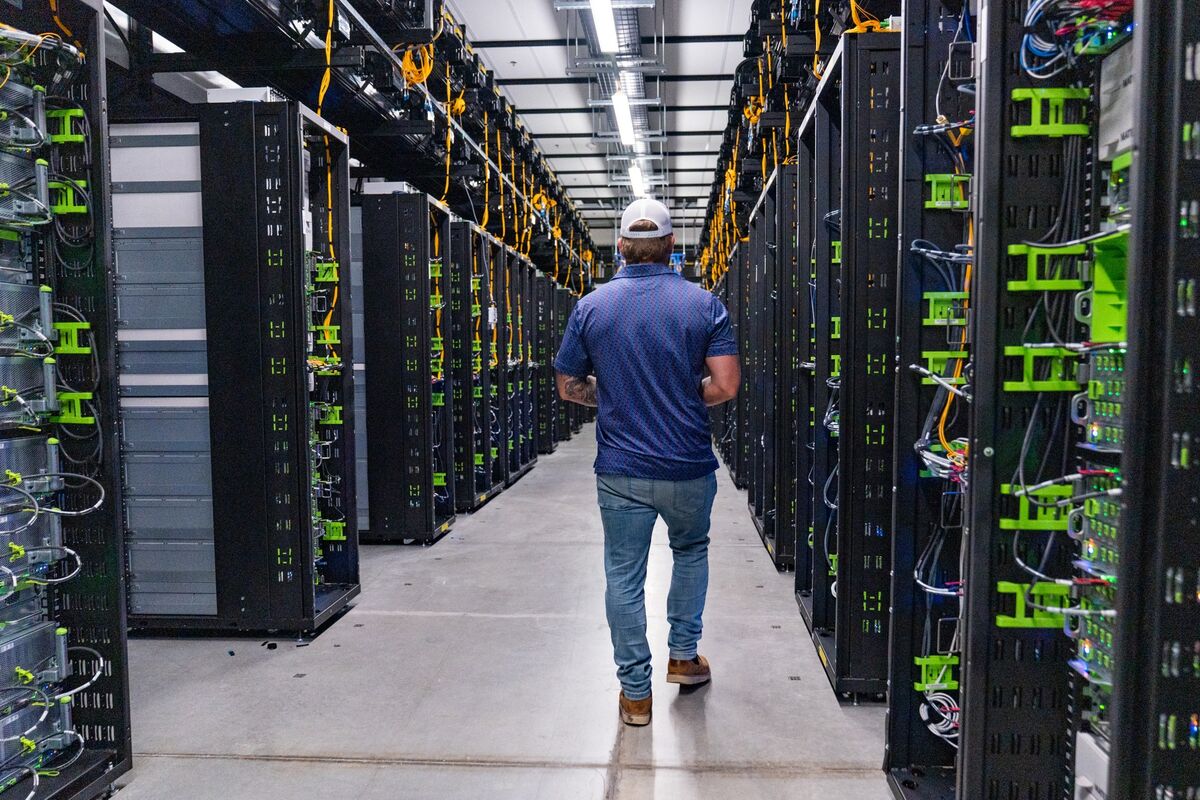
Broadcom is reportedly seeking $60 billion in new financing for AI-chip-related funding benefiting Anthropic and other companies, including a planned $42 billion Class A senior-secured tranche led by Blackstone. The unusually large debt package tests investor appetite for financing the capital-intensive AI buildout. Anthropic is also reportedly nearing an IPO that could exceed the scale and market attention of SpaceX's expected May listing.
Analysis
The relevant signal is not incremental AI demand; it is the migration of AI infrastructure funding from corporate balance sheets into large, bespoke private-credit structures. That can extend accelerator purchasing beyond what public-equity investors would tolerate under conventional capex discipline, supporting AVGO’s custom-silicon revenue visibility over the next 2-4 quarters. The offset is that debt-funded demand is inherently more reflexive: any slowing in model-provider funding, cloud utilization, or equity valuations can rapidly turn a hardware order book into a credit-workout issue.
AVGO should earn a relative valuation premium to merchant chip suppliers if financing enables customers to commit to multi-year ASIC programs, since custom designs create switching costs and attach networking content. However, the equity upside is likely capped if investors begin capitalizing financing obligations as quasi-vendor financing rather than treating them as independent end-customer demand. For AMZN, the read-through is mixed: third-party model-provider capacity may validate cloud demand, but a proliferation of financed dedicated infrastructure can compete with AWS for the highest-value AI workloads and pressure the economics of capacity leasing.
BX benefits near term from origination fees, asset deployment and the scarcity premium attached to financing at this scale, but its upside is most sensitive to underwriting protections rather than headline deal volume. A broad repricing in AI-linked private credit would create a second-order problem for credit managers: mark volatility, redemption concerns in semi-liquid vehicles, and reduced capacity to fund follow-on infrastructure. The contrarian view is that public markets may be underestimating this credit-channel risk because AI demand remains strong; credit spreads and covenant terms will likely signal deterioration before semiconductor guidance does.
Over the next 1-3 months, monitor syndication uptake, all-in yield, leverage multiple, amortization profile and whether the debt is fully recourse to a cash-generative obligor. Weak demand requiring wider pricing or greater lender protections would be bearish for AVGO’s multiple even if near-term revenue guidance holds. Over 6-18 months, the key falsifier for the bullish infrastructure thesis is a material miss in AI-cloud utilization or a funding/IPO valuation reset among major model developers, which would impair the assumed residual value of specialized compute assets.
AllMind Terminal
AI-powered research, real-time alerts, and portfolio analytics for institutional investors.
Request TrialMarket Sentiment
Overall Sentiment
mildly positive
Sentiment Score
0.20
Ticker Sentiment
Key Decisions for Investors
- Maintain a tactical long AVGO versus a short basket of merchant AI semis (SMH hedge or selected GPU-exposed names) for the next 2-4 quarters; custom-silicon commitments should have superior revenue durability if the financing clears cleanly. Size modestly until leverage, collateral and pricing terms are disclosed; exit the relative long if AVGO indicates customer-funded programs are being delayed or if financing spreads widen materially during syndication.
- Do not add directional AMZN exposure on this development alone. Set an alert for AWS commentary on AI capacity utilization and customer concentration at the next earnings cycle: evidence that financed dedicated capacity is displacing AWS workloads would favor an AMZN underweight versus MSFT/GOOGL, while accelerating AWS backlog conversion would invalidate that concern.
- Accumulate BX only on evidence of strong lender demand and conservative structural protections, rather than on announced fee opportunity. A 6-12 month long is attractive if private-credit fundraising and deployment remain intact, but reduce if AI-linked credit vehicles report valuation marks, elevated withdrawals, or deal terms require unusually high advance rates against rapidly depreciating compute hardware.
- Treat the prospective model-provider IPO pipeline as a volatility catalyst rather than a fundamental confirmation. If public-market pricing implies aggressive revenue multiples without a corresponding improvement in utilization or cash generation, consider trimming AI-infrastructure beta into the event; a weak aftermarket would tighten financing conditions for the entire AI supply chain within months.
More News
- These charts show how volatile the last quarter was for stocks and bonds
- Broadcom to lend Anthropic up to $42 billion to lease its chips, filing says
- SoftBank completes final phase of $30 billion investment in OpenAI
- Broadcom starts amassing $60 bln to fund chips for Anthropic- Bloomberg
- One of our most recent defensive buys cleared a hurdle and its stock jumped
- Exclusive-Broadcom to lend Anthropic up to $42 billion to lease its chips, filing says
From AllMind Research
- Anthropic IPO Preview: Valuation, Timing, and What to Watch
- Shein After the IPO: Venue, Valuation, and What Must Be Proved
- What AI Research Tools Should a Small Hedge Fund Buy First?
- Document Search Enhancements, AI Enhancements, AI Actions, & Chat Export
- AI Vendor Landscape for Institutional Investment Teams