
Krelva Accepted Into the HBS Foundry Bootcamp at Harvard Business School
Source: PRWeb
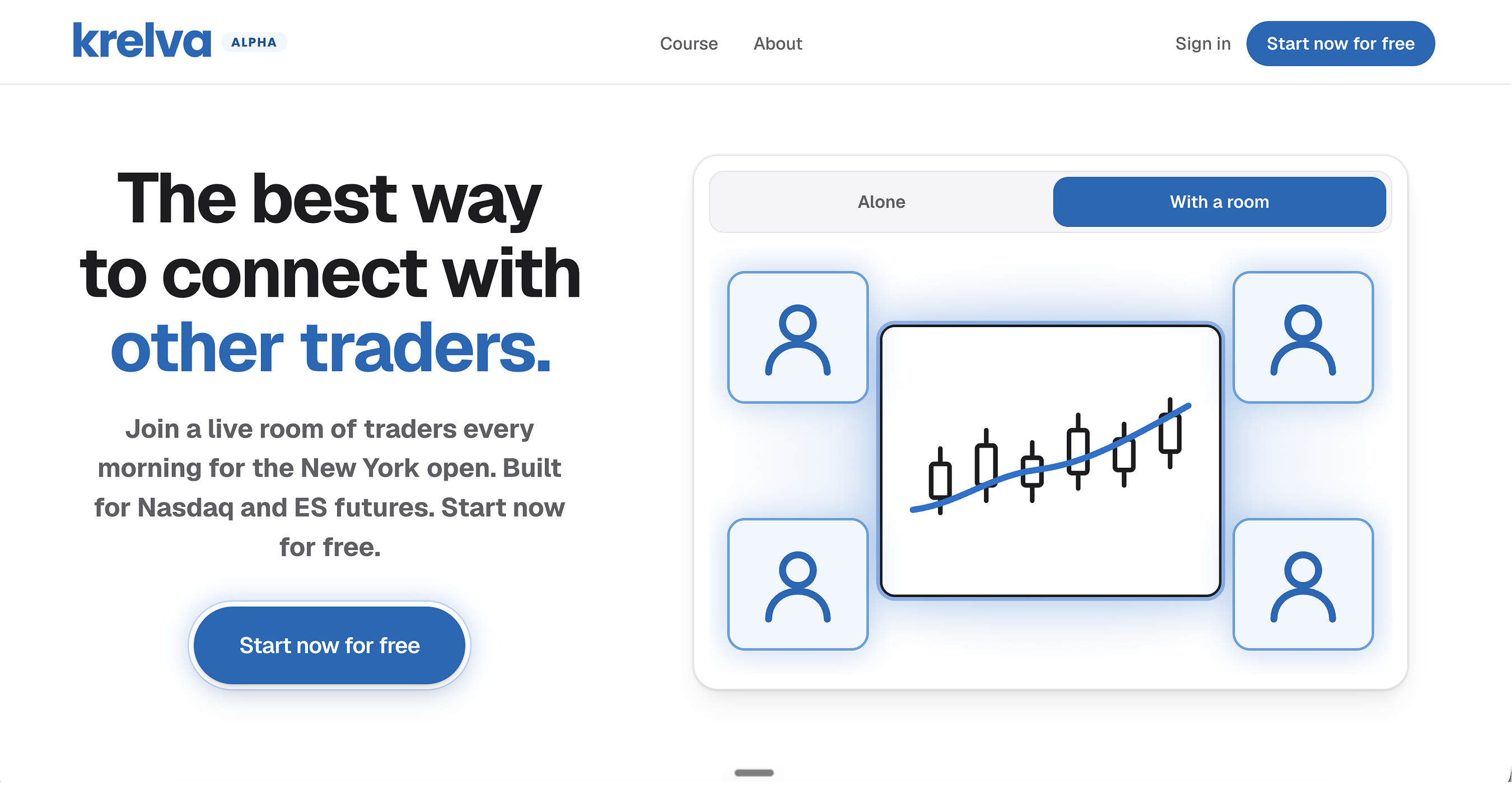
Pre-launch futures-trading community startup Krelva was accepted into Harvard Business School's Foundry Bootcamp and plans to launch Krelva Meet in October. The subscription product will charge $50 per month after a 14-day free trial, placing traders in verified skill-level groups to discuss Nasdaq-100 and S&P 500 futures trading. The company remains bootstrapped and early stage, making the announcement primarily a startup-validation and product-launch development rather than a broad market catalyst.
Analysis
No listed-company earnings read-through is evident: the product is pre-launch, unfinanced, and targets a low-ARPU retail cohort with inherently high churn. The relevant mechanism is not incremental futures volume today, but whether verified, cohort-based communities can lower customer-acquisition costs and improve retention versus Discord, X, and prop-firm affiliate funnels. At $50/month, meaningful economics require thousands of sustained paid users; a 14-day trial creates adverse-selection risk because unsuccessful traders are most likely to churn before conversion.
For NDAQ, any impact is de minimis. The underlying contracts are CME-listed equity-index futures, so even a successful community would more directly contribute marginally to CME Group (CME), not Nasdaq's transaction revenue; NDAQ exposure is limited to broader retail engagement around Nasdaq-100 as a benchmark. The more relevant second-order risk is regulatory: automated brokerage verification and performance-based social rankings could attract CFTC/NFA scrutiny if rooms evolve into de facto trade recommendations or compensated signal distribution.
Consensus-style enthusiasm around a Harvard-affiliated founder program is not investable validation. The core moat claim—verification—depends on brokerage and prop-firm integrations, data permissions, fraud controls, and enough liquidity at each skill tier to make rooms useful. Over the next 6-18 months, the likely outcome is fragmented niche adoption unless the company can demonstrate paid conversion, 90-day retention, and low moderation/compliance costs; without those metrics, there is no public-market trade signal.
AllMind Terminal
AI-powered research, real-time alerts, and portfolio analytics for institutional investors.
Request TrialMarket Sentiment
Overall Sentiment
mildly positive
Sentiment Score
0.20
Ticker Sentiment
Key Decisions for Investors
- No action in NDAQ; the cited activity is economically immaterial and NDAQ is not the primary exchange beneficiary. Do not extrapolate retail Nasdaq-100 futures interest into a revenue catalyst.
- Place CME on a retail-futures engagement watchlist, not a recommendation: revisit only if independently verified platform metrics show material paid-user scale and increased Micro E-mini Nasdaq-100/S&P 500 volume. A measurable acceleration in CME retail volume growth over 1-3 quarters would be the required confirmation.
- Avoid private-market valuation inference from the program affiliation. For any future venture diligence, require cohort conversion after the free trial, 90-day paid retention, CAC/payback, brokerage-verification coverage, and legal review of room moderation before underwriting network effects.
- Key falsifier for the cautious view: evidence that verified cohorts produce retention materially above generic trading communities while maintaining compliance boundaries. Conversely, an enforcement action, broker-data access denial, or reliance on unverified prop-firm credentials would impair the product's central differentiation.
More News
- The AI Infrastructure Stock That Could Make Investors Millionaires Is Hiding in Plain Sight, and Wall Street Isn’t Paying Attention
- SpaceX weighting in Nasdaq 100 set to more than double
- Housing market: Mortgage rates rise for third straight week to highest level since June 2025 while home sales fall for third month in a row
- Christine Lagarde: Interview with Ouest-France
- Wall Street analysts warns the AI boom is on ‘borrowed time'
- Speculators turn net long on yen for first time since February