
Financial stocks are falling as rates rise. Why that’s a problem for the broader market.
Source: MarketWatch
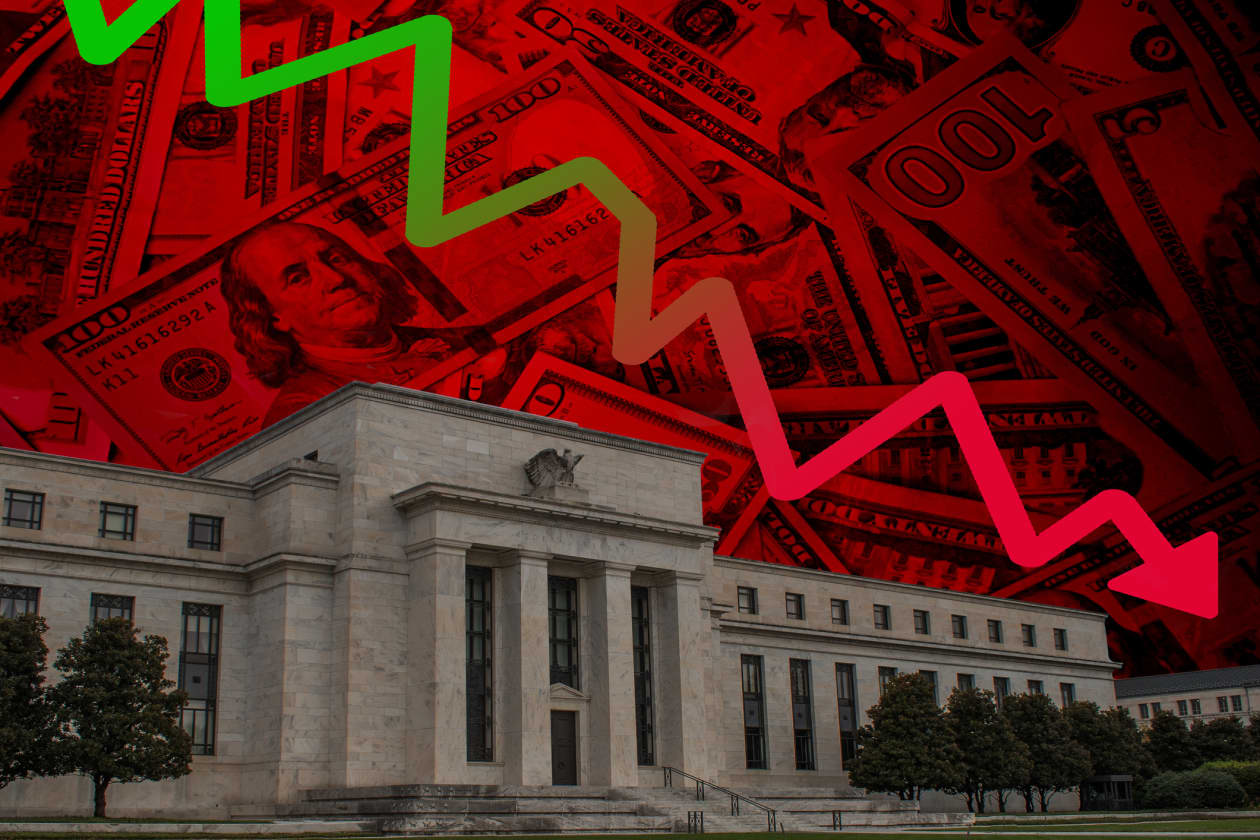
Financial stocks are declining despite rising interest rates as the 2-year Treasury yield is climbing faster than the 10-year yield, flattening the yield curve. A flatter curve and higher rates could constrain bank net interest economics by slowing loan growth and increasing funding costs, reducing credit availability for companies and creating a broader equity-market risk.
Analysis
The key transmission is not simply lower bank net-interest income; it is a tightening in the economy’s credit-creation channel. A persistent front-end-led flattening raises deposit betas and wholesale funding costs faster than asset yields can reprice, pressuring regional-bank profitability and incentivizing tighter underwriting. That disproportionately impairs rate-sensitive borrowers—commercial real estate, small/mid-cap corporates and private-equity-backed issuers—while reducing buyback, M&A and capex capacity over the next 1-3 quarters.
Large money-center banks (JPM, BAC, C) should outperform regionals (KRE) if the curve remains flat because of more diversified fee income, institutional deposit franchises and stronger liquidity. The second-order equity risk is that declining bank relative performance becomes a financial-conditions signal: cyclicals and small caps (IWM) generally face multiple compression before realized credit losses emerge. Insurers with long-duration asset books, particularly P&C carriers (CB, TRV), are comparatively insulated and can benefit from reinvestment yields, although mark-to-market volatility remains a near-term constraint.
Contrarian risk is that a flattening driven by credible disinflation, rather than policy overtightening, could ultimately lower long-end yields and support duration assets. The bearish financials thesis is falsified if deposit costs stabilize, loan growth reaccelerates without a rise in criticized loans, or the 2s10s curve steepens materially through declining front-end rates. The most important near-term evidence will be bank earnings commentary on deposit beta, commercial-real-estate reserves and loan-demand surveys rather than headline rate moves.
AllMind Terminal
AI-powered research, real-time alerts, and portfolio analytics for institutional investors.
Request TrialMarket Sentiment
Overall Sentiment
mildly negative
Sentiment Score
-0.35
Key Decisions for Investors
- Express the credit-tightening view via long JPM / short KRE over the next 1-3 months. JPM offers a higher-quality deposit and fee-income mix, while KRE is more exposed to funding-cost pressure and CRE-linked underwriting; reassess if the 2s10s curve steepens by more than 25bp through falling 2-year yields or regional-bank deposit costs improve.
- Maintain a defensive relative-value position: long CB or TRV / short IWM for 3-6 months. This targets higher reinvestment income and resilient underwriting against the financing sensitivity of small-cap earnings; exit if small-business credit conditions ease materially or loss-ratio guidance deteriorates.
- Avoid broad-bank beta until quarterly disclosures confirm deposit migration and commercial-real-estate reserve trends. A tactical long KRE is only justified if loan growth and net interest income guidance stabilize simultaneously; without those data, the apparent valuation discount can remain a value trap.
- For portfolios with meaningful cyclical exposure, buy 3-6 month IWM downside protection rather than adding outright financial shorts after a sharp selloff. The payoff is strongest if tighter bank lending translates into weaker earnings revisions, while the defined premium limits risk from a rapid Fed-driven steepening.
More News
- This could infrastructure stock has been hit hard of late. UBS says to buy it
- Europe’s economy surprisingly resilient amid war-driven energy shock, surveys show
- European shares advance on Saudi pipeline restart and UN Middle East diplomacy
- AI Data Center Debt Offers Investors Huge Yields — and New Risks
- Nearly 10% of borrowers opted for riskier mortgages last week, as rates soared over 7%
- OECD raises UK 2026 growth forecast, cuts inflation outlook on energy support
From AllMind Research
- Anthropic IPO Preview: Valuation, Timing, and What to Watch
- Shein After the IPO: Venue, Valuation, and What Must Be Proved
- What AI Research Tools Should a Small Hedge Fund Buy First?
- Weekly Update: AI-Powered Report Editing, Investor Relations, and Enhanced Search
- Automating Financial Model Updates: A Source-Controlled Workflow