
Hoymiles lanceert V2X DC-lader van 22 kW als sluitstuk van geïntegreerd energie-ecosysteem voor woningen
Source: PR Newswire
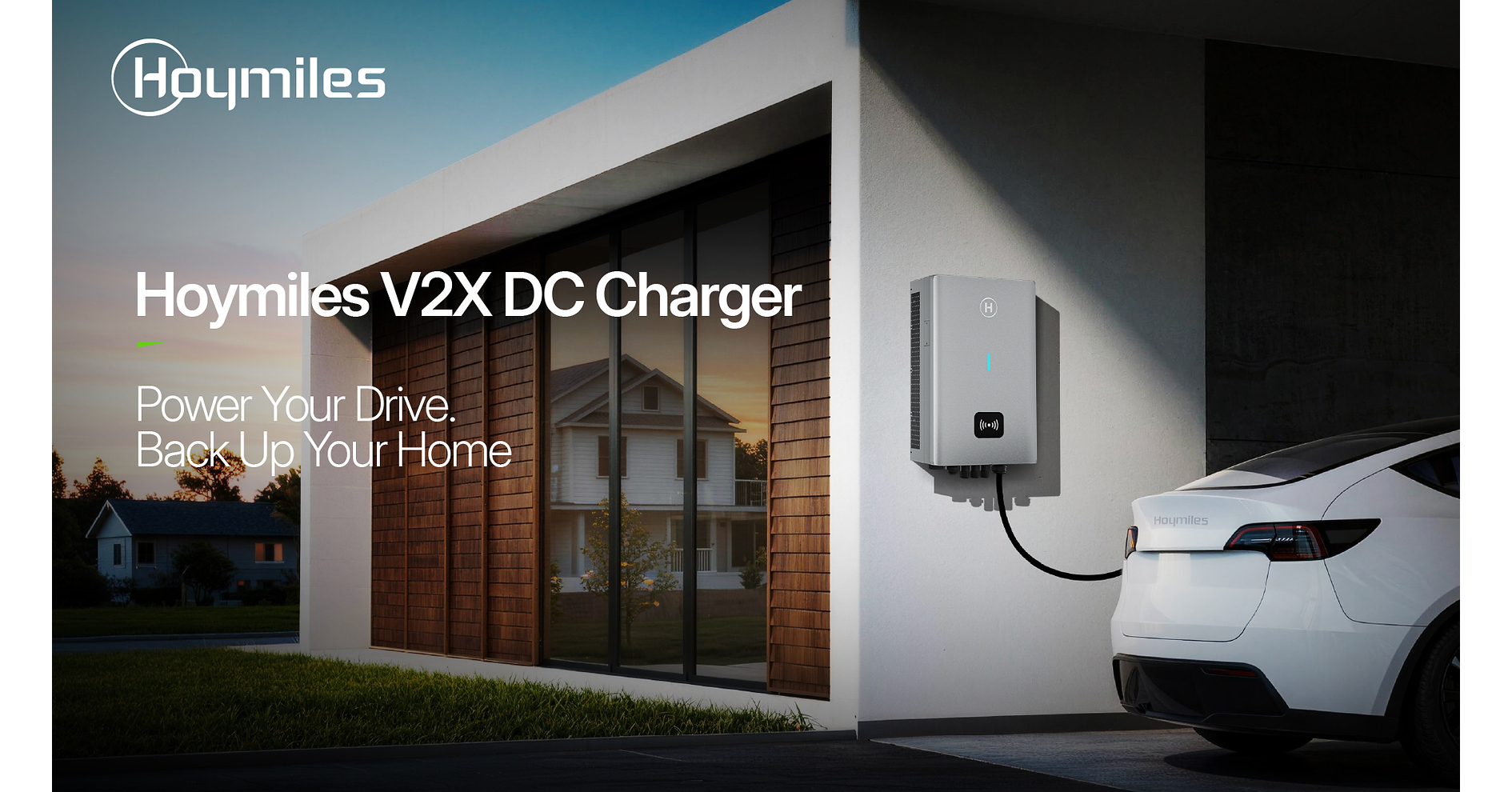
Hoymiles launched a 22 kW bidirectional V2X DC charger that integrates electric vehicles with its HiOne residential battery energy-storage system, solar generation and home energy-management platform. The charger supports V2H backup power and V2G participation in peak-load reduction and virtual power plants, while adding about 110 km of driving range per hour versus roughly 35 km for a conventional AC charger. Hoymiles says the unit supports 95% of mainstream EVs and uses direct DC charging to reduce conversion losses.
Analysis
The investable implication is not the charger’s power rating but whether bidirectional EV integration becomes a purchasing criterion for residential solar-plus-storage systems. If bundled hardware meaningfully improves customer acquisition or installer stickiness, it increases pressure on fragmented inverter/storage vendors such as SolarEdge (SEDG), Enphase (ENPH) and SMA Solar (S92.DE), where attach rates and software/service revenue matter more than one-off hardware margin. The likely near-term effect is limited: Hoymiles is private, and residential V2G economics remain constrained by local interconnection rules, utility tariff design and installer complexity.
The company’s broad vehicle-compatibility claim should be separated from usable V2H/V2G compatibility. DC charging compatibility does not ensure bidirectional operation: vehicle OEM authorization, communication protocols, battery-warranty terms, grid-code certification and utility enrollment are the gating factors. Over the next 1-3 months, evidence of certified vehicle models, named utility/VPP partners and European installer distribution would matter far more than launch publicity; absent these, this is principally a product-specification announcement rather than a revenue catalyst.
Contrarian view: the market may overestimate the speed at which V2G turns EV batteries into monetizable household assets. Battery degradation concerns, low residential export compensation and intermittent vehicle availability can make stationary storage economically preferable, limiting displacement risk for ENPH and SEDG in the next 6-18 months. Conversely, sustained high evening power prices or capacity-market payments could make integrated systems materially more valuable, favoring vendors with control software and utility aggregation capabilities rather than lowest-cost charging hardware.
AllMind Terminal
AI-powered research, real-time alerts, and portfolio analytics for institutional investors.
Request TrialMarket Sentiment
Overall Sentiment
moderately positive
Sentiment Score
0.42
Key Decisions for Investors
- No directional trade on the launch alone; the 1-3 month revenue signal is too weak without disclosed pricing, installation volumes, vehicle certifications and utility/VPP contracts.
- Maintain a watchlist on SEDG and ENPH for European residential-storage attach-rate commentary and gross-margin guidance. A confirmed shift toward third-party DC/V2X bundles with weaker proprietary battery attachment would be a negative read-through; stronger storage attach rates would falsify the displacement concern.
- Monitor Wallbox (WBX) as the most direct listed charging-equipment sentiment proxy, but do not short solely on this announcement. Consider a tactical short only if European bidirectional-charger price competition appears alongside renewed gross-margin or liquidity deterioration; upside risk is a utility partnership or policy subsidy that validates V2G demand.
- For a 6-18 month thematic position, prefer exposure to integrated energy-control platforms over standalone charger manufacturers: reassess ENPH or SEDG long entries only after evidence that VPP compensation and bidirectional-EV standards are expanding. The key falsifier is continued low V2G enrollment despite product availability.
More News
- AI Doubts Spread Cracks in Equities, Credit Markets: Evening Briefing Americas
- Stocks Fall as Oil Rally Keeps a Lid on Treasuries
- Energy markets are adapting to the Iran war as a ‘forever conflict’ while oil producers keep supplies flowing and avoid ‘mutually assured destruction’
- Kinder Morgan, Energy Transfer and Williams could benefit from cheap natural gas
- CrowdStrike CEO's alarming prediction — plus, the sell-off spreads beyond tech
- Vertex reports positive IgAN trial data, FDA decision due Nov. 30
From AllMind Research
- Anthropic IPO Preview: Valuation, Timing, and What to Watch
- Shein After the IPO: Venue, Valuation, and What Must Be Proved
- What AI Research Tools Should a Small Hedge Fund Buy First?
- Bitcoin's 52% Crash Proves It's a Tech Stock: Here's What That Means for Portfolio Construction
- What Is an AI Investment Research Platform?