
NIKE's Cost Controls vs. Growth Investments: Right Tradeoff?
Source: zacks.com
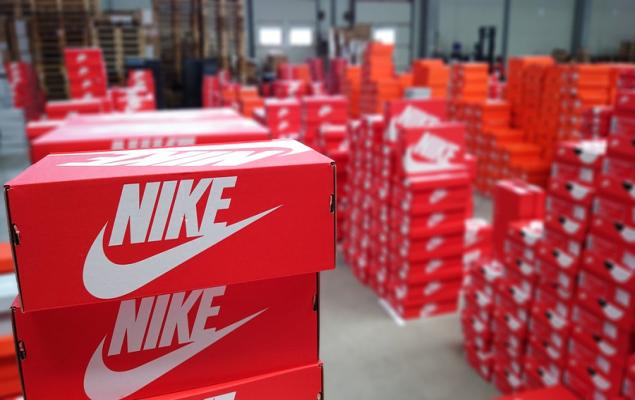
NIKE expects fiscal 2027 revenue to decline by a high-single-digit percentage, while its Pace program is forecast to deliver about $2.5 billion in cumulative savings through fiscal 2031 and incur about $1 billion in pre-tax charges. In the first quarter of fiscal 2027, selling and administrative expenses fell 3% year over year, while demand-creation spending rose 5%. NIKE shares lost 21.6% over six months, fiscal 2027 and 2028 EPS estimates moved lower over the past 30 days, and the stock carries a Zacks Rank #5 (Strong Sell).
Analysis
The key asymmetry is timing: structural savings arrive over years, while revenue pressure and restructuring costs weigh nearer term. The savings case only supports earnings if reductions remove bureaucracy and supply-chain friction without slowing product launches or weakening demand creation. If execution slips, the cost program can become a margin-defensive response to deteriorating demand rather than a self-funded growth investment.
Near term, high-single-digit revenue contraction plus falling EPS estimates creates a downgrade risk; the stated FY2028 earnings rebound is therefore a credibility test, not yet a catalyst. Inventory discipline could eventually improve full-price mix, but pulling supply back also risks ceding shelf space and consumer attention to lululemon and adidas if Nike’s product newness does not convert. Higher demand-creation spend during a weak top-line period raises the bar for measurable sell-through and marketing returns.
At a premium to the cited industry multiple despite estimate cuts, NKE has less valuation protection if the recovery slips. The contrarian counterpoint: expectations and positioning may already be depressed, and successful marketplace clearing could improve mix before reported revenue recovers. Over 1–3 months, track estimate revisions, inventory/discounting, and China trends; over 6–18 months, test whether savings flow through without impairing innovation. The thesis weakens if estimates stabilize and full-price sell-through improves; it strengthens on further cuts, persistent promotions, or execution-related delays.
AllMind Terminal
AI-powered research, real-time alerts, and portfolio analytics for institutional investors.
Request TrialMarket Sentiment
Overall Sentiment
mildly negative
Sentiment Score
-0.35
Ticker Sentiment
Key Decisions for Investors
- Maintain an underweight in NKE versus athletic-apparel peers rather than add an outright short immediately: the estimate-revision and premium-multiple combination is unfavorable, but weak sentiment may make a crowded short vulnerable to a stabilization surprise.
- Consider a relative-value position—short NKE against a diversified peer basket including LULU and adidas AG (ADS)—only where borrow, liquidity, and valuation differences are acceptable. Reassess if NKE’s estimates stabilize while peer demand or margins deteriorate.
- Use the next earnings update as the 1–3 month decision point. Watch revenue trajectory, inventory and markdown commentary, Greater China, and evidence that demand-creation spending is improving full-price sell-through; avoid treating cumulative savings targets as near-term EPS protection.
- Falsification: reduce the underweight if Nike delivers improving full-price demand and stabilizing estimates without renewed discounting. Increase caution if revenue guidance weakens further or cost reductions coincide with slower product execution.
More News
- Nike’s China troubles: What are the implications for other sportswear brands?
- How Christina Zhu turned Sam’s Club into Walmart’s unlikely growth engine in China
- Jim Cramer's top 10 things to watch in the stock market Monday
- Nike Bulls, Time To Pull The Plug (Rating Downgrade)
- Nike: The Business Is Broken, Not The Brand
- Samsung, SK Hynix shares drop as Q3 earnings loom
From AllMind Research
- Anthropic IPO Preview: Valuation, Timing, and What to Watch
- Shein After the IPO: Venue, Valuation, and What Must Be Proved
- What AI Research Tools Should a Small Hedge Fund Buy First?
- AllMind Fixed Income Compass for October 2025: Navigating Policy Divergence and Political Risk
- AI Equity Research Tools for RIAs and Wealth Managers