
The National Police Association Backs the Safe Transit Act
Source: PR Newswire
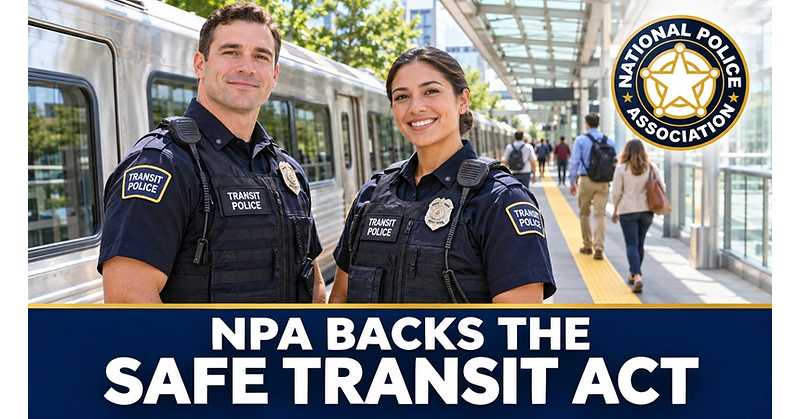
The National Police Association endorsed the proposed Safe Transit Act (S. 5492 / H.R. 10902), which would tie FTA funding to transit-safety requirements; the bills have been referred to committees in both chambers. The legislation would require agencies to direct at least 3% of FTA funding to crime prevention and authorize USDOT to withhold up to 100% of formula grants for specified noncompliance, or up to 50% from jurisdictions with transit crime rates significantly above the national average.
Analysis
This is an advocacy announcement, not evidence of congressional momentum: the bills are at committee referral, and the NPA’s endorsement does not establish bipartisan support, a funding score, or implementation odds. Near term, there is no investable earnings signal.
If enacted, the main market mechanism is conditionality on federal transit grants—not a broad new security-spending appropriation. Withholding funds could shift costs to state and municipal budgets, prompt capital deferrals, or pressure agencies to change policing and pretrial policies. That creates a potential downside for transit construction and maintenance contractors if grant disruption outweighs incremental security procurement. The proposed 3% allocation could favor providers of cameras, communications, lighting, and fare-control systems, but it reallocates existing funding and does not guarantee awards; vendors such as Axon, Motorola Solutions, and Conduent would need to demonstrate relevant contract exposure before being treated as beneficiaries.
The key contrarian point is that enforcement and compliance may be harder than the bill’s funding lever implies. Crime-rate comparisons can be affected by reporting practices and ridership, while legal and political disputes over fare evasion, transit bans, and pretrial release could delay implementation or limit federal leverage. Over 1–3 months, committee action and bill text are the catalysts; over 6–18 months, passage, agency rules, and actual grant decisions matter. No company-specific financial impact is established by the article.
AllMind Terminal
AI-powered research, real-time alerts, and portfolio analytics for institutional investors.
Request TrialMarket Sentiment
Overall Sentiment
neutral
Sentiment Score
0.10
Key Decisions for Investors
- No trade on the endorsement alone. Treat the proposal as a low-confidence policy watch item until committee markup, bipartisan co-sponsors, or a credible legislative calendar emerges.
- If the bill advances, map FTA grant dependence and security-contract exposure across transit contractors and equipment vendors before positioning. Verify whether any required spending is incremental or merely redirects existing agency budgets.
- Watch for downside spillovers to transit construction and maintenance contractors if grant withholding risks delay projects; do not assume security suppliers offset that exposure without award and revenue disclosures.
- Falsifiers: the bills stall or are materially narrowed; conversely, committee advancement paired with enforceable grant conditions and funded implementation would strengthen the procurement thesis. Track USDOT guidance and agency grant actions as confirmation.
More News
- Tech stocks are suffering their biggest selloff since Covid, as investors see premature end to AI datacenter boom
- Elon Musk's Tesla and SpaceX lose over $420 billion in combined market cap after midterms
- Iran says tankers struck in Hormuz amid fears of new US attack
- The Iran war has cost U.S. households nearly $2,000 each. New strikes could keep the bill climbing
- South Korea’s KOSPI halts trade after 8% wipeout on AI losses
- U.S. stock futures rise after AI rout batters Wall St; payrolls data in focus