
Memory chips have come to rule the AI boom. Why Micron's reign could be here to stay.
Source: marketwatch.com
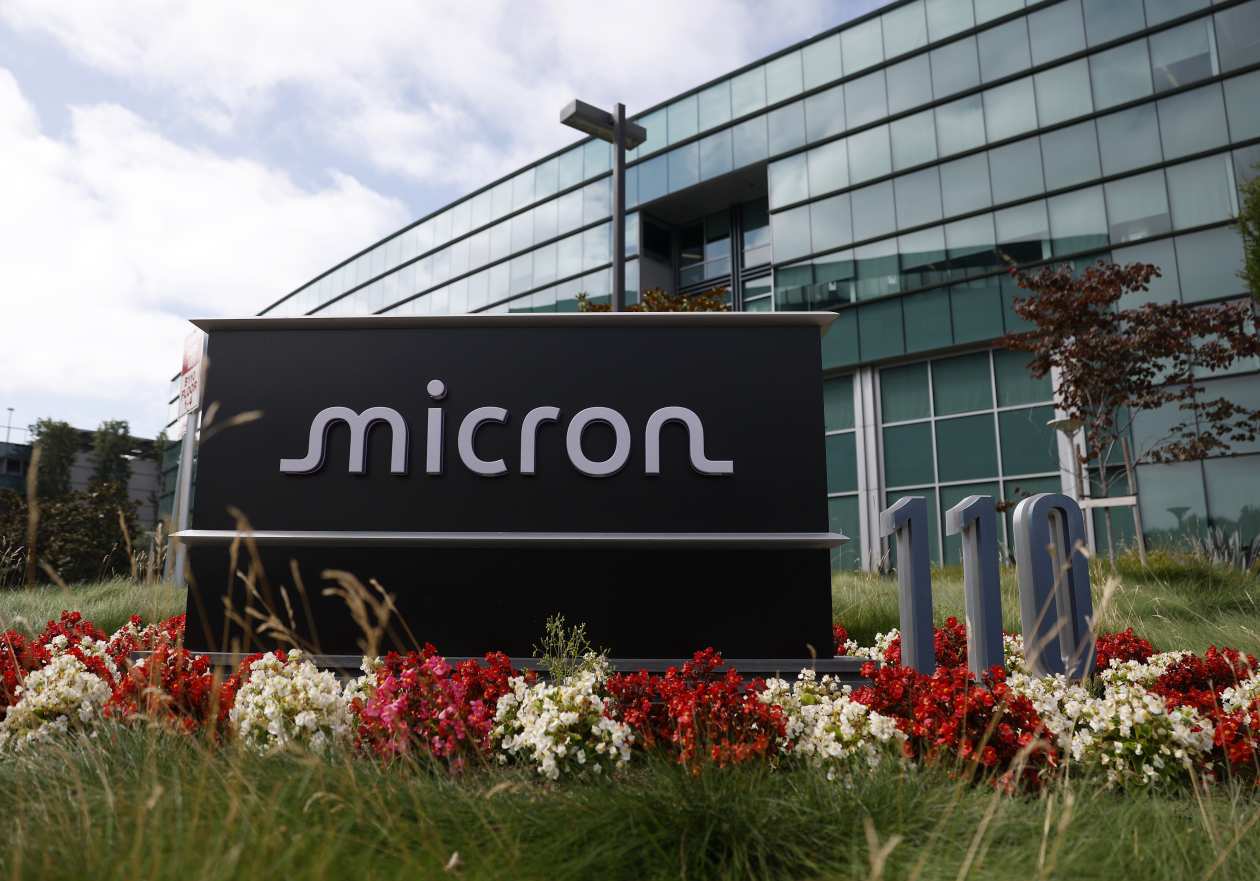
Semiconductor-industry revenue is projected to reach $1.5 trillion this year, roughly doubling on AI data-center investment, with memory chips identified as the primary growth driver. Susquehanna analyst Mehdi Hosseini said memory has become the semiconductor industry's "king" and argued that its leadership is durable, supporting a favorable outlook for Micron and other memory-chip suppliers.
Analysis
The investable implication is not simply higher DRAM/NAND pricing, but a shift in semiconductor profit pools toward high-bandwidth memory (HBM) and data-center DRAM, where qualification cycles, packaging capacity, and customer validation create materially higher barriers than in commodity memory. MU’s earnings sensitivity should increasingly depend on HBM mix and gross-margin conversion rather than aggregate bit shipment growth; this supports a higher through-cycle multiple only if management demonstrates that AI-related revenue is displacing, rather than merely supplementing, cyclical PC/mobile exposure.
Near term, the key risk is that memory equities have already capitalized a durable shortage while supply additions typically arrive with a lag. Over the next 1-3 months, watch HBM allocation commentary from NVIDIA (NVDA), SK hynix and Samsung, as well as MU’s pricing and gross-margin guide: any evidence of faster HBM yield improvement or capacity conversion by competitors could compress the scarcity premium before reported supply catches up. A weaker-than-expected AI server build or hyperscaler capex pause would hit MU disproportionately because memory is a high-operating-leverage component of the stack.
The contrarian view is that the best AI-memory trade may be the bottleneck enablers rather than MU itself. HBM production requires advanced packaging and specialized memory test equipment, leaving ASML, AMAT, LRCX, KLAC and TER with potentially more durable content and service revenue exposure across multiple memory suppliers. MU remains attractive if its HBM ramp converts into sustained margin expansion, but its equity retains substantially more spot-price and inventory-cycle risk than the equipment complex.
For the 6-18 month horizon, structural demand is credible only if AI inference broadens beyond a concentrated set of training clusters; that would support more diversified memory demand and reduce reliance on a few accelerator programs. Thesis falsification: MU guides data-center revenue or consolidated gross margin below current expectations, reports inventory rebuilding ahead of end demand, or HBM supply constraints visibly ease through customer qualification announcements.
AllMind Terminal
AI-powered research, real-time alerts, and portfolio analytics for institutional investors.
Request TrialMarket Sentiment
Overall Sentiment
moderately positive
Sentiment Score
0.45
Ticker Sentiment
Key Decisions for Investors
- Maintain a tactical long MU only through the next earnings/guide, preferably entered on post-results volatility rather than ahead of it; require evidence of HBM revenue mix growth and sequential gross-margin expansion. Exit or reduce if management signals material HBM supply normalization within two quarters.
- Prefer a 6-12 month basket long AMAT/LRCX/KLAC versus MU for structural AI-memory capex exposure with less direct DRAM/NAND price beta; target roughly 2:1 upside/downside, with risk limits triggered by memory-fab WFE guidance cuts.
- Use a pair trade long MU / short WDC for a 1-3 month catalyst window if HBM pricing and allocation remain tight: MU has better AI-memory leverage, while WDC is more exposed to NAND and storage-cycle normalization. Close if NAND pricing accelerates faster than DRAM/HBM or if WDC executes a favorable strategic transaction.
- Set alerts on NVDA and hyperscaler capex guidance, plus HBM qualification updates from Samsung and SK hynix. A broad AI-capex deceleration or a second qualified HBM supply source at scale is the signal to de-risk the entire memory thesis.
More News
- CrowdStrike CEO's alarming prediction — plus, the sell-off spreads beyond tech
- We're exiting our position in this chipmaker and right-sizing another winner
- The Next AI Infrastructure Winner Isn't a Memory Stock. It's This.
- Micron and Sandisk Hit Record Memory Margins. There's One Clear Winner.
- Micron: HBM's Margin Drag Flips Into A Profit Driver In 2027
- Memory Stocks Are Plummetting. Jensen Huang Says the Bears Have It Wrong.
From AllMind Research
- Anthropic IPO Preview: Valuation, Timing, and What to Watch
- Shein After the IPO: Venue, Valuation, and What Must Be Proved
- What AI Research Tools Should a Small Hedge Fund Buy First?
- Eli Lilly Q4 2025 Earnings: Revenue Surges 43% as Mounjaro and Zepbound Dominate the GLP-1 Market
- Investment Research Software Costs: A 2026 Budget Framework