
60 Million Americans Live With Chronic Pain: U.S. Pain Foundation Launches #OneVoiceForPain
Source: PR Newswire
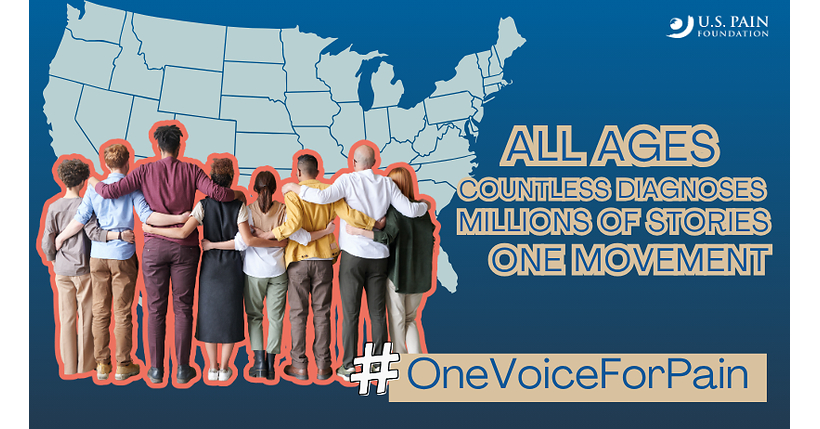
The U.S. Pain Foundation launched its 2026 Pain Awareness Month campaign, #OneVoiceForPain, highlighting that more than 60 million Americans live with chronic pain. In a survey of 2,000+ respondents, participants reported an average of 10 distinct diagnoses and 73% said they felt socially isolated or misunderstood. The campaign will run through September with themes focused on all ages, multiple diagnoses, shared lived experiences, and community-wide collaboration to support better recognition and care.
Analysis
This is not a near-term earnings catalyst; it is a narrative event that only matters if it converts into reimbursement, diagnosis, or prescribing changes. The incremental beneficiaries are the small subset of healthcare names exposed to opioid-sparing care pathways — neuromodulation, interventional pain, physical therapy enablement, and behavioral health — because advocacy can modestly improve patient willingness to seek treatment and physician willingness to escalate beyond cheap generics.
The second-order risk sits with payers and pharmacy benefit managers. If the awareness push feeds into broader scrutiny of undertreatment, the cost pressure can migrate from pharmacy spend to higher-acuity services: imaging, injections, procedures, and specialist visits. That is a margin negative for UNH/CVS/HUM only if utilization rises faster than their ability to steer patients into lower-cost pathways; otherwise they contain it with prior auth and networks. Time horizon is months to years, not days.
Contrarian view: the market should mostly ignore this. Awareness campaigns are usually noise unless they become a data-backed policy story, and the consensus tends to overprice sentiment without checking claims data. The real falsifier is simple: if CMS and major commercial payers do not revise chronic pain coverage, and implant/procedure volumes do not inflect over the next 1-2 quarters, any bullish read-through to pain-care equities is probably overdone.
AllMind Terminal
AI-powered research, real-time alerts, and portfolio analytics for institutional investors.
Request TrialMarket Sentiment
Overall Sentiment
neutral
Sentiment Score
0.00
Key Decisions for Investors
- No immediate directional trade: treat this as a watch item, not a catalyst, unless payer or CMS coverage language changes within 1-2 quarters.
- If follow-through data emerges, consider a relative-value long BSX or MDT vs. XLV on the thesis that opioid-sparing interventions gain share from low-cost pharmacologic management.
- Monitor UNH and CVS for any uptick in medical-cost commentary tied to chronic pain utilization; if PMPM trends rise without corresponding premium reset, look for a short-term short opportunity on the next guidance cycle.
- For a limited-risk expression, use a small call-spread only after concrete policy headlines on chronic pain reimbursement; without that, the expected value is poor and theta will dominate.
- Set an alert on CMS, major commercial payer medical policies, and implant/procedure volumes; if no change by the next two reporting cycles, remove the theme from active consideration.
More News
- Hybe shares jump 10% as K-pop sensation BTS' tour lifts earnings hopes
- Gen Z founders are hiring while Boomers’ corporate America freezes out—‘I’ve already proven to myself that I can thrive in this’
- FDA approves Enspryng for thyroid eye disease treatment
- The Tesla Roadster 2 Is Here—and It Flies
- Smartphone shipments plummet as memory crisis pumps up prices
- Trump administration advances plan for peptide drugs favored by RFK Jr.