
From Pitch to Pilot: Lee Kuan Yew Global Business Plan Competition Opens Search for Deep Tech Urban Solutions and Sustainability focused Founders Ready to Scale
Source: PR Newswire
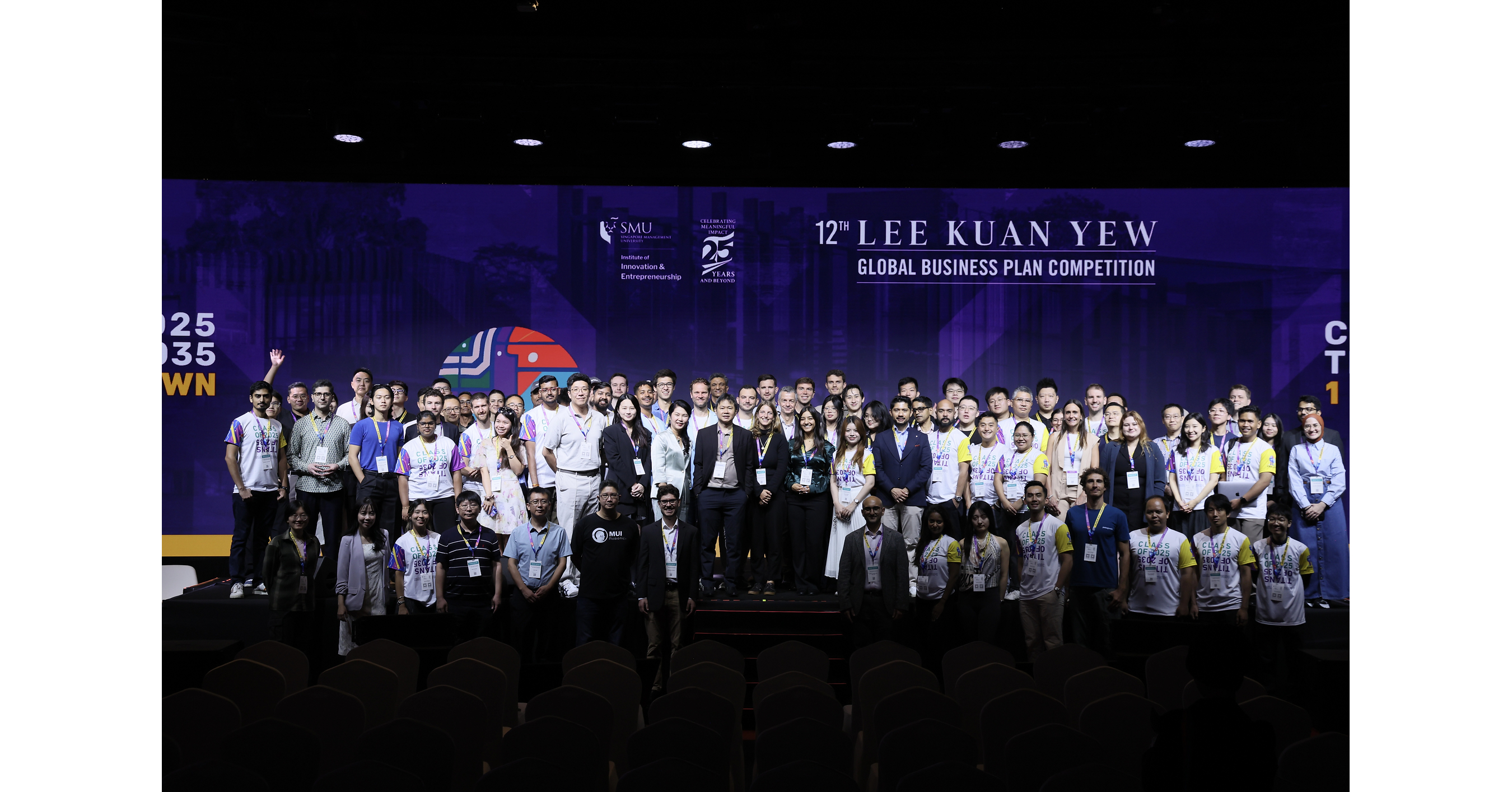
Applications opened for the 13th Lee Kuan Yew Global Business Plan Competition, with 50 finalists set to compete for more than S$2.5 million in prizes and potential access to SMU’s Urban SustaInnovator accelerator and US$10 million USI Fund. The article highlights prior participants’ pilots and fundraising, including Standard Physics’ US$2.3 million seed round and a pilot with Kajima. Singapore is also backing urban and sustainability innovation through its S$37 billion RIE 2030 plan and a S$40 million USS Translation Fund.
Analysis
The investable signal is not the competition itself; it is whether Singapore’s publicly backed pilot ecosystem shortens the path from prototype to repeatable procurement. If pilots convert into multi-site contracts, building-efficiency software, sensing and retrofit suppliers could gain a lower-cost route into Southeast Asian property and data-centre markets. That would reinforce demand for building controls and energy-management incumbents such as Schneider Electric, Siemens and Johnson Controls, while raising the bar for startups that cannot demonstrate measurable savings or integrate with installed systems. Self-healing materials face a longer qualification and production ramp, so near-term revenue implications are less credible.
The key second-order risk is confusing introductions and funded pilots with scalable demand. Building owners may run trials for sustainability targets but defer capex absent verified payback, standardised integration and procurement budgets. Public research and translation funding can support validation, but does not by itself establish commercial unit economics. The named startups’ examples are encouraging, not evidence of cohort-wide conversion rates.
Time horizon: negligible listed-company earnings impact over days; over 1–3 months, track pilot-to-contract announcements and public funding execution; over 6–18 months, look for repeat deployments, disclosed energy savings and regional distribution. Contrarian view: the ecosystem narrative may be underpricing slow building procurement and overpricing accelerator access. No direct event-driven trade is justified from this announcement. A falsifier of the adoption thesis would be pilots that do not convert, delayed public disbursements, or incumbent guidance showing weak retrofit demand.
AllMind Terminal
AI-powered research, real-time alerts, and portfolio analytics for institutional investors.
Request TrialMarket Sentiment
Overall Sentiment
mildly positive
Sentiment Score
0.35
Key Decisions for Investors
- No trade on the announcement alone: the competition and accelerator are not publicly listed securities, and the article provides no cohort-level revenue or conversion data.
- Add building-efficiency and data-centre energy-management suppliers, including Schneider Electric, Siemens and Johnson Controls, to a watchlist rather than initiating a thematic position. Reassess on evidence of repeat commercial deployments and customer-verified savings.
- For private-market diligence, require pilot-to-paid-contract conversion, deployment duration, gross-margin potential, production capacity and customer concentration before underwriting the named startups or comparable ventures.
- Monitor Singapore’s sustainability funding disbursements and procurement awards over the next 1–3 months; downgrade the thesis if pilots remain demonstration-only or public support is delayed.
More News
- What investors need to know about Alphabet's stock-busting earnings report
- SK Hynix says the memory-chip shortage will last until 2030—and more than half its production is booked for the next two years
- Microsoft’s strong quarter backs up its stock rebound. Here's our new price target
- Google struggling to make AI Mode searches pay
- As Waymo expands overseas, it remains a niche cash-burning business
- Microsoft’s cloud growth accelerates, and so too does the spending