
Boeing: Global Freighter Fleet to Exceed 4,000 Airplanes as Air Cargo Traffic Doubles by 2045
Source: PR Newswire
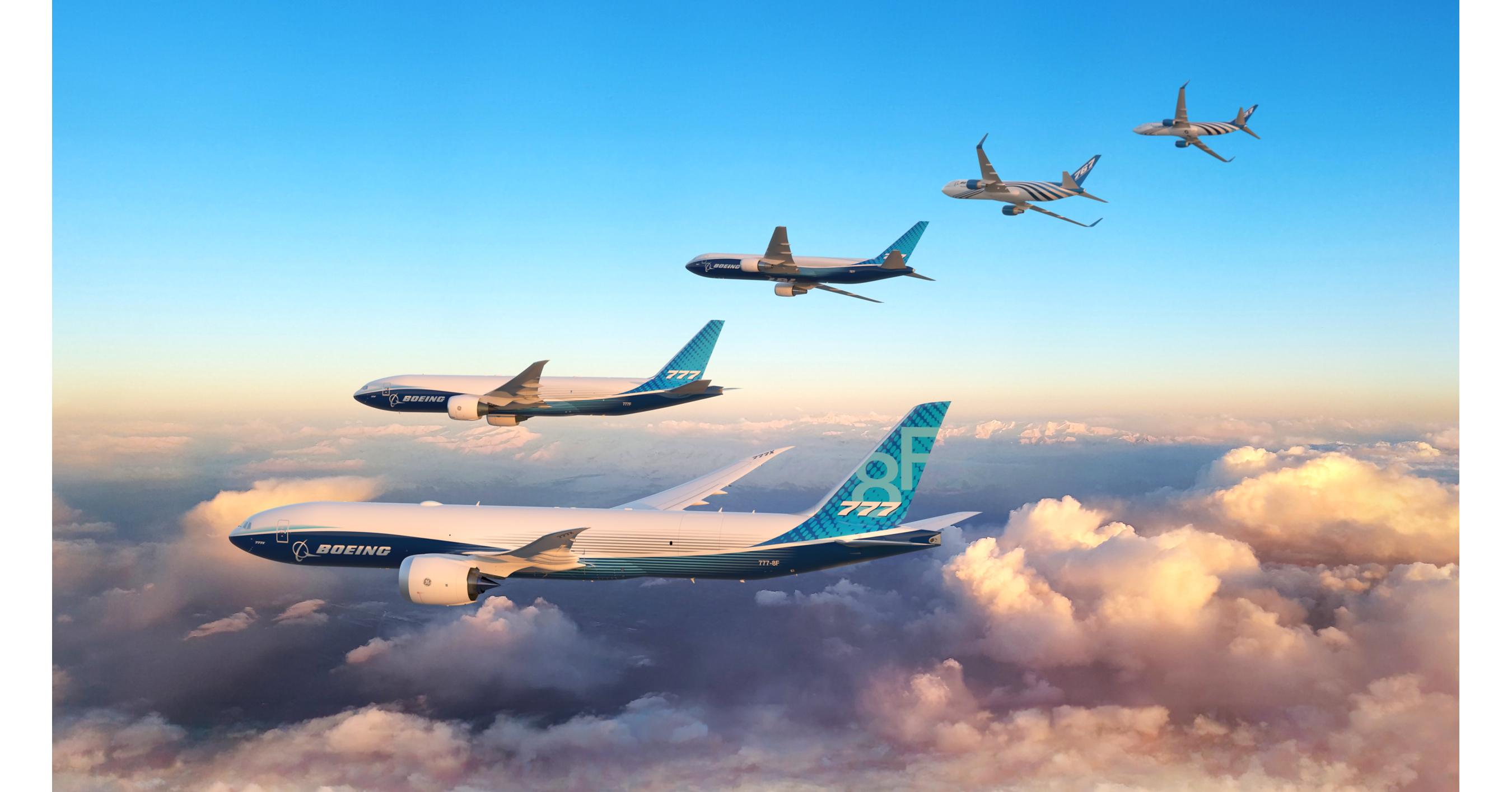
Boeing forecasts global air cargo traffic will double over the next 20 years, with the freighter fleet growing 67% from 2,395 aircraft in 2025 to 4,010 by 2045. Operators will need 2,930 new and converted freighters, while traffic is projected to grow 3.5% annually; Boeing cites e-commerce, AI-related goods, and supply-chain diversification as demand drivers. The forecast is a positive long-term industry outlook, not a report of Boeing earnings or a change to company guidance.
Analysis
The forecast is a long-dated demand signal, not an earnings catalyst: the fleet projection spans two decades, and almost half of projected deliveries replace retiring aircraft. More importantly for BA, roughly two-thirds of demand is expected to be met by passenger-aircraft conversions, so traffic growth does not translate one-for-one into new-build freighter revenue. The commercial opportunity depends on Boeing capturing orders and executing deliveries—not just on the market expanding. Boeing’s forecast is also an interested-party estimate; validate it against operator orders, conversion slots, and actual cargo yields.
Second-order beneficiaries may include conversion, maintenance, and parts providers, while integrators such as FedEx and UPS could gain from higher time-definite volumes but still face fleet, labor, and fuel costs. Passenger airlines with belly capacity may capture some incremental cargo without buying freighters, limiting dedicated-aircraft demand. Asia-linked trade growth is a tailwind, but a reversal in trade fragmentation, weaker e-commerce, or more belly capacity could dilute it.
Near term (days): little fundamental basis for repricing BA from a forecast alone. Over 1–3 months, watch BA freighter order announcements, delivery cadence, and commercial-aircraft production/guidance. Over 6–18 months, the thesis strengthens only if orders convert into deliveries and conversion capacity does not absorb a larger share. The contrarian point is that the fleet headline may overstate new-build upside; replacement demand supports the installed base, but not necessarily incremental BA sales.
AllMind Terminal
AI-powered research, real-time alerts, and portfolio analytics for institutional investors.
Request TrialMarket Sentiment
Overall Sentiment
mildly positive
Sentiment Score
0.25
Ticker Sentiment
Key Decisions for Investors
- No immediate directional trade in BA on this announcement; treat it as a long-horizon demand indicator, not a near-term catalyst.
- Keep BA on an order-and-execution watchlist. Reassess positively if freighter orders and delivery cadence improve without deterioration in broader production guidance; the thesis is falsified if guidance or deliveries weaken despite reported demand.
- For cargo exposure, monitor conversion-slot availability and operator fleet plans before preferring new-build aircraft exposure; the forecast’s conversion-heavy mix is a meaningful constraint on BA’s addressable upside.
- Track cargo yields, express volumes, and belly-capacity utilization at major operators. A sustained decline in yields or traffic, or a reversal in Asia-linked trade flows, would undermine the structural-growth case.
More News
- S&P 500 pulls within 1.2% of its all-time high even as majority of its stocks fell: Broadcom, Nvidia and other AI stocks made up the difference
- Jim Cramer sees buying opportunities in these 2 beaten-down stocks
- Jim Cramer's top 10 things to watch in the stock market Wednesday
- What investors need to know about Alphabet's stock-busting earnings report
- Our next steps for Alphabet stock after earnings disappoint at nearly every turn
- Budget 2026 speech