
Meritz Securities Connects to Bruce Markets' Data Feed for U.S. Equities, Improving Market Data for Korean Traders
Source: PR Newswire
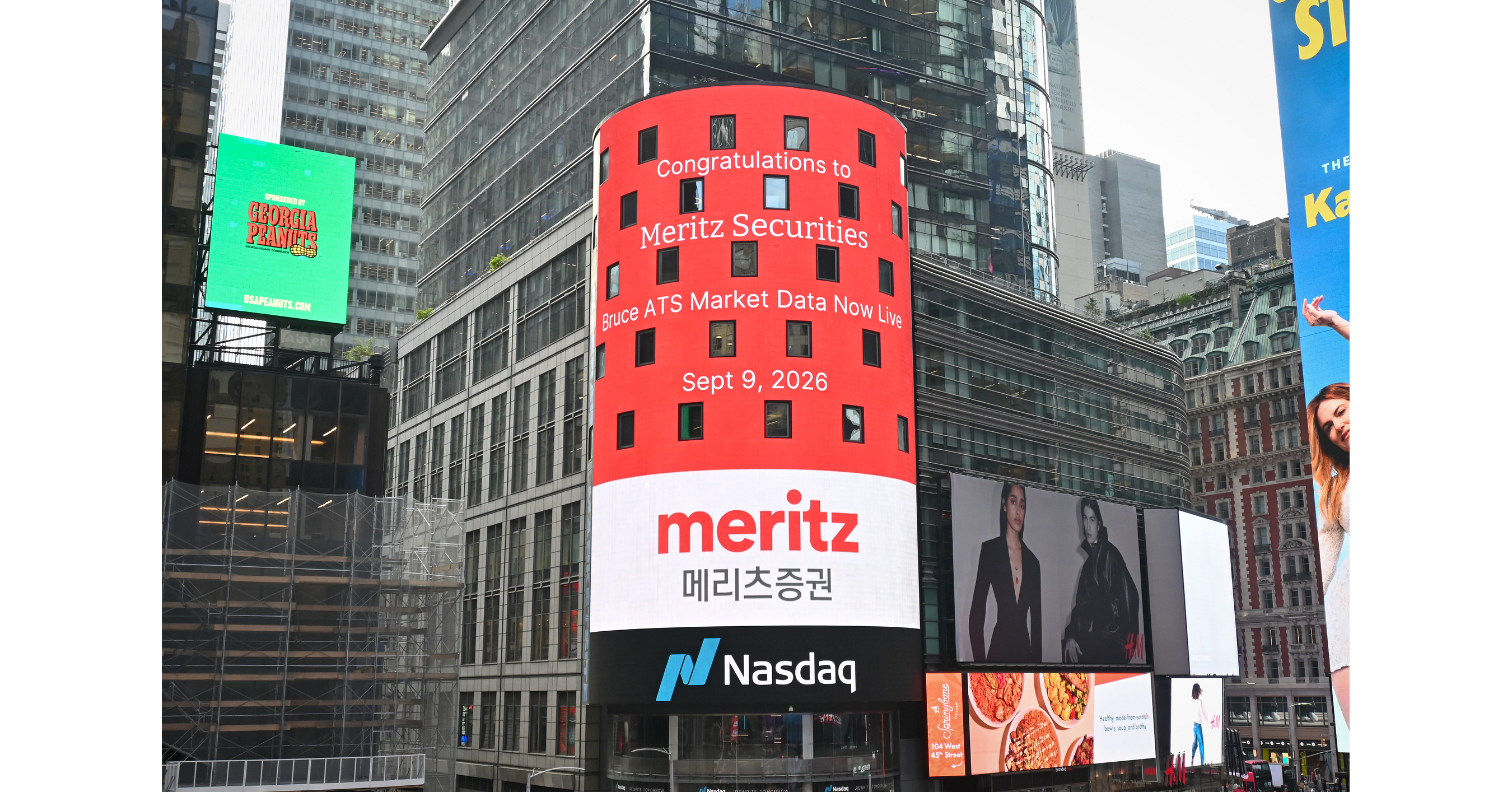
Meritz Securities connected to Bruce ATS's overnight U.S. equities market-data feed, expanding Korean investors' visibility into pricing and trading activity during the 8:00 p.m.-4:00 a.m. ET session. Across the three leading overnight ATSs, Q2 volume rose 34% sequentially to 11.14 billion shares and notional value increased 59% to $391.2 billion; Bruce's executed volume jumped 144% to 1.16 billion shares and notional rose 105% to $49.03 billion. Bruce's reported overnight notional share reached a record 20.77% in September, underscoring growing Korean demand for multi-venue access and reduced risk of "blind trading."
Analysis
There is no directly investable read-through to Bruce or Meritz, but the relevant public-market implication is that overnight U.S. equity liquidity is becoming a product feature rather than a niche service. IBKR is best positioned among listed brokers because global access and active-trader tools monetize both trading frequency and FX conversion; HOOD has the largest retail-engagement upside if it can offer reliable overnight execution, but also greater execution-quality and regulatory risk. SCHW's retail franchise is more exposed to customer-experience parity pressure, while CBOE, NDAQ and ICE face a longer-term risk that price discovery and order flow migrate outside traditional exchange hours without equivalent listed-market capture.
The second-order effect is likely higher overnight volatility and a larger share of fundamental-news repricing before the U.S. cash open, particularly in liquid, retail-owned AI, semiconductor, crypto-adjacent and leveraged-ETF names. That can increase spreads, adverse selection and market-maker capital requirements even if headline volume growth is strong; retail brokers may gain engagement without proportional earnings if they must subsidize connectivity or improve best-execution controls. The press-release volume statistics are not independently comparable across venues, so the investable signal should be validated through broker disclosures on overseas-equity commissions, options activity, net interest revenue, and customer-account growth over the next two earnings cycles.
Consensus may overstate the near-term threat to incumbent exchanges: fragmented overnight venues lack the consolidated-liquidity, clearing and institutional block-trading economics of regular hours. The more credible 6-18 month outcome is not wholesale displacement but a higher value placed on consolidated data, surveillance and cross-venue routing—constructive for exchange infrastructure providers if they capture the data layer. The thesis fails if Korean retail U.S.-equity turnover decelerates materially, overnight spreads remain persistently wide, or regulators impose venue-level restrictions that raise compliance costs and reduce accessible symbols.
AllMind Terminal
AI-powered research, real-time alerts, and portfolio analytics for institutional investors.
Request TrialMarket Sentiment
Overall Sentiment
moderately positive
Sentiment Score
0.58
Key Decisions for Investors
- Maintain a 3-6 month long bias in IBKR versus SCHW: IBKR has cleaner sensitivity to cross-border active trading and FX monetization; reassess if quarterly client-account growth or commission revenue misses consensus by more than 5%, or if overseas trading is not cited as a growth contributor.
- Do not chase HOOD solely on overnight-market headlines. Place on a watchlist for a tactical long only if management discloses expanded 24-hour execution with improving transaction-based revenue; key downside is higher customer-service, best-execution and regulatory expense offsetting engagement gains.
- Consider a 6-12 month basket long CBOE/NDAQ versus a short retail-broker basket only after evidence that consolidated data, surveillance or routing revenues are accelerating. This is an infrastructure monetization thesis, not a volume thesis; invalidate if overnight activity bypasses listed data products without measurable revenue capture.
- For trading books, tighten overnight gap-risk limits in high-Korean-retail ownership names and leveraged ETFs rather than directional positioning. Monitor overnight-to-open return variance and quoted spreads for 1-3 months; a sustained rise would favor liquidity providers selectively but raises tail-risk for unhedged single-stock positions.
More News
- What investors need to know about Alphabet's stock-busting earnings report
- Fortinet’s stock is taking a dive after earnings. Here’s why.
- Microsoft's Big Bets on AI Start to Pay Off
- Asian shares fall as Alphabet earnings miss drags Wall St futures lower
- Google's Gemini 4 Carbon looks like a diamond in the rough
- China’s tech darlings are losing their shine. Here’s what’s behind the sell-off