
RTI International Opens $14M Expansion of Pilot Xcelerator to Help Innovators Scale Promising New Energy and Industrial Technologies
Source: PR Newswire
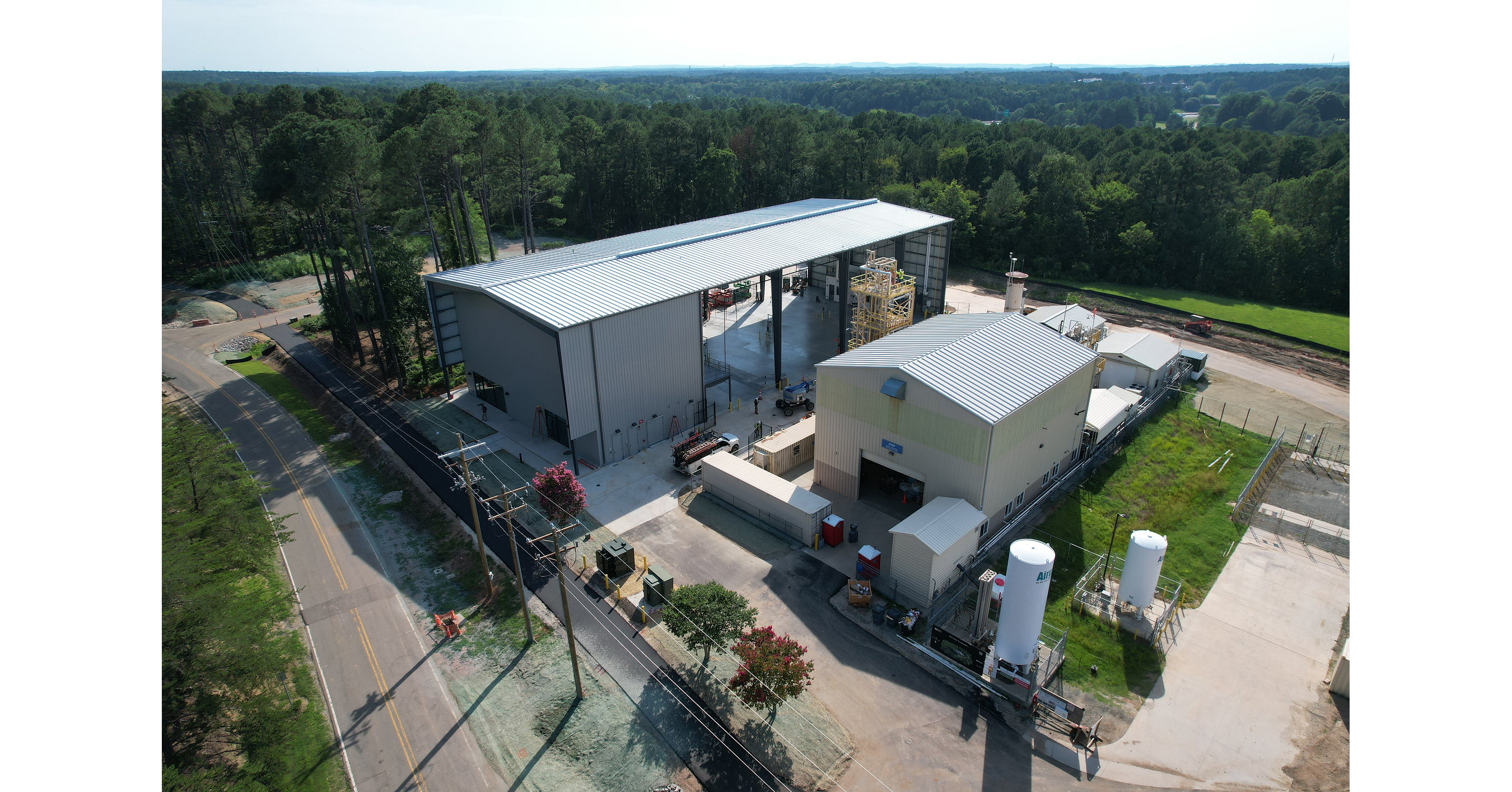
RTI International opened a $14 million, 25,000-square-foot expansion of its North Carolina Pilot Xcelerator, doubling its commercialization infrastructure for energy and industrial technologies. The facility provides pilot-scale testing, engineering, independent validation and commercialization support for startups, companies and government partners in areas including sustainable aviation fuel, carbon capture, critical minerals and advanced recycling. RTI highlighted client projects progressing toward commercial deployment, including Lydian Labs' targeted commercial-scale SAF demonstration plant in 2027 and full-scale production by 2030.
Analysis
This is not a public-equity earnings event; the near-term market impact is negligible. The investable signal is that scarce pilot capacity is becoming a bottleneck in carbon-to-value, sustainable aviation fuel (SAF), recycling, and industrial-biotech commercialization. Independent validation can lower financing friction for pre-revenue developers, but it does not solve the larger constraints—project finance, feedstock contracts, power costs, permitting, and offtake—which determine whether pilot success converts into investable commercial assets.
Over 1-3 months, monitor announcements of successful runs, third-party performance data, customer offtakes, and Department of Energy awards from RTI-linked developers. These could modestly improve sentiment toward public SAF and carbon-management proxies, notably GEVO and AMTX, but neither should be bought solely on a pilot-facility affiliation: the relevant catalysts are financing closes and contracted economics, not technical validation alone. The more direct beneficiaries are likely private companies and engineering/service providers rather than listed fuel producers.
The second-order implication is mildly negative for incumbent low-carbon-fuel developers with weak proprietary process advantages: shared infrastructure lowers entry barriers and can compress the scarcity premium historically assigned to early pilot-stage technology. Conversely, airlines and fuel distributors gain optionality if more qualified SAF pathways reach bankability, although meaningful supply additions remain a 6-18 month-plus proposition. Consensus tends to overvalue a successful pilot as de-risking commercialization; scale-up failures commonly emerge in catalyst life, uptime, feedstock variability, and unit-energy consumption, none of which are established by promotional facility-access announcements.
AllMind Terminal
AI-powered research, real-time alerts, and portfolio analytics for institutional investors.
Request TrialMarket Sentiment
Overall Sentiment
moderately positive
Sentiment Score
0.42
Key Decisions for Investors
- No directional trade on the announcement; treat it as a pipeline-monitoring event rather than a catalyst for listed equities.
- Create a 1-3 month alert basket: GEVO, AMTX, World Energy/SAF-related private-market comparables, and carbon-capture proxies such as OXY. Upgrade only after independently disclosed pilot metrics are paired with binding offtake, feedstock supply, and construction financing.
- For a liquid relative-value expression after verified SAF project financings, consider long JETS versus short XLE only if SAF credit economics tighten jet-fuel substitution spreads; this is a 6-18 month theme, not an immediate trade. Falsifier: sustained low conventional jet-fuel prices or delayed federal credit implementation.
- Avoid extrapolating pilot validation into commercial revenue for early-stage SAF names. A financing delay, revised capex estimate, lower-than-target uptime, or failure to secure long-duration offtake should be treated as thesis-breaking evidence.
More News
- Here’s the ‘core economic flaw’ in the AI bull case as stock and bond trades unravel, according to a top economist
- Iran says won’t allow US warships to get close as Trump ponders new attacks
- Biotech stocks are surging. How investors can play the new drug innovation boom
- Israelis hold final rally against Netanyahu ahead of what may be the most consequential election in the country’s history
- Ukraine says Starlink and Starshield high speed restrictions have been lifted
- Oil Markets Brace for Renewed Iran Fighting
From AllMind Research
- Anthropic IPO Preview: Valuation, Timing, and What to Watch
- Shein After the IPO: Venue, Valuation, and What Must Be Proved
- What AI Research Tools Should a Small Hedge Fund Buy First?
- AlphaSense vs Hebbia vs AllMind: Choose by Workflow
- AllMind Discusses Ontario's AI Economy with Minister Stephen Crawford and Supply Ontario CEO James Wallace