
BS PHARM KOREA Broadens Professional Aesthetic Offerings with Peptide and Organoid ECM Technologies
Source: PRWeb
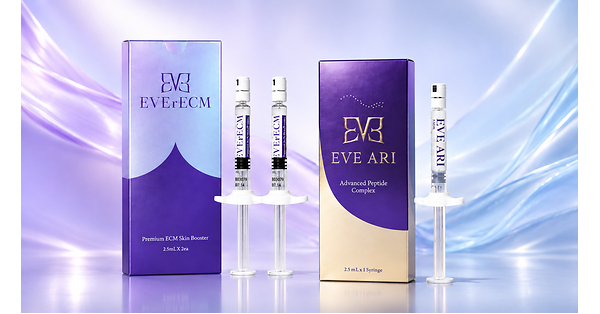
BS PHARM KOREA expanded its professional aesthetic portfolio with EVErECM, a lab-grown organoid ECM formulation containing 25 mg of ECM, and EVE ARI, a five-peptide formulation; both products were introduced in October 2026. The company says the additions broaden its options for international distribution partners, but the article provides no sales or financial results. It cites forecasts for South Korea's ECM skin booster market to grow from approximately KRW 92.5 billion in 2026 to KRW 172.9 billion in 2027, and the global cosmetic peptide synthesis market to rise from USD 269.6 million in 2026 to USD 387.7 million by 2033, a 5.3% CAGR.
Analysis
The launch is strategically useful as portfolio breadth, but not yet an earnings signal: no pricing, production capacity, distributor commitments, sell-through, or revenue contribution is disclosed. The investable question is whether lab-grown ECM can be manufactured consistently at commercial scale and clear market-specific regulatory requirements, and whether distributors reorder after initial sampling. If validated, non-donor sourcing could reduce dependence on biological-tissue supply; it could also introduce costly process-control and quality-validation burdens that erase any supply advantage.
The five-peptide proposition faces a high evidence bar. Mechanism language is not proof of clinically meaningful results, and any expression-line positioning may encounter different regulatory and substantiation standards across markets. Established HA, PN/PDRN, and exosome offerings remain substitutes, so added SKUs could expand distributor choice—or cannibalize existing products without growing total sales. The quoted category forecasts are market estimates, not company-specific demand evidence.
Near term, this is a low-signal press release with no clear public-equity trade identified from the supplied data. Over 1–3 months, watch for named distribution agreements, registrations, and repeat orders; over 6–18 months, the thesis depends on reproducible manufacturing, clinical credibility, and portfolio-level sales conversion. The contrarian risk is that investors extrapolate category growth into company growth before any commercial proof. A reversal in the thesis would be delayed approvals, weak reorder evidence, quality-control issues, or management indicating limited contribution from the launches.
AllMind Terminal
AI-powered research, real-time alerts, and portfolio analytics for institutional investors.
Request TrialMarket Sentiment
Overall Sentiment
mildly positive
Sentiment Score
0.20
Key Decisions for Investors
- No position on the announcement alone; the company identity/ticker and financial exposure are not supplied, and the release provides no verifiable commercial commitments.
- Set an alert for distributor agreements that disclose territories or minimum purchases, product registrations, and evidence of repeat orders; distinguish signed demand from promotional sampling.
- Before underwriting the organoid-ECM angle, verify manufacturing capacity, batch consistency, cost, and regulatory classification in target markets. Failure on any of these weakens the claimed sourcing advantage.
- Treat peptide efficacy statements as marketing until supported by product-specific clinical evidence and lawful claims in target jurisdictions; monitor whether the products expand category sales or displace the company's existing boosters.
More News
- Tech stock rout, driven by US AI fears, continues in Asian trading
- Elon Musk once said the Cybertruck would be Tesla’s ‘best product ever.’ Now he’s winding down production
- Fox completes its $22B acquisition of Roku
- Elanco Shares Jump After Q3 Beat and Outlook Raise
- Paraguay’s Santiago Pena under arrest, new president Pedro Alliana sworn in
- FIGS Beats Earnings as Demand Outstrips Supply, CEO Trina Spear Says