
ON Semiconductor Is No Longer Just A Cyclical Chipmaker
Source: seekingalpha.com
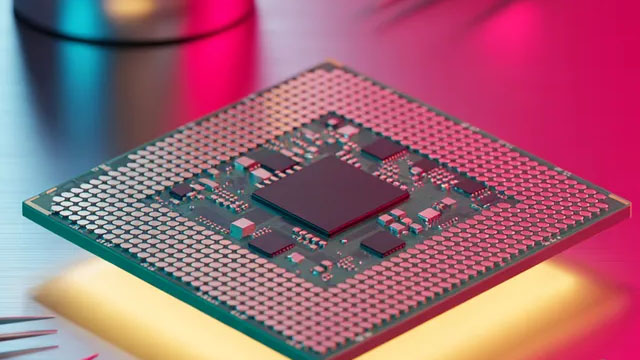
ON Semiconductor's Fab Right strategy, AI data-center demand and silicon-carbide products are positioned as structural growth drivers, with management expecting AI data-center revenue to more than double by 2026. The company is characterized as undervalued relative to peers at a 0.68x forward PEG, while cost savings, higher factory utilization and leading free-cash-flow margins are expected to support further margin expansion.
Analysis
The key valuation question is whether ON can re-rate from an automotive/industrial cyclical multiple toward a power-management growth multiple. That outcome depends less on headline AI revenue growth than on mix: data-center power content must become large enough to offset the operating leverage drag from underutilized automotive-facing fabs. Competitors with more direct hyperscale exposure—MPWR, IFNNY and STM—remain the relevant relative-value benchmarks; ON’s discount will persist if investors view its AI opportunity as a small attach product rather than a durable platform.
Near term, the market is likely to reward evidence of gross-margin stabilization more than another long-dated AI target. The operating model has high fixed-cost absorption, so even modest improvement in factory loading can create disproportionate EPS and FCF upside over the next 1-3 quarters; conversely, weak EV/industrial order patterns can overwhelm the AI narrative. The important second-order risk is that SiC capacity additions across ON, STM, Wolfspeed (WOLF) and Chinese suppliers turn a demand pause into pricing pressure, impairing returns on recently expanded capacity.
Consensus may be underestimating the asymmetry if utilization bottoms before auto demand visibly recovers: a low-expectations earnings setup can drive multiple expansion alongside margin recovery. But the bullish case is not yet independently validated by disclosed AI revenue mix, design-win conversion, or segment-level pricing. Treat management’s 2026 trajectory as an option value, not as base-case earnings, until quarterly backlog, utilization and gross-margin data corroborate it.
AllMind Terminal
AI-powered research, real-time alerts, and portfolio analytics for institutional investors.
Request TrialMarket Sentiment
Overall Sentiment
moderately positive
Sentiment Score
0.68
Ticker Sentiment
Key Decisions for Investors
- Initiate a 1-3 month starter long in ON only ahead of an earnings setup where consensus gross-margin expectations appear to assume flat-to-down utilization; add on evidence of sequential margin expansion. Target a 15-20% upside from combined estimate revision and partial multiple normalization; cut if management guides gross margin down sequentially or cites broad SiC pricing concessions.
- Express the cyclical recovery more cleanly through a pair: long ON / short STM in equal dollar amounts for 3-6 months. ON has greater upside if internal utilization recovers, while STM’s larger automotive/industrial exposure and European end-market sensitivity provide a hedge against a broad semiconductor rally; close if ON fails to outperform STM by the next two earnings reports.
- Do not underwrite a standalone long on the AI thesis until management discloses the current AI-data-center revenue base, customer concentration and incremental gross-margin profile. Set an alert for a material upward revision to 2026 AI targets or confirmed hyperscaler design wins; that would justify increasing exposure rather than chasing generic AI-semiconductor beta.
- Avoid WOLF as a sympathy long. If SiC demand remains soft, its balance-sheet and refinancing sensitivity make it the more vulnerable expression of industry oversupply; a tactical ON long/WOLF short can hedge SiC-cycle risk, but only with tight sizing given WOLF’s high short interest and event-driven volatility.
More News
- Asian stocks dip, bonds in focus after torrid September
- Tencent leases 100,000 chips from Oracle for $7 bln- FT
- California Gov. Gavin Newsom bans AI 'robo bosses' in landmark state law, reversing his earlier veto
- RAM supply set to worsen, says Micron, as CEO celebrates ‘much higher’ prices
- Why is Nidec stock plunging today?
- Why is Kioxia stock rallying today?
From AllMind Research
- Anthropic IPO Preview: Valuation, Timing, and What to Watch
- Shein After the IPO: Venue, Valuation, and What Must Be Proved
- What AI Research Tools Should a Small Hedge Fund Buy First?
- Research Workflows, Report Format Selection, and Interactive Synthesis
- Can ChatGPT Analyze a 10-K? A Verification Workflow