
Saronic Breaks Ground on Port Alpha, a New Model for American Shipbuilding
Source: PR Newswire
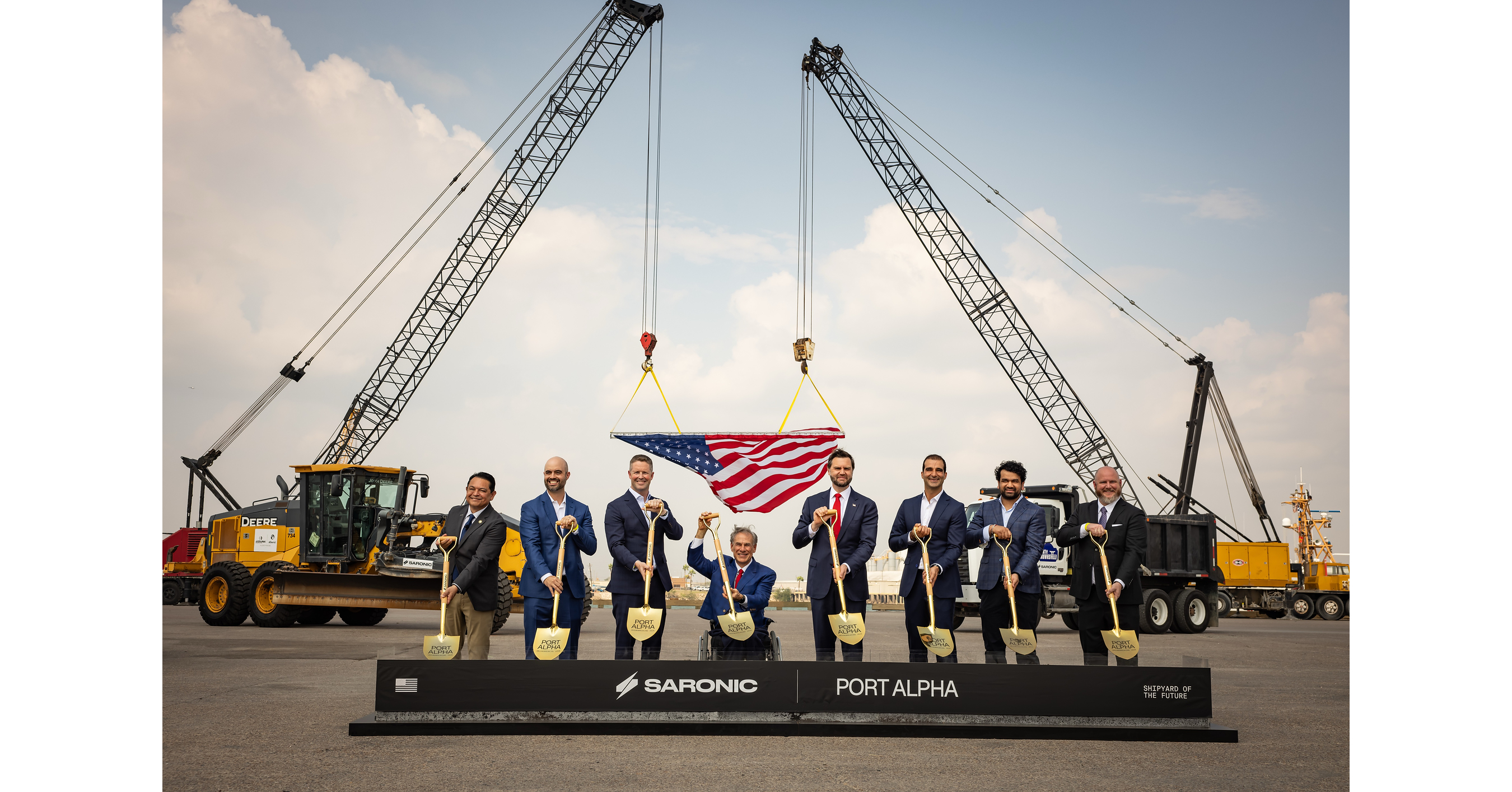
Saronic broke ground on Port Alpha, a more than $3 billion shipyard investment in Brownsville, Texas, designed to add 150,000 gross tons of annual capacity at opening—more than doubling current U.S. commercial shipbuilding capacity. The facility could scale to more than 2 million gross tons annually, produce autonomous and manned vessels including U.S. Navy Landing Craft Utility ships, and create up to 10,000 direct jobs over the next decade. Saronic estimates the project could generate $264.5 billion of economic impact for Texas while helping address U.S. defense-shipbuilding capacity and skilled-labor shortages.
Analysis
The investable read-through is not a near-term revenue event for listed primes; it is evidence that DoD procurement is shifting toward distributed, software-enabled production rather than concentrating incremental hulls at legacy yards. HII and GD retain the highest-value nuclear and combat-system franchises, but a credible new entrant raises the risk that lower-complexity auxiliaries, landing craft, unmanned surface vessels, and exportable conventional hulls migrate away from incumbent yards over the next 3-7 years. The immediate beneficiaries are likely domestic steel-processing, marine-electrical, propulsion, automation, and defense-electronics suppliers rather than the established prime contractors.
The key bottleneck is skilled labor, not waterfront acreage. A large Brownsville hiring ramp can tighten Gulf Coast welding, fabrication, machining, and engineering labor markets, potentially raising execution costs for HII, GD, KBR and nearby industrial contractors before meaningful new vessel output arrives. That creates a second-order positive for factory automation and modular-construction vendors, but the company’s stated throughput and economic-impact figures should be treated as aspirational until funded capex, workforce conversion, supplier qualification, and Navy acceptance milestones are independently demonstrated.
Over the next 1-3 months, the catalyst is whether the Navy’s FY27 budget and procurement documents convert maritime-industrial policy into multi-year quantities for LCUs, unmanned vessels, and sealift. Over 6-18 months, contract awards and supplier disclosures matter more than construction progress. Contrarian view: the market may over-credit a new yard as incremental capacity; without reliable engines, gearboxes, electronics, trained labor and stable Navy specifications, the project could initially redistribute constrained inputs rather than expand delivered fleet capacity.
AllMind Terminal
AI-powered research, real-time alerts, and portfolio analytics for institutional investors.
Request TrialMarket Sentiment
Overall Sentiment
strongly positive
Sentiment Score
0.72
Key Decisions for Investors
- No direct equity position: Saronic is private, and the release alone does not establish a tradable earnings impact. Create an alert for disclosed public suppliers, Navy contract value, committed financing, and initial-production timing before underwriting a dedicated trade.
- Maintain a 6-18 month long bias in BWXT versus HII as a relative-value expression of defense spending shifting toward maritime capacity while nuclear propulsion remains the least substitutable bottleneck; target 10-15% relative upside, and exit if Navy shipbuilding appropriations are cut or BWXT nuclear-program margin guidance deteriorates.
- Watchlist long NUE or STLD on a 3-6 month horizon only if domestic plate/shipbuilding orders become visible in earnings commentary or contract disclosures. The initial steel requirement is too small relative to these companies’ volumes to justify a standalone position today; invalidate on falling steel spreads or evidence that procurement uses imported/seaborne plate.
- Avoid shorting HII or GD solely on new-yard headlines. Their near-term valuation is driven by nuclear carrier/submarine execution and classified systems content; revisit a short leg only if Navy procurement formally reallocates conventional-vessel awards and either company guides to lower backlog conversion or weaker margin recovery.
More News
- Greer urges G20 to back Trump tariff agenda, takes aim at China
- Tencent leases 100,000 chips from Oracle for $7 bln- FT
- California Gov. Gavin Newsom bans AI 'robo bosses' in landmark state law, reversing his earlier veto
- Stocks Jump on inflation Surprise, Apple's Smart-Home Push
- RAM supply set to worsen, says Micron, as CEO celebrates ‘much higher’ prices
- Why is Kioxia stock rallying today?