
California Legislature Passes Law to Make California the First State to Require Corporations to Disclose Slavery Profits
Source: PR Newswire
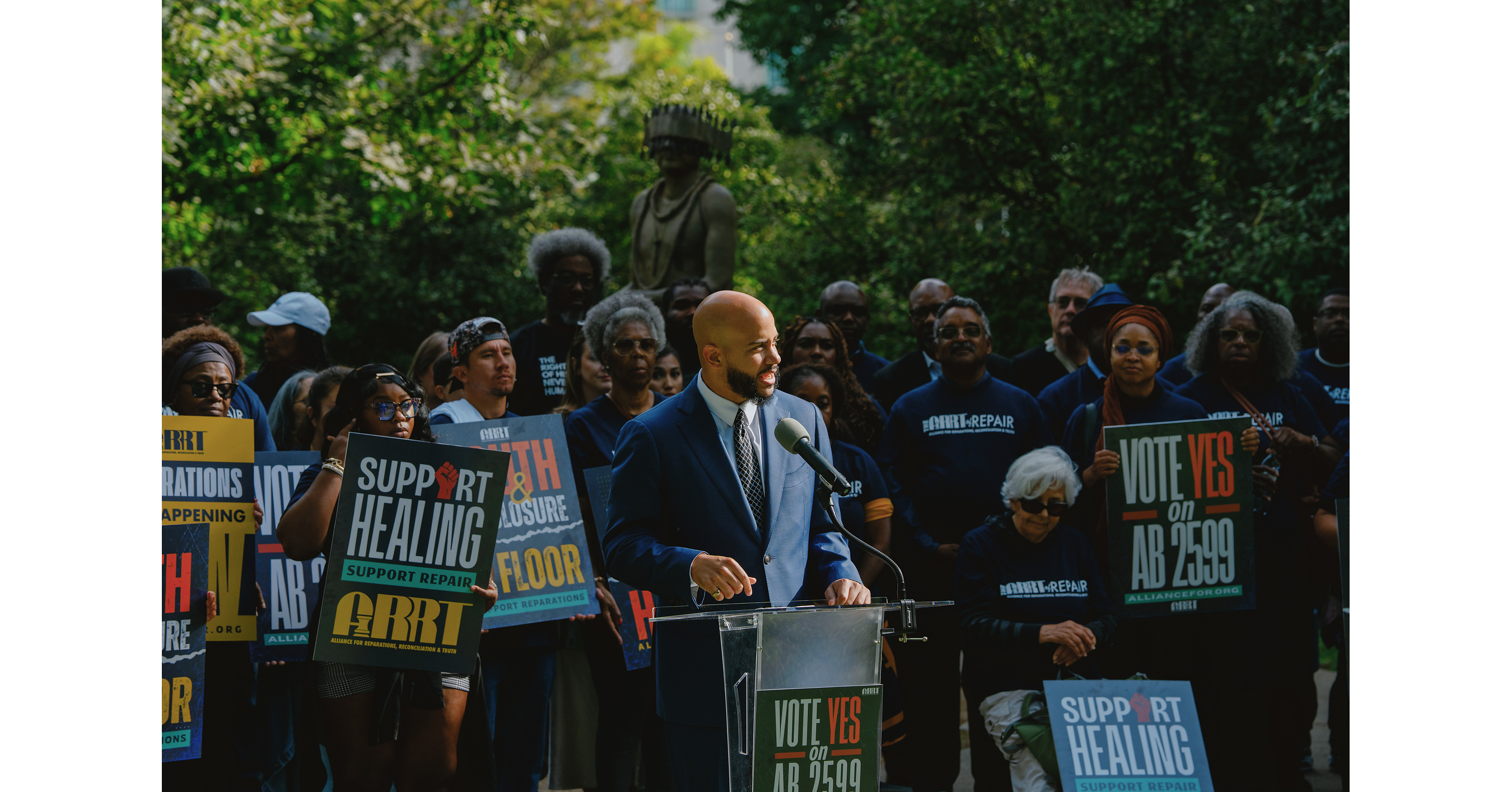
California passed AB 2599, the Truth in Disclosure Act, requiring corporations with $100M+ in annual California gross receipts to file sworn, perjury-penalized affidavits on whether they or predecessors profited from slavery-era transactions, with results posted to a public searchable database. The bill now goes to Gov. Gavin Newsom for signature. The measure extends California’s existing corporate disclosure framework and could increase compliance and legal exposure for affected companies, though it remains pending at the governor stage.
Analysis
This is much more a compliance/reputation workflow than a cash-flow event. The direct burden lands on legal, IR, and archive teams at large California-facing companies, but the economic damage is mostly optional unless the disclosure process creates a public list that activists can weaponize against firms with long, opaque predecessor chains. That makes the real losers older, brand-sensitive platforms in financials, consumer staples, transportation, and industrials where corporate genealogy is messy and management would rather not spend time explaining it.
The first-order market reaction should be brief; the second-order effect is a modest increase in governance/ESG data demand. Legal research, corporate services, and disclosure analytics vendors are the cleanest structural beneficiaries, not the operating companies being forced to file. The more interesting angle is M&A diligence: once a public database exists, buyers may demand broader reps and extra indemnities for historical lineage, which can modestly widen transaction friction over the next 6-18 months.
Contrarian view: the market may overstate the financial meaning of a transparency mandate and understate how little it changes near-term earnings. Unless the bill evolves into procurement penalties, civil liability, or mandatory monetary repair, this is unlikely to move sector multiples. Falsifiers are straightforward: a veto/softening by Newsom, weak implementation rules, or a lack of follow-on activist attention within 1-3 months.
AllMind Terminal
AI-powered research, real-time alerts, and portfolio analytics for institutional investors.
Request TrialMarket Sentiment
Overall Sentiment
neutral
Sentiment Score
-0.05
Key Decisions for Investors
- No trade in CNL/CWT/TSTS/WWRL on the headline; treat this as a legal-overhang alert, not a fundamentals event. Reassess only if implementation guidance introduces penalties or reporting granularity that expands liability.
- If Newsom signs, buy TRI on any weakness over the next 1-3 months as a small thematic long versus SPY; disclosure complexity and legal research demand are the only durable monetizable channels. Risk/reward is modest, but the downside is limited if the bill stays purely declarative.
- Do not short XLF, XLP, or XLI on day-1 headline reaction; if there is an indiscriminate selloff, fade it with tight stops because the likely revenue impact is de minimis. The thesis fails if regulators or plaintiffs convert disclosure into monetary exposure.
- Set a watchlist on BAC, C, JPM, KO, and WMT for any activist follow-up naming specific predecessor entities; only act if a company is singled out publicly, as that is the point when reputational risk can briefly hit valuation multiples.
More News
- After France, is Italy next? Goldman Sachs flags bond risks as Rome's deficit widens
- CBO chief warns it’s ‘probably not plausible’ that a strong economy alone can steady U.S. debt as 5%-6% growth is needed—more than Bessent’s 3% view
- Last-Minute Lawsuit Upends Cable One’s $480 Million Mega Broadband Deal
- Why is US turning to Russia for diesel despite sanctions?
- Trump says Ukraine should get a new president as he blames Zelenskyy for U.S. diesel prices
- Putin relayed Iran war proposal to Trump, Kremlin says