
Pork Slump Worsens as High Gas Prices Curb Road Trip Pit Stops
Source: Bloomberg
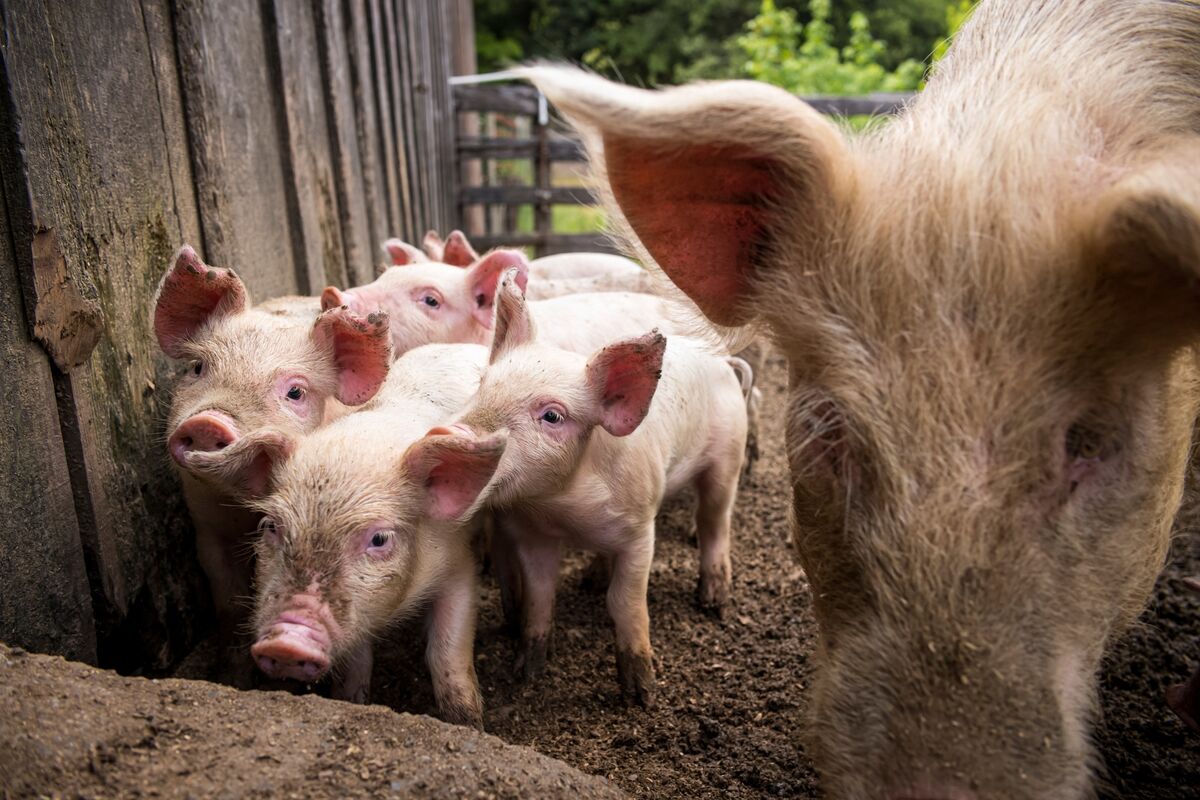
Smithfield Foods said high gasoline prices, which have surged since the start of the war in Iran, weighed on its quarterly pork sales. The report adds pressure to a US pork industry already facing weak demand; it gives no sales figures or quantified impact.
Analysis
The key question is whether this is a narrow away-from-home/roadside demand effect or evidence of broader consumer trade-down. If reduced travel cuts foodservice and convenience-channel traffic, pork processors may see weaker volumes before retail grocery demand shows it; a shift toward cheaper at-home meals could partly offset that. Persistent fuel inflation also squeezes household discretionary budgets and can raise freight costs, creating a two-sided headwind for processors. Poultry could gain share if consumers trade down from pork, while beef may be more exposed if relative prices favor pork; the net substitution depends on current retail price gaps, which are not provided.
Near term, one company comment is weak evidence for a sector-wide earnings reset. Over 1–3 months, watch SFD’s reported pork volumes, channel mix, pricing, and guidance alongside gasoline prices and foodservice indicators. Over 6–18 months, sustained fuel costs could favor value-oriented proteins and private-label purchasing, but the effect may reverse quickly if fuel retreats or consumers shift spending back toward travel and dining. The contrarian risk to a bearish read is that the reported weakness is concentrated in travel-linked channels and is offset by resilient grocery demand or relative pork affordability. No valuation, consensus, or segment-level data are supplied to support a firm directional position.
AllMind Terminal
AI-powered research, real-time alerts, and portfolio analytics for institutional investors.
Request TrialMarket Sentiment
Overall Sentiment
mildly negative
Sentiment Score
-0.30
Ticker Sentiment
Key Decisions for Investors
- Treat the disclosure as a watch item, not a standalone short signal. Before changing SFD exposure, verify whether weakness is in volume, price/mix, or a specific sales channel and whether management changed its outlook.
- If fuel remains elevated and subsequent data confirm volume deterioration, consider a small relative-value underweight in SFD versus a diversified protein peer basket; define the thesis around SFD-specific pork volume and margin revisions rather than the headline alone.
- Monitor U.S. gasoline and diesel prices, foodservice traffic, pork-versus-poultry retail price spreads, and SFD’s quarterly volumes and guidance. A retreat in fuel or stable/improving SFD volumes would weaken the bearish thesis.
- Avoid extrapolating this single reported quarter across the pork industry until competitor commentary or public channel data corroborate it; the impact may be limited to travel-sensitive demand.
More News
- Smithfield Foods falls as company cuts annual revenue outlook
- Why is Smithfield Foods stock sliding today?
- Iran’s calculations as US escalation looms: Trust, midterms, Hormuz
- Anthropic’s S-1 embodies all the contradictions of the AI boom, and the questions about what happens next
- Anthropic’s S-1, by the numbers: A thriving business—with a $441 billion asterisk
- Tech's relief rally extends as attention turns to tough decisions for the Fed